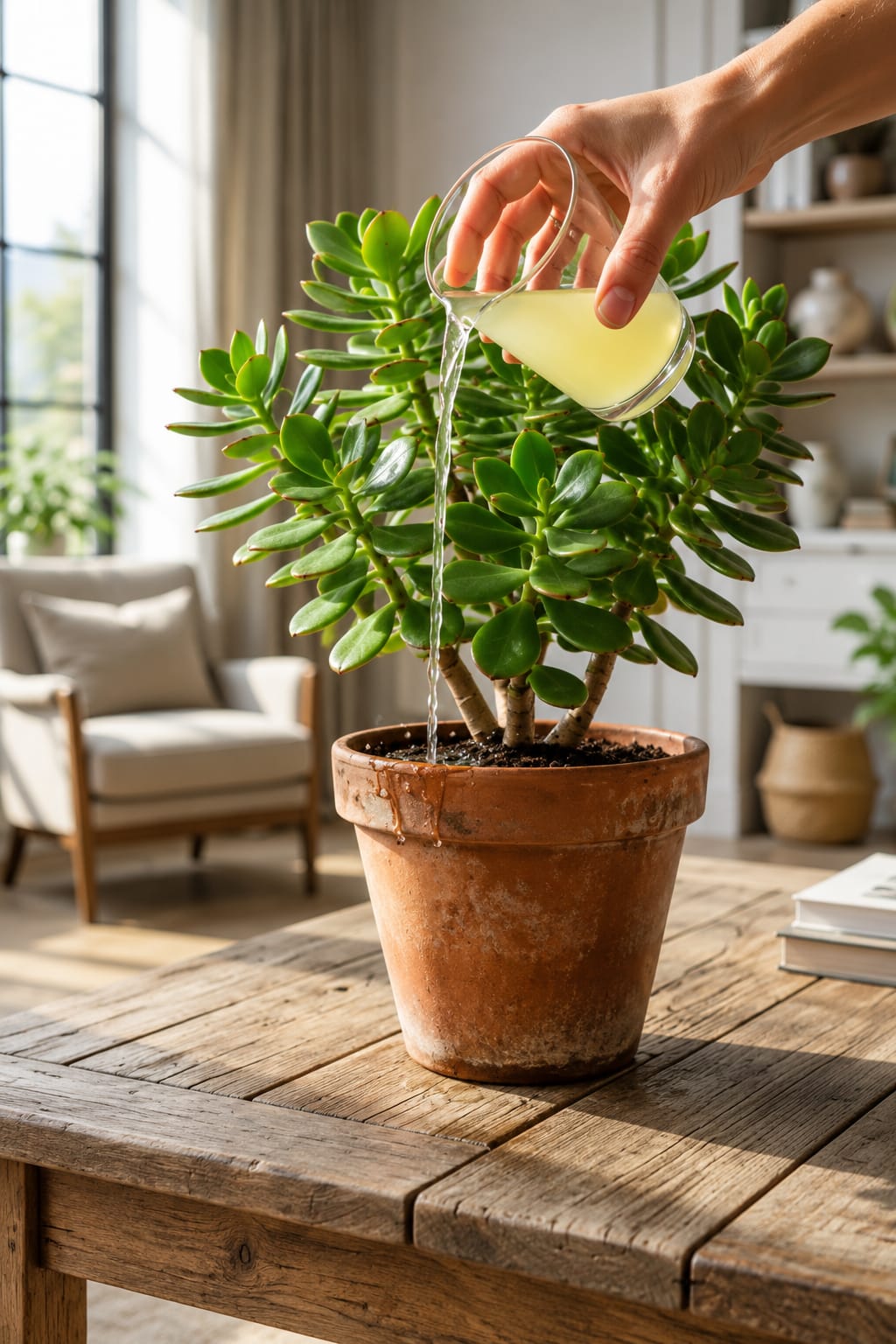
Cleaning Jade Plant Leaves
Jade leaves are naturally glossy and attractive. Dust can dull their appearance and reduce light absorption. Wipe the leaves gently with a soft damp cloth. Support branches while cleaning so they do not snap. A clean jade plant looks healthier and more luxurious, especially when placed in a bright living room or on a wooden table near natural light.
If yellow tonic splashes on the leaves, wipe it away before it dries. Homemade mixtures can leave sticky or cloudy residue. Clean leaves create a more elegant indoor display. Residue can also attract dust, making the plant look neglected even if it is otherwise healthy.
Avoid oily leaf shine products. Jade plants already have a natural surface. Plain water and a soft cloth are enough for simple grooming. If leaves are damaged, scratched, or scarred, do not rub them aggressively. Old marks may remain, but new growth can look clean when care improves.
Pruning for a Fuller Shape
Pruning is one of the best ways to encourage a fuller jade plant. When a healthy jade plant is pruned during active growth, it can branch from the cut point. This helps create a stronger tree-like shape over time. Use clean sharp scissors or pruners and cut above a leaf node. Good pruning can turn a stretched plant into a more compact specimen, but it must be done when the plant has enough light and energy to respond.
Do not prune heavily if the plant is weak, overwatered, or recently repotted. Let it recover first. Healthy roots and bright light are needed for strong branching after pruning. A plant that is rotting or dehydrated will not respond well to major cuts. It needs stability before shaping.
Cuttings can often be propagated. Let the cut end dry and callus before planting in gritty soil. Do not place fresh cuttings directly into wet soil because they may rot. Once callused, the cutting can be placed in dry or barely moist succulent mix and kept in bright indirect light until roots form.
Repotting Jade Plants
Jade plants do not need frequent repotting, but they should be repotted when the soil is old, compacted, sour-smelling, or staying wet too long. Choose a pot only slightly larger than the current one. A pot that is too large can hold excess moisture around the roots. This is especially dangerous for succulents because the extra soil remains wet long after the plant has used what it needs.
During repotting, remove old soil gently and inspect the roots. Use a gritty succulent mix and a pot with drainage holes. After repotting, avoid heavy watering immediately. Give the roots time to settle. If roots were trimmed, waiting a few days before watering can reduce rot risk.
Repotting into correct soil is often more useful than adding any tonic. A healthy root environment is the foundation of strong leaves and stems. If a jade plant has been in the same dense soil for years, fresh gritty mix can make a noticeable difference over time.
Indoor Decor and Styling Ideas
Jade plants are perfect for warm indoor styling because their thick leaves and woody stems create a calm sculptural look. A terracotta pot gives a natural rustic style. A white ceramic pot creates a clean modern look. A stone planter feels premium and grounded. A shallow bonsai-style pot can highlight the tree-like shape of an older jade.
Place the jade plant near bright light where its shape can be appreciated. A sunny windowsill, coffee table near a bright window, plant stand, office shelf, entry console, or bedroom dresser can work beautifully. Rotate the plant occasionally so growth stays balanced. A jade plant leaning strongly toward one side often needs more even light or occasional rotation.
A clean pot and tidy soil surface make the plant look more luxurious. Avoid sticky tonic spills on wood tables, rugs, shelves, or decorative pots. Homemade liquids can leave marks if they overflow. The best display looks intentional, clean, and calm. A jade plant should feel like a living sculpture, not a messy experiment.
Common Mistakes With Jade Plant Tonics
One common mistake is using a tonic too often. Jade plants do not need frequent extra liquids. Another mistake is pouring tonic into wet soil. This can create root rot. A third mistake is using fermented banana peel water or rice water. Sour mixtures can damage the soil environment and create an unpleasant smell indoors.
A fourth mistake is expecting liquid to fix low light. A jade plant in poor light will not become compact and strong from a tonic. A fifth mistake is using a pot without drainage. No homemade mixture can protect roots from trapped water. The plant may look fine for a while, then suddenly decline when roots begin to rot.
A sixth mistake is treating jade plants like tropical foliage plants. Jade plants need brighter light, drier soil, and less frequent watering. Their care should stay simple and dry-leaning. A jade plant is not a peace lily, pothos, or fern. It has different needs, and those needs should guide every care decision.
Better Alternatives for Strong Growth
If the goal is fuller leaves, improve light and water correctly. If the goal is stronger stems, provide bright light and prune carefully when the plant is healthy. If the goal is better nutrition, use a weak cactus or succulent fertilizer during active growth. If the goal is cleaner leaves, wipe them with plain water. These basic steps are more reliable than unknown yellow liquid.
If the plant is dropping leaves, check soil moisture and light. If the plant is soft at the base, check for rot. If the plant is stretched, move it gradually to brighter light and prune later once growth improves. If leaves are wrinkled but the soil is wet, the roots may be damaged. If leaves are wrinkled and the soil is bone dry, the plant may need a deep watering with plain water.
Jade plants reward patience and consistency. Their beauty builds slowly. A thick trunk, balanced branches, and full leaves develop over months and years. Quick tricks may look exciting, but stable care creates the long-lasting result that homeowners actually want.
Final Thoughts
A light yellow tonic around a jade plant may look like an easy growth trick, but it should be used carefully. The liquid could be banana peel water, rice water, aloe water, diluted fertilizer, lemon water, or another homemade mixture. Some fresh weak mixtures may be tolerated rarely, but strong, fermented, acidic, sticky, or unknown liquids can sour the soil, attract fungus gnats, and damage roots.
The real foundation of jade plant health is bright light, gritty succulent soil, drainage holes, infrequent watering, warm stable conditions, clean leaves, light pruning, and gentle feeding during active growth. If the soil is wet, do not add more liquid. If the plant is soft, check the roots. If the plant is stretched, improve light. If the plant is healthy, keep the routine simple.
With patient care and clean styling, jade plants can remain beautiful indoor succulents for living rooms, bedrooms, home offices, apartments, bright windowsills, commercial interiors, luxury home staging, and premium plant displays. Firm leaves, strong stems, tidy soil, and balanced maintenance will always create a healthier and more elegant result than relying on risky homemade tonic shortcuts.