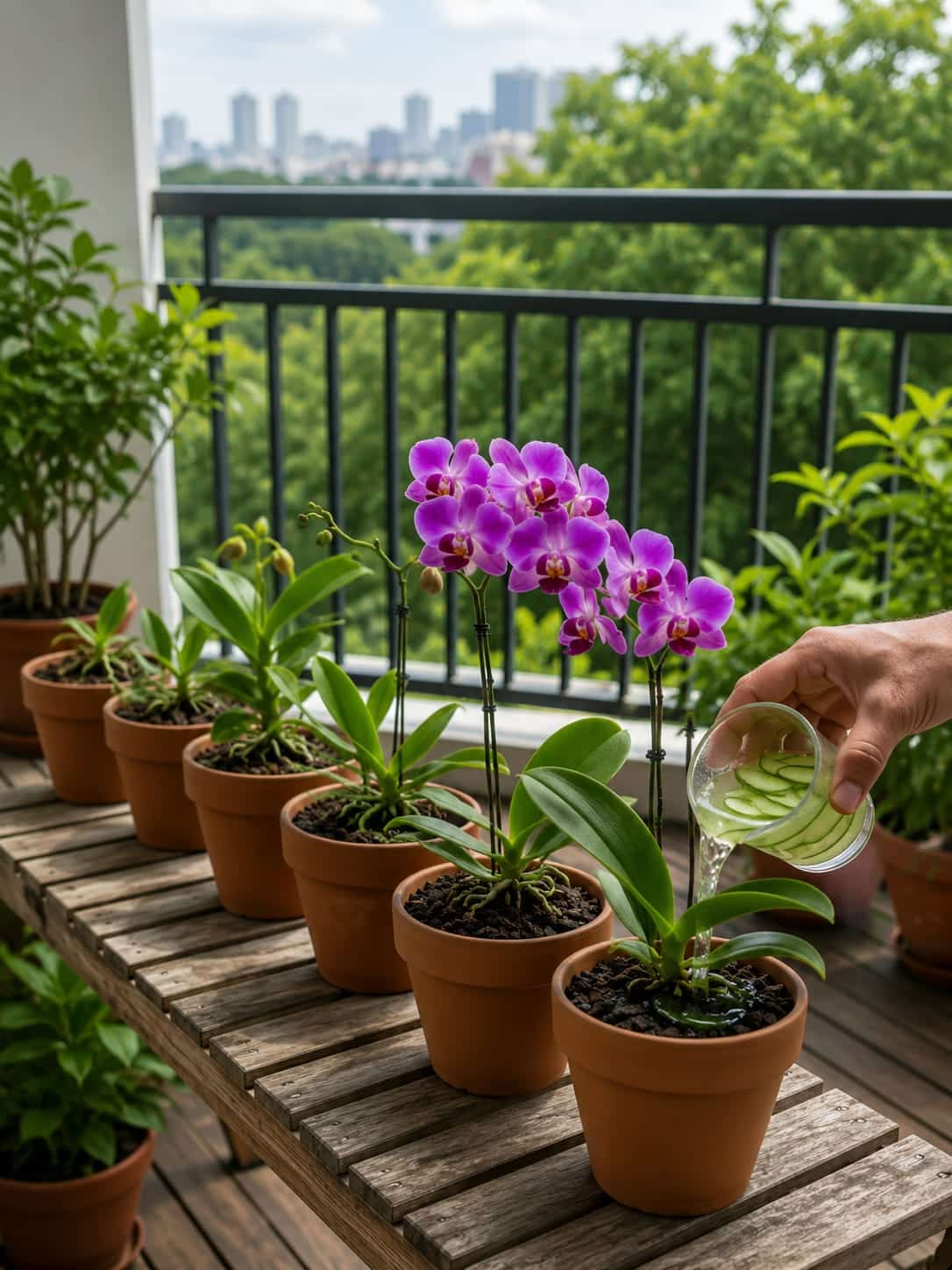
Common Mistakes With Orchid Liquid Tricks
One common mistake is using thick aloe gel directly on the roots. Another mistake is pouring homemade liquid into old broken-down bark. A third mistake is watering too often because the liquid is called a tonic. Orchids still need drying and airflow.
A fourth mistake is letting liquid sit in the crown. This can cause rot. A fifth mistake is using fermented rice water, banana water, or old aloe water. A sixth mistake is feeding or treating a blooming orchid too heavily.
Orchid care works best when it is clean, measured, and patient. The plant needs air as much as moisture.
Better Alternatives for Stronger Orchid Roots
If the goal is stronger roots, use fresh orchid bark, proper watering, drainage, and bright indirect light. If the goal is more blooms, improve light and give the plant stable temperatures. If the goal is greener leaves, clean the leaves and feed weakly during active growth. If the goal is recovery, inspect roots and remove rot.
If the plant is dry, water thoroughly and drain. If roots are rotten, repot. If leaves are limp, check roots before adding liquid. If flowers are dropping, check drafts, temperature, and watering consistency.
These steps solve real orchid problems more safely than unknown green liquids.
Final Thoughts
A pale green liquid poured around orchids may look like a simple natural secret for stronger roots and better blooms, but it should be used carefully. The liquid could be aloe water, cucumber water, seaweed extract, rice water, banana peel water, green tea water, diluted fertilizer, or another unknown mixture. Some plant-safe liquids can help when diluted properly, but thick, sticky, fermented, sugary, or old homemade liquids can damage roots, sour the bark, attract pests, and reduce airflow.
The real foundation of orchid health is bright indirect light, airy orchid bark, drainage, clean water, proper drying, healthy roots, stable warmth, moderate humidity, and gentle feeding during active growth. If the potting medium is wet, do not add liquid. If the roots are mushy, repot. If the orchid is blooming, avoid experiments. If the plant is healthy, keep the routine simple.
With patient care and clean styling, orchids can remain beautiful plants for living rooms, bedrooms, kitchens, home offices, apartments, balcony gardens, covered patios, commercial interiors, luxury home staging, and premium plant displays. Strong roots, glossy leaves, long-lasting flowers, tidy pots, and balanced maintenance will always create a safer and more elegant result than relying on risky homemade liquid shortcuts.