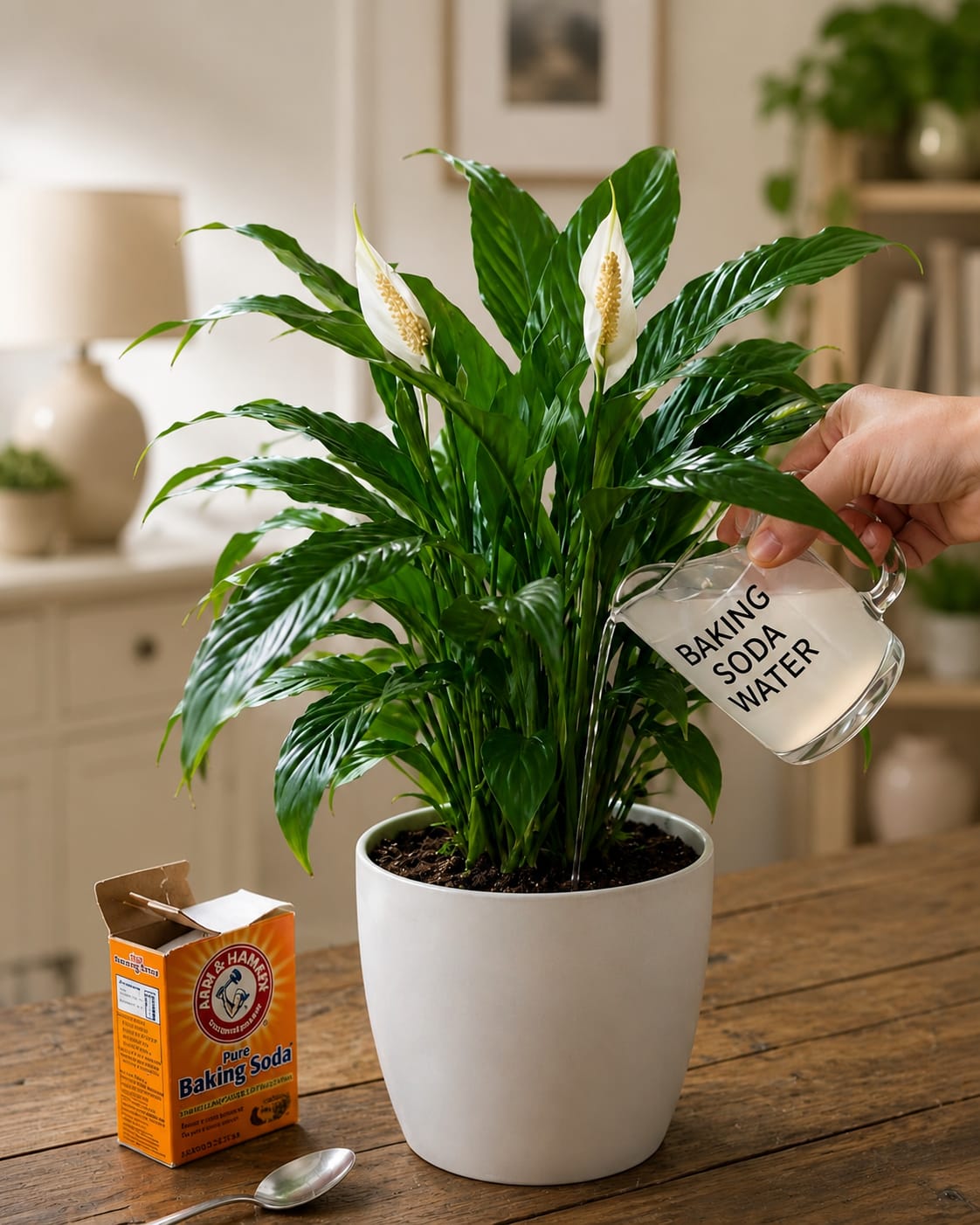
Common Mistakes With Baking Soda Water
One common mistake is assuming baking soda is plant food. It is not. Another mistake is using it repeatedly because it seems harmless. In a small indoor pot, repeated sodium buildup can stress roots. A third mistake is pouring it into already wet soil, which can worsen root stress.
A fourth mistake is using baking soda water to fix every problem. Yellow leaves, brown tips, drooping, and lack of blooms can have many causes. The right solution depends on the cause. A fifth mistake is using strong mixtures or combining baking soda with other household ingredients.
A sixth mistake is ignoring drainage. No homemade mixture can make up for a pot that traps water. A peace lily needs drainage holes, airy soil, and a balanced watering routine.
What to Do If the Plant Starts Declining
If the peace lily begins drooping, first check the soil. If it is dry, water with plain water and let it drain. If it is wet, do not add more liquid. Wet soil and drooping may mean root stress. Let the soil dry slightly and inspect the roots if the plant continues to decline.
If leaves yellow after baking soda use, stop all homemade treatments. Check for salt buildup, poor drainage, and root health. Remove badly yellow leaves with clean scissors once they are mostly spent. Do not remove too many healthy leaves at once.
If brown tips increase, flush the pot with plain water only if drainage is good. Improve humidity and avoid overfertilizing. Return to simple care. Peace lilies often recover when the stress source is removed.
Final Thoughts
Baking soda water may look like an easy peace lily care trick, but it is not a reliable fertilizer or bloom booster. Baking soda is alkaline and contains sodium, which can create root stress and soil imbalance when used incorrectly. It may leave residue, contribute to brown tips, and cause problems in small indoor pots if repeated often.
The real foundation of peace lily health is bright indirect light, healthy roots, airy soil, drainage holes, steady moisture, clean leaves, warm indoor conditions, moderate humidity, and gentle balanced feeding during active growth. If the plant is not blooming, improve light first. If the plant is drooping in wet soil, check the roots. If the leaves are dusty, clean them with plain water and a soft cloth.
With patient care and clean styling, peace lilies can remain beautiful indoor plants for living rooms, bedrooms, home offices, apartments, entryways, bright windowsills, commercial interiors, luxury home staging, and premium plant displays. Glossy leaves, graceful white blooms, tidy soil, and balanced maintenance will always create a safer and more elegant result than relying on baking soda water shortcuts.