Common Reasons ZZ Plants Turn Yellow
Yellow leaves are often caused by overwatering. If the soil is wet and leaves are yellowing, stop watering and check the roots. Soft rhizomes or black roots indicate rot. The plant may need repotting into fresh dry mix.
Yellowing can also come from low light, old leaves, sudden cold, or fertilizer buildup. If only one old leaf turns yellow while the plant is otherwise healthy, it may be natural aging. If many leaves yellow at once, investigate the root zone.
Lemon juice can add stress if the plant is already yellowing. Do not use acidic treatments on a plant showing decline. Simple correction is safer.
Indoor Decor and Styling Ideas
ZZ plants are excellent for interior styling because their glossy leaves and upright stems look clean and architectural. A terracotta pot gives a warm natural look. A white ceramic pot creates a modern minimal style. A black planter adds contrast and drama. A woven basket softens the display and works well with neutral decor.
Place the ZZ plant where it receives bright indirect light and has room for stems to spread. It looks beautiful on wooden tables, plant stands, office corners, bookshelves, bedroom dressers, and entry consoles. Keep the pot and soil surface tidy for the best effect.
Lemon juice can stain surfaces or create a sticky mess if spilled. A luxury plant display should look fresh, calm, and intentional. Clean care is part of good styling.
Common Mistakes With Lemon Juice and ZZ Plants
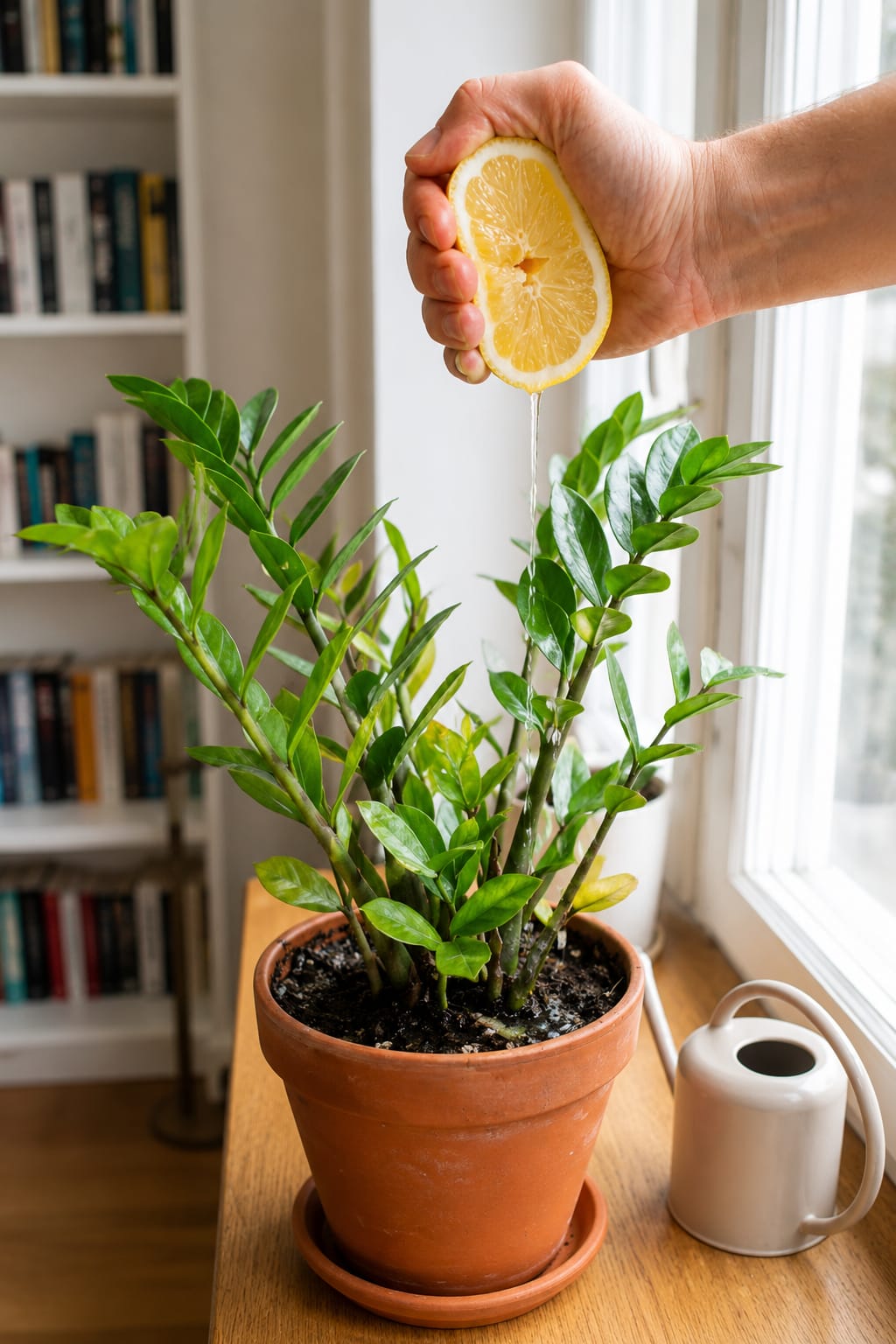
One common mistake is squeezing lemon directly into the pot. Direct juice is too concentrated and unpredictable. Another mistake is using lemon because the plant is not growing fast. ZZ plants are naturally slow growers, especially in low light or winter.
A third mistake is adding lemon to wet soil. This increases root stress. A fourth mistake is treating lemon as fertilizer. It is not complete plant food. A fifth mistake is ignoring drainage. No homemade trick can protect a ZZ plant from a pot that traps water.
A sixth mistake is using lemon repeatedly. Even if the plant does not react right away, repeated acidic treatments can change soil balance and create buildup. ZZ plants prefer simple, steady care.
What Usually Helps More Than Lemon
If the goal is stronger growth, give the ZZ plant brighter indirect light. If the soil is heavy, repot into a loose mix. If the pot has no drainage, move the plant into a draining container. If watering is frequent, reduce it and allow the soil to dry properly.
If the plant has not been fed for a long time and is actively growing, use a weak balanced fertilizer during spring or summer. Do not overfeed. A light fertilizer routine is more useful than lemon juice.
If the leaves are dusty, wipe them with plain water. If pests are present, identify the pest and use a targeted treatment. Lemon juice is not a reliable pest-control method for ZZ plants.
Final Thoughts
Lemon juice may look like a fresh natural ZZ plant trick, but it is not a safe routine for regular care. It is acidic, can irritate roots, may leave residue, and does not provide balanced nutrition. Direct lemon juice should not be squeezed into ZZ plant soil, especially if the pot is already wet, compacted, or poorly drained.
The real foundation of ZZ plant health is firm rhizomes, fast-draining soil, drainage holes, infrequent watering, bright indirect light, warm stable conditions, clean leaves, and gentle feeding only during active growth. If the plant is slow, improve light and patience. If the plant is yellowing, check watering and roots. If the plant is dusty, clean the leaves with plain water.
With simple care and clean styling, ZZ plants can remain beautiful indoor plants for living rooms, bedrooms, home offices, apartments, entryways, bright windowsills, commercial interiors, luxury home staging, and premium plant displays. Glossy leaves, strong stems, tidy soil, and balanced maintenance will always create a healthier and more elegant result than relying on lemon juice shortcuts.