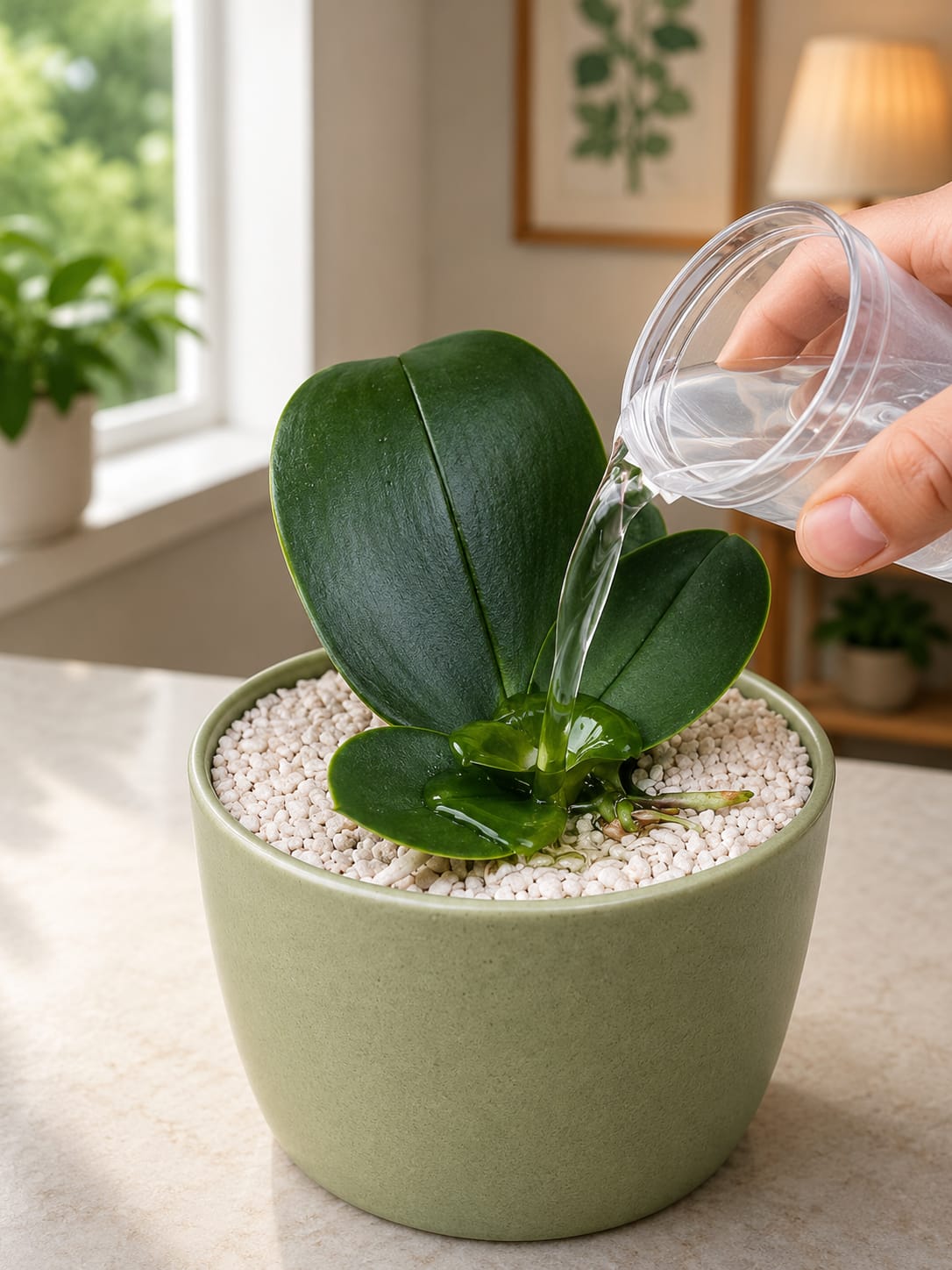
Why New Leaves Are a Good Sign
When an orchid produces new leaves, it usually means the plant is entering an active growth stage. This is a positive sign because new leaves show that the crown is alive and the orchid is still building energy.
New leaves often appear before new flower spikes. The orchid may first grow leaves and roots, then bloom later when it has enough strength. This is why patience matters. A plant that is not flowering may still be healthy if it is producing new growth.
New leaf growth can mean:
- The crown is active
- The orchid is recovering
- The roots are supporting the plant
- The plant is storing energy
- Future blooms may be possible
Do not force the plant to bloom while it is rebuilding. Let the leaves and roots develop first.
How Often to Water After the Reset
After a watering reset, do not keep watering every day. Orchids need a wet-dry cycle. The roots should receive water, then have time to breathe and dry slightly.
A simple watering rule is:
- Water when the roots look silvery
- Wait if the roots are still green
- Check the weight of the pot
- Water less in winter
- Water more carefully in low light
- Never allow the pot to sit in water
In many homes, orchids may need water about once a week, but the exact timing depends on light, temperature, humidity, pot size, and potting medium.
Should You Fertilize During Recovery?
A weak orchid should not be overloaded with fertilizer. Fertilizer can help during active growth, but too much can burn roots or stress the plant. If the orchid is recovering, use a gentle approach.
Fertilizer tips:
- Use orchid fertilizer at reduced strength
- Feed only when the plant is actively growing
- Do not fertilize rotten or rootless orchids
- Flush the pot occasionally with plain water
- Avoid strong homemade mixtures
Healthy roots must come first. Fertilizer is support, not a rescue solution.
Common Mistakes With Orchid Recovery
Many orchid problems become worse because homeowners try too many tricks at once. Orchids like consistency. One careful change is better than five aggressive treatments.
- Do not repot immediately without checking the roots.
- Do not water every day.
- Do not leave water in the crown.
- Do not use regular garden soil.
- Do not place the orchid in harsh sun.
- Do not keep the orchid in a dark corner.
- Do not add too much fertilizer.
- Do not cover all roots with thick decorative stones.
- Do not cut healthy roots.
- Do not expect flowers immediately after recovery.
Simple Orchid Recovery Routine
For a tired but living orchid, use this simple routine:
- Move the orchid to bright indirect light.
- Check the roots and potting medium.
- Water gently around the root zone.
- Let the pot drain completely.
- Keep water out of the crown.
- Remove only dead or rotten material.
- Wait before repotting unless the medium is bad.
- Watch for new roots or new leaves.
This routine gives the orchid time to respond. Sometimes a plant needs stability more than dramatic intervention.
Frequently Asked Questions
Should I repot my orchid as soon as it looks weak?
Not always. If the roots are not rotten and the potting medium is still usable, a gentle watering reset may help before repotting.
Can watering help an orchid grow new leaves?
Proper watering supports healthy roots, and healthy roots support new leaves. Watering alone does not force growth, but balanced moisture helps the plant recover.
Is it bad to pour water near orchid leaves?
Water should be directed toward the root zone. Avoid leaving water trapped in the crown or between leaves because this can cause rot.
Why are my orchid roots silver?
Silver roots are often dry roots. After watering, healthy orchid roots usually turn green.
Can decorative white stones be used with orchids?
Yes, but they should not block airflow or keep the root zone too wet. Use them lightly and make sure the pot drains well.
How do I know if my orchid is recovering?
Signs of recovery include firmer leaves, greener roots after watering, new root tips, and new leaf growth from the crown.
Final Thoughts
The “do not repot too soon” orchid trick is really about understanding what the plant needs before taking action. A tired orchid does not always need a new pot immediately. Sometimes it needs a gentle watering reset, better light, clean airflow, and patience.
When the root zone is refreshed carefully and the crown is protected from trapped water, the orchid has a better chance to recover naturally. New leaves are one of the best signs that the plant is rebuilding strength. Once the roots and leaves are healthy, future blooms become much more likely.
For the most elegant indoor display, keep the orchid simple: bright indirect light, clean decorative stones, a breathable potting setup, careful watering, and a calm uncluttered location. With the right routine, even a tired orchid can return to a fresher, cleaner, and more refined look.