Best Places to Display Orchids
Orchids can fit into many interior styles. Their leaves and flowers add softness without making a room feel crowded.
Great display spots include:
- Bright windowsills
- Bathroom shelves with natural light
- Kitchen counters away from direct heat
- Bedroom dressers
- Living room side tables
- Entryway consoles
- Office desks near indirect light
A terracotta orchid pot on a light-colored surface can look natural and peaceful. A white orchid pot on a black shelf can look modern and expensive. A blooming orchid beside a mirror can make the display feel fuller and brighter.
How to Encourage Orchid Flower Spikes
Faster leaf and root growth is one goal, but many homeowners want flowers. Flower spikes usually appear when the orchid is mature, healthy, and exposed to the right seasonal cues.
To encourage blooms:
- Give bright indirect light
- Keep roots healthy
- Use gentle feeding during growth
- Allow a slight nighttime temperature drop when appropriate
- Do not overwater
- Avoid repotting too often
- Keep the plant stable and consistent
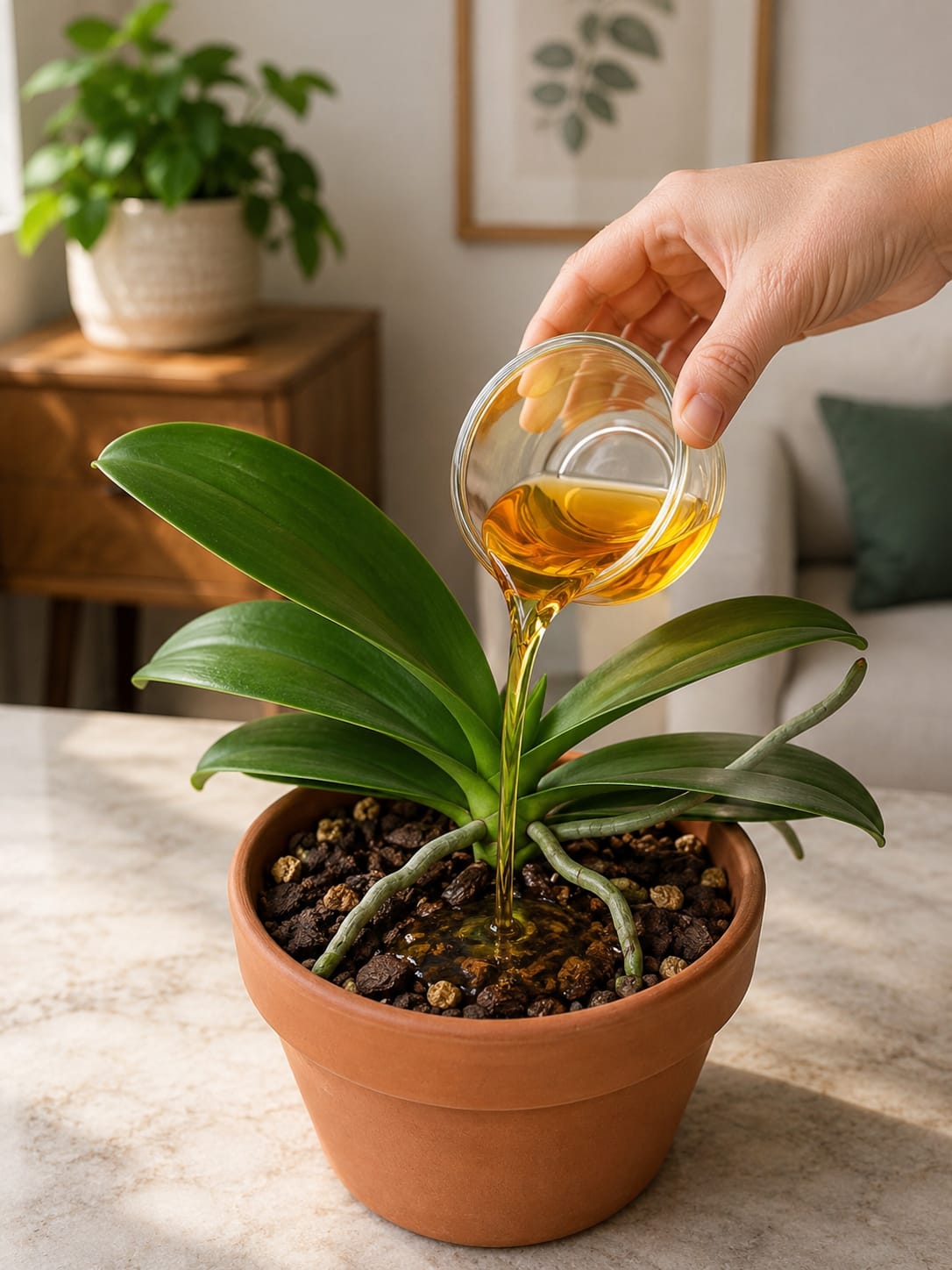
A golden liquid can be part of the support routine, but flowers come from the whole system. The plant must have enough energy stored in its leaves and roots before it can bloom well.
Orchid Care Table
| Care Factor | Best Practice | Why It Matters |
|---|---|---|
| Light | Bright indirect light | Supports leaves, roots, and future blooms |
| Water | Water when medium is nearly dry | Prevents root rot |
| Medium | Chunky orchid bark or airy mix | Gives roots oxygen |
| Golden tonic | Use diluted and lightly | Refreshes the root zone without overload |
| Pot | Drainage holes or slotted orchid pot | Prevents stagnant moisture |
| Decor | Clean pot and neat top dressing | Makes the display look polished |
Common Orchid Problems and What They Mean
Wrinkled Leaves
Wrinkled orchid leaves often mean the plant is not taking up enough water. This can happen from underwatering, but it can also happen from root rot. If the roots are damaged, the plant cannot absorb water even when the pot is wet.
Yellow Leaves
One old yellow leaf can be normal. Several yellow leaves can mean overwatering, low light, root stress, or too much fertilizer.
Brown Root Tips
Brown tips can happen from fertilizer burn, strong homemade liquids, salt buildup, or dry stress. Use weaker solutions and flush the pot with plain water occasionally.
No Flowers
An orchid may refuse to bloom if it lacks light, has weak roots, or is still recovering from its last bloom cycle. Focus on steady care instead of forcing flowers.
Mushy Roots
Mushy roots are usually a sign of rot. Remove the orchid from the pot, trim dead roots, and repot into fresh airy medium.
Frequently Asked Questions
Can a golden liquid make orchids grow faster?
It may support growth if it is diluted, plant-safe, and used on a healthy orchid. But faster growth depends more on roots, light, drainage, and proper watering.
Should I pour the liquid on orchid leaves?
No. Apply it around the root zone only. Avoid the crown and flowers.
Can I use it on a sick orchid?
Only if the roots are not rotten. A sick orchid should be inspected first. Rotten roots need trimming and fresh medium, not extra liquid.
How often should orchids be fed?
Orchids usually prefer weak feeding during active growth. Heavy feeding can damage roots.
Why are my orchid roots turning brown?
Brown roots may be old, dry, burned by fertilizer, or rotting from too much moisture. Check if they are firm or mushy.
Can orchids grow in regular soil?
No. Most indoor orchids need airy orchid bark or a special orchid mix, not dense garden soil.
Final Thoughts
The golden liquid orchid method is best understood as a gentle root-support trick. It can help refresh the growing medium and support healthier growth when the orchid already has the right foundation: bright indirect light, an airy potting mix, proper drainage, and careful watering.
The important rule is moderation. Orchids do not need heavy feeding or constant treatments. They need oxygen around their roots, enough light to produce energy, and a stable routine. A small amount of diluted golden tonic can fit into that routine, but it should never replace correct orchid care.
When the roots stay healthy and the display is styled cleanly, an orchid can look far more expensive than it really is. With a terracotta pot, a neat top layer, bright filtered light, and gentle root-zone care, the plant can grow stronger, refresh its leaves, and prepare for future blooms that make the whole room feel calmer, greener, and more elegant.