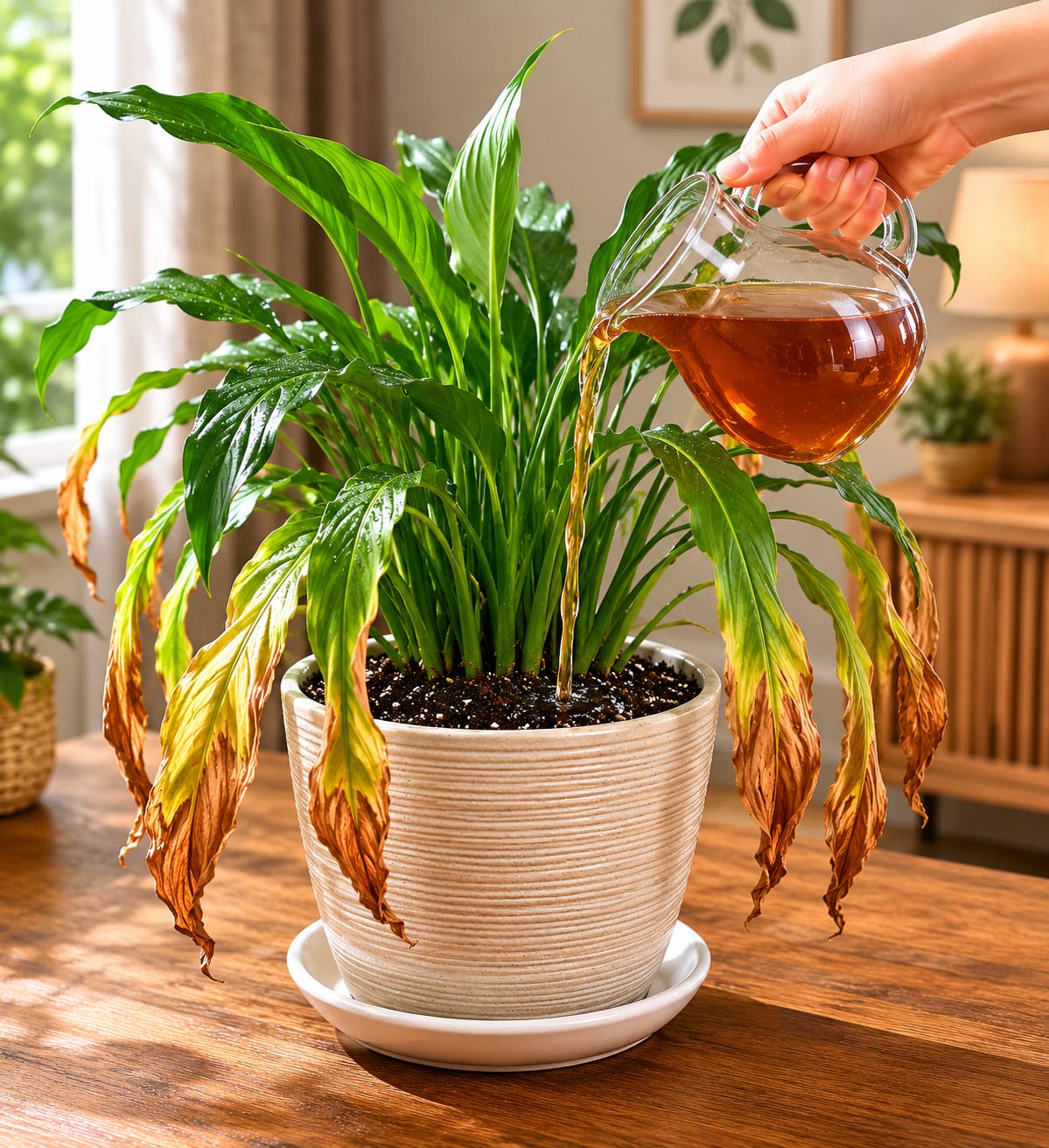
Why Drainage Is Non-Negotiable
A peace lily pot needs drainage. Without drainage, water can collect at the bottom and suffocate the roots. This is especially important if any liquid treatment is being used.
A good pot should:
- Have drainage holes
- Allow excess water to escape
- Sit in a saucer that can be emptied
- Not trap water around the roots
- Be the right size for the plant
If the decorative pot has no drainage, use a nursery pot inside it. This keeps the display attractive while protecting the plant.
Why Soil Quality Matters
Peace lilies need soil that holds moisture but still breathes. Heavy compacted soil can stay wet too long and cause root problems. Very dry, old soil may repel water and leave roots thirsty.
A good peace lily soil mix should be:
- Moisture-retentive
- Well-draining
- Light enough for airflow
- Fresh enough to support roots
- Not packed too tightly
If the soil is old, dense, or sour-smelling, repotting may help more than any amber liquid.
Why Peace Lilies Bloom After Recovery
A peace lily with healthy roots, good light, and steady moisture is more likely to bloom. The white flowers appear when the plant has enough energy and stability.
Blooming depends on:
- Bright indirect light
- Healthy roots
- Balanced moisture
- Fresh soil
- Light feeding during growth
- Plant maturity
An amber liquid cannot force blooms if the plant is stressed. It can only support the system if the basics are already right.
Peace Lily Rescue Table
| Problem | What It May Mean | Better Response |
|---|---|---|
| Brown crispy leaves | Dryness, low humidity, or past stress | Trim damaged leaves and correct watering |
| Drooping with dry soil | Underwatering | Water deeply with clean water |
| Drooping with wet soil | Overwatering or root rot | Improve drainage and inspect roots |
| No blooms | Low light or weak roots | Move to bright indirect light |
| Amber liquid being used | Root-zone support attempt | Use mildly and only if soil conditions are safe |
Frequently Asked Questions
What is the amber liquid poured on a peace lily?
The exact liquid can vary. It may be a diluted fertilizer, compost tea, banana water, weak tea, or another mild root-zone support liquid.
Can amber liquid revive a peace lily?
Not by itself. Recovery depends on root health, watering, drainage, soil condition, and bright indirect light.
Will brown leaves turn green again?
No. Brown leaves will not recover. They can be trimmed or removed while the plant grows healthier new foliage.
Should the liquid be poured on the leaves?
No. It should be applied to the soil only. Leaves should stay clean and dry.
Can too much liquid harm a peace lily?
Yes. Too much liquid can worsen soggy soil, attract pests, or damage roots.
Why is my peace lily drooping after watering?
If the soil is wet and the plant still droops, the roots may be stressed from overwatering or poor drainage.
Best Places to Display a Recovered Peace Lily
Once the peace lily begins improving, placement matters for both health and decor. A healthy plant should be displayed where its glossy leaves and white blooms can be seen clearly.
Good spots include:
- Near a bright window with filtered light
- Beside a sofa
- On a living room table
- In a bedroom corner
- On a plant stand
- In a home office
- Near an entryway with soft light
The plant should not be hidden in a dark corner if the goal is strong growth and blooms.
Styling Tips for a More Expensive Look
A peace lily looks best when the styling is simple and clean. The leaves and blooms already provide enough beauty.
- Use a cream, white, terracotta, or ceramic planter
- Remove dead leaves regularly
- Wipe dust from healthy leaves
- Keep the saucer clean
- Place the plant near soft natural light
- Avoid clutter around the pot
- Pair with wood, linen, or neutral decor
These small details can make the peace lily look more luxurious and intentional.
Final Thoughts
Pouring an amber liquid around a struggling peace lily can be understood as a root-zone support method, but it should never be treated as a guaranteed rescue trick. A peace lily with brown leaves needs proper diagnosis first. The plant may be too dry, too wet, rootbound, underlit, overfed, or sitting in old compacted soil.
The strongest recovery comes from the full system: healthy roots, clean drainage, balanced watering, bright indirect light, fresh soil, careful trimming, and only gentle feeding when the plant is stable.
When those details work together, the peace lily can return to producing glossy green leaves and elegant white blooms. And once it does, it becomes more than a rescued houseplant. It becomes a calm, beautiful, luxury indoor decor feature that makes the whole room feel fresher, softer, and more complete.