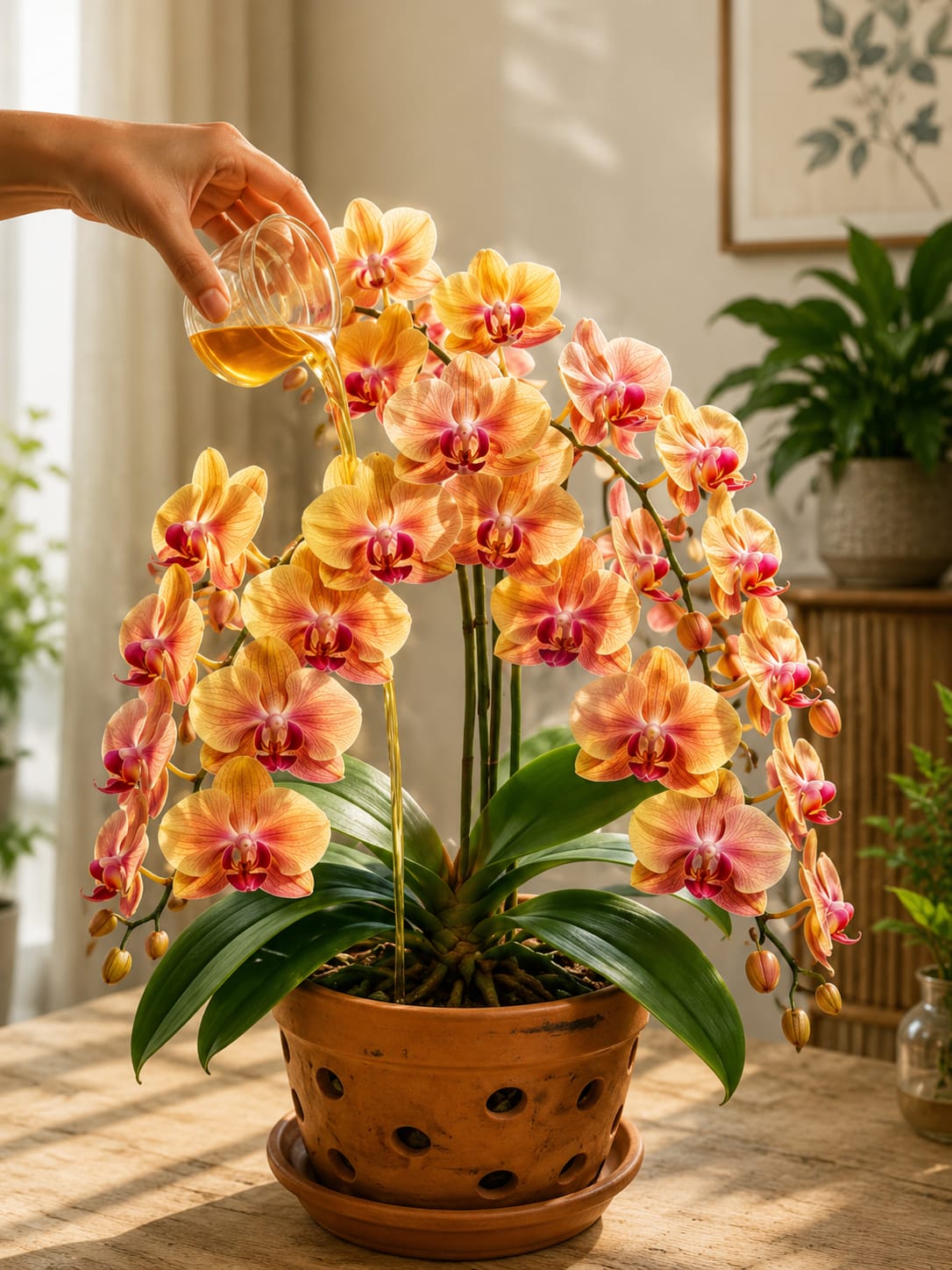
Why Banana Water Is Often Mentioned for Orchids
Some homeowners use banana-peel water because bananas are associated with potassium, which is often discussed in relation to flowering plants. The idea is that a mild banana-based infusion may support blooms.
However, banana water is not a complete orchid fertilizer. It may contain some plant-supporting compounds, but it can also introduce sugars or organic residue if prepared poorly.
Possible risks include:
- Sticky buildup
- Fungus gnats
- Cloudy media
- Bad smell
- Root stress from decay
If used, it should be very weak, strained well, and used rarely. It should not replace balanced orchid fertilizer.
Why Proper Orchid Fertilizer Is Often Safer
A balanced orchid fertilizer is designed to give orchids nutrients in a more predictable way. It is usually safer than random homemade mixtures because the nutrient concentration is known.
A proper orchid feeding routine can support:
- Leaf growth
- Root development
- Flower spike formation
- Plant recovery after blooming
- Long-term health
Many orchid growers prefer the “weakly, weekly” concept, meaning they use a very diluted fertilizer more gently during active growth. Even then, occasional flushing with clean water is important to reduce buildup.
Why Flushing the Pot Matters
When fertilizers or nutrient liquids are used, minerals can build up in the potting media over time. This buildup can stress orchid roots.
Flushing means running clean water through the pot to wash out excess salts and residue. It helps keep the root zone healthier.
Flushing can help prevent:
- Salt crust
- Root burn
- Brown root tips
- Media residue
- Overfeeding stress
This is especially important if the orchid is grown in bark or moss that holds minerals over time.
Why Blooming Orchids Should Not Be Overfed
When an orchid is covered in flowers, it may seem logical to feed it more. But heavy feeding during bloom is not always necessary. Too much fertilizer can shorten bloom life or stress roots.
A blooming orchid needs:
- Stable light
- Moderate moisture
- Good drainage
- No temperature shock
- Gentle feeding only if appropriate
The plant should not be pushed aggressively. The goal is to maintain health, not force unnatural growth.
Why Orchids Sometimes Rebloom From Old Spikes
Some Phalaenopsis orchids can produce more flowers from an existing green flower spike. Others may dry the spike and later grow a new one. Both patterns are normal.
To support reblooming, the plant needs:
- Healthy leaves
- Strong roots
- Bright indirect light
- Moderate feeding during growth
- A slight temperature change in some cases
- Time to recover after blooming
A golden liquid will not guarantee reblooming if the orchid lacks light or energy.
Why Orchid Leaves Reveal Plant Health
Orchid leaves can tell a lot about the plant’s condition. Healthy leaves should be firm, smooth, and medium to deep green depending on light levels.
Warning signs include:
- Wrinkled leaves
- Yellowing from the base
- Black or soft spots
- Very dark floppy leaves in low light
- Burn marks from direct sun
- Weak limp growth
Before using any feeding liquid, check the leaves and roots. A stressed orchid may need better watering or repotting more than feeding.
Why Orchid Roots Should Be Checked Before Feeding
Feeding a plant with damaged roots can create more stress. If roots are mushy or rotten, nutrients cannot be absorbed properly. The orchid may need root cleanup and fresh media first.
Healthy roots can benefit from light feeding. Damaged roots need recovery.
Before feeding, check for:
- Firm roots
- No foul odor
- No slimy sections
- Good drainage
- Media that is not decomposed
- A stable crown
This prevents homeowners from pouring nutrients into a pot that actually needs rescue.
Why Old Orchid Media Can Cause Problems
Orchid bark and moss break down over time. When the media becomes old, it can hold too much water and reduce airflow. This makes root rot more likely.
Signs of old media include:
- Bad smell
- Constant wetness
- Very dark broken-down bark
- Collapsed texture
- Root decline
- Fungus gnats
If the media is old and compacted, repotting is often more helpful than adding golden liquid.
Orchid Golden Liquid Care Table
| Care Step | Purpose | Why It Matters |
|---|---|---|
| Use a diluted golden liquid | Support root-zone feeding | Reduces risk of root burn |
| Apply to the potting media | Target the roots | Keeps blooms and leaves clean |
| Avoid the crown | Prevent trapped moisture | Reduces risk of crown rot |
| Use airy orchid media | Support root oxygen | Prevents suffocation and rot |
| Provide bright indirect light | Build plant energy | Supports blooms and reblooming |
| Flush with clean water | Remove buildup | Protects sensitive roots |
Common Mistakes to Avoid
Golden liquid feeding can go wrong if it is treated like a magic shortcut. Orchids need balance, not overload.
Avoid these mistakes:
- Using a concentrated mixture
- Pouring liquid over flowers
- Letting liquid sit in the crown
- Feeding a plant with rotten roots
- Using homemade liquids too often
- Ignoring poor light conditions
- Keeping the pot constantly wet
- Skipping drainage
- Leaving residue in old media
A careful routine protects the orchid and keeps the display beautiful longer.
How to Use a Golden Liquid More Safely
A safer orchid feeding approach is simple and controlled.
- Check that the orchid roots are healthy
- Make sure the pot drains properly
- Use only a diluted liquid
- Pour around the root zone, not the flowers
- Allow excess liquid to drain away
- Keep the crown dry
- Return to clean water for regular watering
- Watch the plant response over time
This keeps the method gentle and reduces the chance of root stress.
Frequently Asked Questions
What is the golden liquid used on orchids?
It may be a diluted orchid fertilizer, a mild homemade plant tea, banana-peel water, or another root-zone support liquid. The exact liquid can vary.
Can golden liquid make orchids bloom?
It can support the plant if nutrients are needed, but blooms depend mostly on light, root health, maturity, watering, and overall care.
Is banana water good for orchids?
Some homeowners use it, but it is not a complete fertilizer and can create residue if used too strongly or too often.
Should the liquid be poured on orchid flowers?
No. It should be applied to the potting media around the roots. Flowers should stay dry and clean.
How often should orchids be fed?
During active growth, orchids can be fed lightly with diluted orchid fertilizer. Frequency depends on the product, plant condition, and growing environment.
Why is my orchid not reblooming?
Low light, weak roots, old media, poor watering, or lack of recovery time after flowering are common reasons.
Best Places to Display a Blooming Orchid
A blooming orchid deserves a visible location where its flowers can be appreciated. It should receive light, but it should also be protected from harsh sun and temperature extremes.
Good places include:
- Bright windowsills with filtered light
- Dining tables near natural light
- Bedroom dressers
- Home office desks
- Living room side tables
- Entryway consoles
- Bathroom counters with good light
The orchid should feel like a living centerpiece, not an afterthought.
Styling Tips for a More Expensive Orchid Display
Orchids already look elegant, so styling should stay clean and simple.
- Use a ceramic orchid pot or decorative cover pot
- Keep the flower spike neatly staked
- Remove spent blooms gently
- Place near soft natural light
- Pair with wood, stone, linen, or glass
- Avoid clutter around the plant
- Keep leaves dust-free and glossy
A clean orchid display can make the whole room feel more luxurious.
Final Thoughts
Pouring a golden liquid around an orchid can be part of a gentle root-zone support routine, especially if the plant is healthy, actively growing, and placed in bright indirect light. But it should never be treated as a guaranteed bloom trick on its own.
The real secret to beautiful orchids is the full system: healthy roots, airy orchid media, controlled watering, proper drainage, bright indirect light, careful feeding, and patience. When those details are right, an orchid can reward the home with long-lasting blooms and a graceful luxury presence.
Used carefully, a mild golden liquid may support the plant from below. But the lasting beauty comes from consistent care — and that is what turns an orchid from a temporary decoration into a stunning indoor centerpiece year after year.