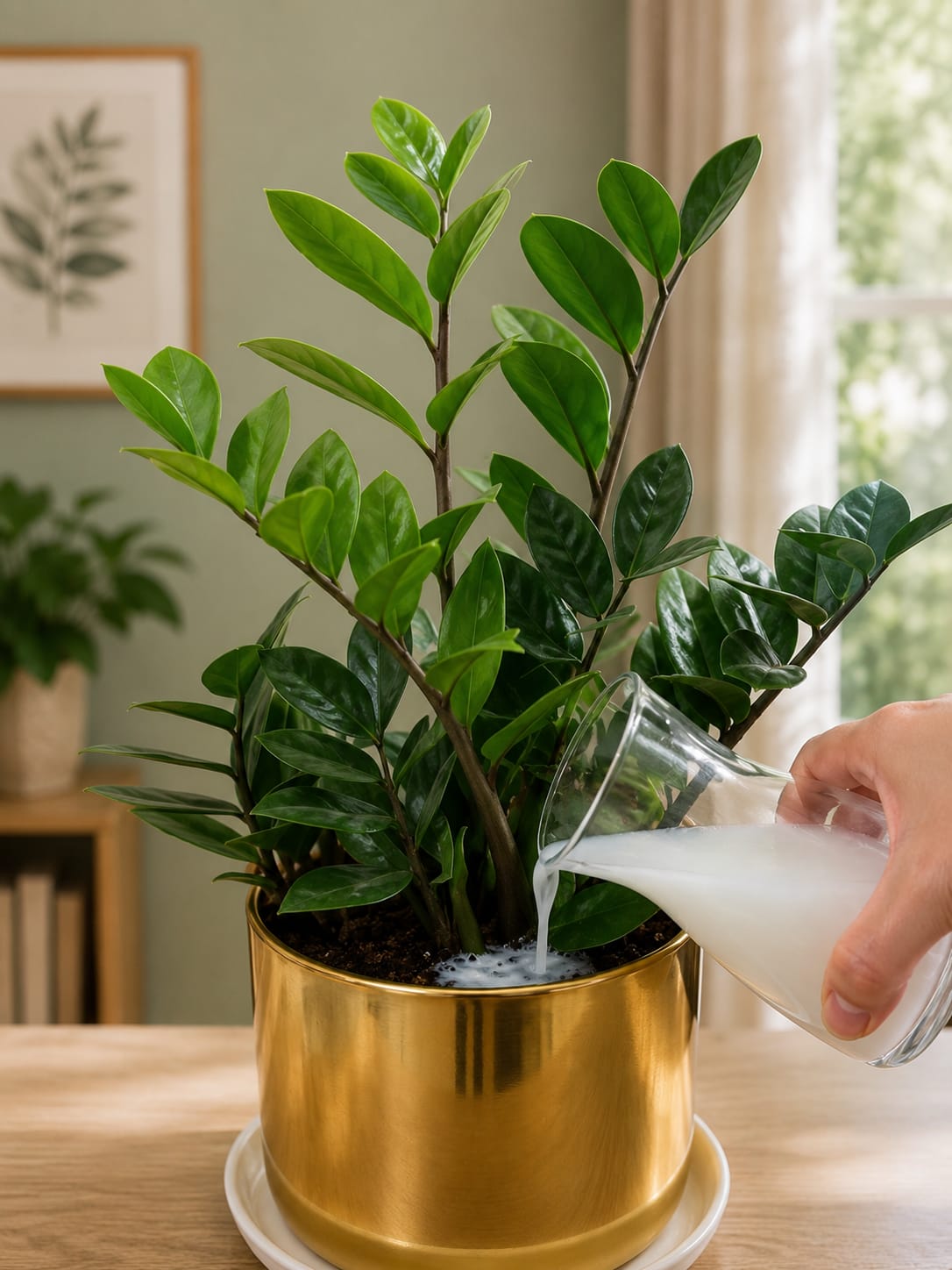
Best Light for ZZ Plants
ZZ plants are often described as low-light tolerant, and that is true. But they usually look better and grow more steadily in bright indirect light.
Good lighting helps ZZ plants:
- Maintain glossy leaves
- Produce stronger stems
- Grow new shoots
- Use water more efficiently
- Stay more compact and healthy
Very dark corners may slow growth significantly. Harsh direct sun can burn the leaves. A bright room with filtered light is usually ideal.
Why White Liquids Can Be Risky Indoors
Homemade white liquids can create problems if they contain ingredients that break down in the soil. Indoor pots do not have the same natural ecosystem as outdoor garden beds. Organic liquids can sit in the pot, sour, and attract pests.
Possible risks include:
- Fungus gnats
- Mold on the soil surface
- Sour smell
- Sticky residue
- Bacterial growth
- Rhizome stress
This is why clean water and proper fertilizer are usually safer than random kitchen mixtures, especially for slow-growing plants like ZZ plants.
When This Method Makes the Most Sense
A mild root-zone liquid may make sense when the ZZ plant is healthy and actively growing. It should not be used as a desperate rescue method for a plant that is already rotting.
It may be more appropriate when the plant has:
- Firm stems
- Healthy glossy leaves
- Dry or nearly dry soil
- A pot with drainage
- Good indirect light
- No signs of rot
It is less appropriate when the plant has yellow leaves, mushy stems, wet soil, or a bad smell from the pot. In those cases, the plant likely needs less water, better drainage, or root inspection.
How to Tell If a ZZ Plant Is Healthy
A healthy ZZ plant usually looks firm, upright, and glossy. The stems stand confidently, and the leaves feel thick and smooth.
Good signs include:
- Firm upright stems
- Glossy leaves
- No mushy base
- Slow but steady new shoots
- No sour smell from soil
- Leaves staying deep green
ZZ plants do not grow quickly all the time, so slow growth does not always mean a problem. Sometimes the plant is simply resting.
Warning Signs After Using White Liquid
After any soil treatment, it is important to watch the plant. A ZZ plant may not react immediately, but signs of stress can appear later.
Watch for:
- Yellowing leaves
- Soft stems
- Mushy base
- Bad soil smell
- Fungus gnats
- White crust or residue
- Leaves dropping suddenly
If these signs appear, stop using the liquid and check the soil moisture and root condition.
Why ZZ Plants Look Best With Simple Styling
ZZ plants already have a strong shape, so they do not need complicated styling. Too many decorations around the plant can make the display feel cluttered.
For a clean premium look:
- Use a gold, black, white, or ceramic pot
- Keep the surface around the plant uncluttered
- Place it against a simple wall
- Pair it with wood or stone textures
- Use soft indirect light
- Wipe dust from the leaves
- Let the plant’s structure stand out
This makes the ZZ plant feel more like a design object than just a houseplant.
Why Leaf Cleaning Matters
ZZ plant leaves naturally look glossy, but dust can dull their appearance. Cleaning the leaves gently can make the plant look healthier and more expensive.
Use a soft damp cloth to wipe the leaves. Avoid heavy leaf-shine sprays, oily products, or thick homemade mixtures on the foliage. These can clog the leaf surface or leave residue.
Clean leaves help the plant:
- Look brighter
- Reflect light better
- Photosynthesize more effectively
- Maintain a premium decor appearance
ZZ Plant White Liquid Care Table
| Care Step | Purpose | Why It Matters |
|---|---|---|
| Use a small diluted amount | Gentle root-zone support | Reduces risk of overfeeding or rot |
| Apply only to soil | Target roots and rhizomes | Keeps glossy leaves clean |
| Check soil dryness first | Avoid excess moisture | Protects rhizomes from rot |
| Use a draining pot | Release excess liquid | Prevents soggy soil |
| Provide indirect light | Support steady growth | Helps the plant use water properly |
| Watch for yellowing | Monitor stress | Helps catch problems early |
Frequently Asked Questions
What is the white liquid used on ZZ plants?
The exact liquid can vary. It may be a diluted fertilizer, rice water, a mild homemade plant liquid, or another root-zone support mixture. It should be used carefully and sparingly.
Is white liquid safe for ZZ plants?
It depends on the ingredients and dilution. ZZ plants are sensitive to excess moisture, so any liquid should be mild and used only when the soil is not already wet.
Can white liquid make ZZ plant leaves shinier?
Healthy roots can support better foliage, but leaf shine mainly comes from good care, proper light, and clean dust-free leaves.
Should the liquid be poured on the leaves?
No. It should be applied to the soil around the base of the plant. ZZ plant leaves should be cleaned with a soft damp cloth instead.
Why is my ZZ plant turning yellow?
The most common cause is overwatering. Yellow leaves can also come from poor drainage, root rot, or stress from too much fertilizer.
How often should ZZ plants be watered?
Water only when the soil has dried out significantly. ZZ plants prefer drying between waterings rather than staying constantly moist.
Best Places to Display a ZZ Plant
A ZZ plant can look beautiful in many parts of the home because it tolerates a range of indoor light conditions.
Good display spots include:
- Living room side tables
- Bedroom corners
- Office desks
- Entryway consoles
- Hallway plant stands
- Minimalist shelves
- Bright indirect window areas
The plant looks best when its upright shape has room to stand out clearly.
Styling Tips for a More Expensive Look
To make a ZZ plant look more luxurious, focus on clean presentation and strong contrast.
- Use a gold or matte black planter
- Wipe the leaves regularly
- Keep the pot surface tidy
- Place it near simple decor objects
- Avoid overcrowding the area
- Use a plant stand for height
- Pair with neutral walls and warm wood furniture
The simpler the styling, the more premium the ZZ plant often looks.
Final Thoughts
Pouring a white liquid around a ZZ plant can be understood as a root-zone support method, but it should be approached carefully. ZZ plants are strong, beautiful, and low maintenance, but they do not enjoy frequent wet treatments or heavy feeding.
The real secret to a healthy ZZ plant is not one special liquid. It is the full care system: well-draining soil, controlled watering, a pot with drainage, bright indirect light, occasional gentle feeding, and clean glossy leaves.
When those details are right, a ZZ plant becomes much more than an easy houseplant. It becomes a sculptural indoor decor feature that adds calm, structure, and a luxury botanical feeling to the whole room.