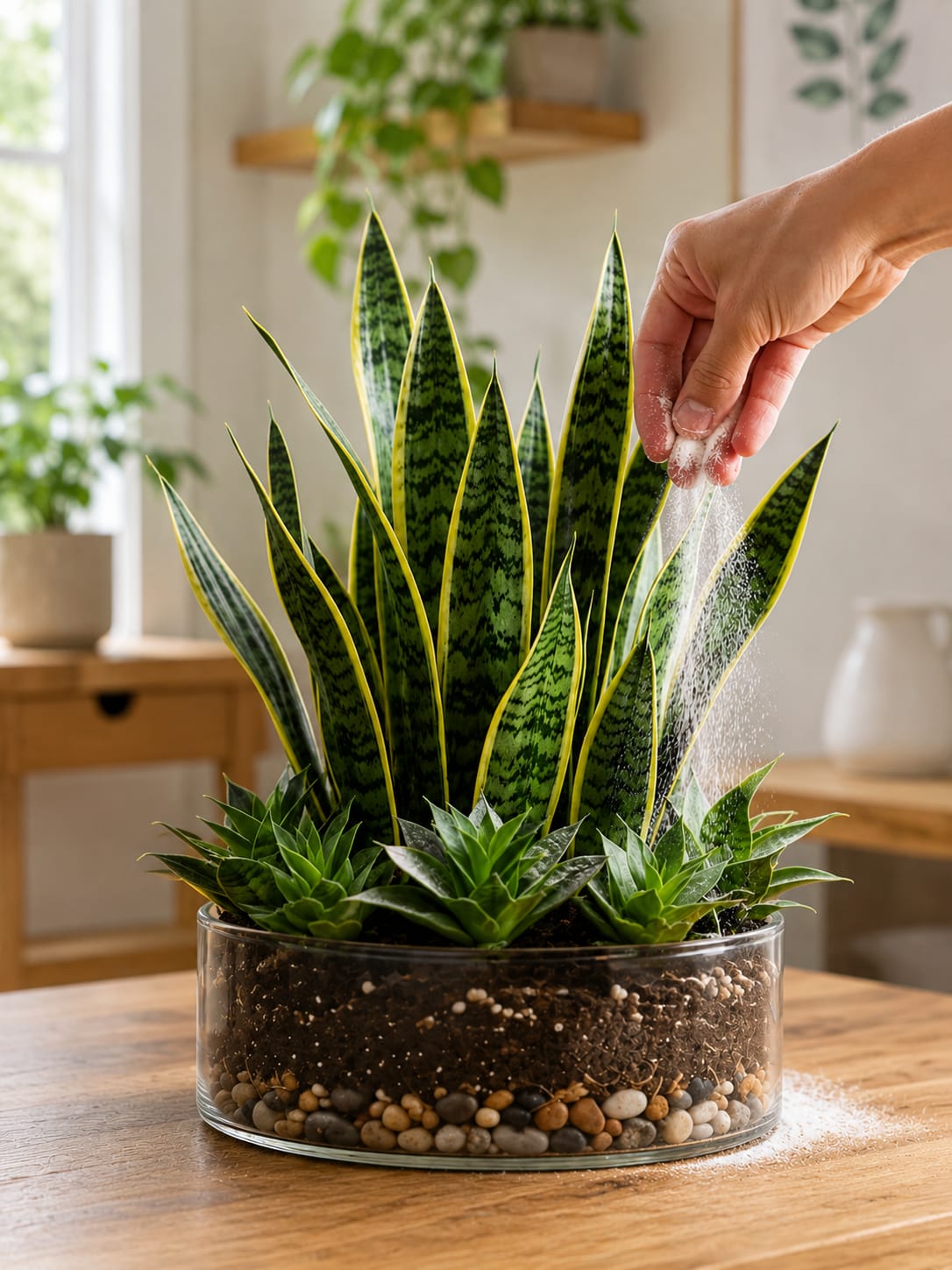
What to Avoid When Sprinkling Powder Around Snake Plants
The biggest risk is treating the powder like magic. Snake plants do not need dramatic care. They need correct conditions.
Avoid these mistakes:
- Using an unknown household powder
- Adding too much at once
- Applying powder to wet, rotting soil
- Letting powder collect inside leaf crowns
- Using it on a plant with mushy bases
- Watering heavily right after application without knowing the product
- Ignoring drainage problems
- Using powder instead of fixing the soil
- Repeating the treatment too often
- Assuming white powder can reverse root rot
Snake Plant Watering Routine
Watering is more important than any powder. Most snake plants die from too much water, not too little. Their thick leaves store moisture, so they can handle dry periods much better than wet roots.
A good watering routine is:
- Let the soil dry out between waterings
- Check deeper than the top surface
- Water thoroughly when the soil is dry
- Allow excess water to drain away
- Never let the pot sit in standing water
- Water less in winter or low light
The exact schedule depends on light, pot size, soil mix, temperature, and humidity. A snake plant in bright light may need water more often than one in a shaded corner.
How Light Affects Snake Plant Growth
Snake plants are often called low-light plants, but they grow better in bright indirect light. Low light may keep them alive, but brighter filtered light helps them grow stronger and maintain better color.
Good light options include:
- Near an east-facing window
- A few feet from a bright south-facing window
- A bright room with filtered sunlight
- An office with strong natural light
- A bedroom with soft morning sun
Too much harsh direct sun can scorch leaves, especially if the plant was previously in lower light. But too little light can slow growth and make overwatering more dangerous.
Why Snake Plant Leaves Turn Yellow
Yellow leaves often point to stress. With snake plants, the most common reason is too much water. However, yellowing can also happen from cold damage, poor soil, root damage, or old age.
Common causes include:
- Overwatering
- Poor drainage
- Cold temperatures
- Root rot
- Too much fertilizer
- Shock after repotting
- Natural aging of older leaves
If yellow leaves appear after adding any powder or fertilizer, stop using the product and check the root zone.
Why Snake Plant Leaves Fall Over
Falling leaves can happen for several reasons. Sometimes the plant is simply top-heavy. Other times the issue is more serious.
Possible causes include:
- Weak roots
- Overwatering
- Rot at the base
- Not enough light
- Loose soil support
- Physical damage
- Old leaves naturally weakening
If a leaf falls over but the base is firm, it may be possible to cut and propagate it. If the base is mushy, root rot is more likely.
Can White Powder Wake Up a Snake Plant?
The phrase “wake up” is often used in plant-care content, but snake plants do not wake up overnight. They are naturally slow growers. A white powder may support the root environment if it is the right product, but it cannot force instant growth.
A snake plant begins to grow better when:
- The roots are healthy
- The soil drains well
- The light is bright enough
- The plant is not overwatered
- The temperature is warm and stable
- The pot is not too large or too wet
- Feeding is gentle and occasional
So the real “wake up” effect comes from correcting the growing conditions.
Snake Plant Care Table
| Care Factor | Best Choice | Why It Matters |
|---|---|---|
| Light | Bright indirect light | Supports stronger growth and better leaf color |
| Water | Only when soil dries | Prevents root rot and mushy bases |
| Soil | Fast-draining mix | Keeps roots oxygenated |
| Pot | Drainage holes preferred | Allows excess water to escape |
| Powder use | Small amount only | Avoids buildup and root stress |
| Decor layer | Light stones or clean top dressing | Improves appearance without trapping too much moisture |
How to Make a Snake Plant Look More Expensive
A snake plant is one of the easiest plants to style because its shape is already strong. To make it look more premium, the container and placement matter almost as much as the plant itself.
Good styling choices include:
- A simple ceramic pot
- A clear modern container
- Neutral decorative stones
- A clean plant stand
- Placement near soft natural light
- Pairing with wood, linen, stone, or matte finishes
- Keeping the area uncluttered
A snake plant looks best when it has space around it. Crowding it with too many small objects can reduce its sculptural effect.
Best Places to Display a Snake Plant
Snake plants work beautifully in many rooms. They add height without taking up too much visual space.
Best decor placements include:
- Living room corners
- Bedroom nightstands
- Home office shelves
- Entryway consoles
- Bathroom counters with bright light
- Minimalist apartment corners
- Dining room sideboards
- Hallways with indirect light
The key is balance. A snake plant should feel intentional, not forgotten. A clean pot, healthy leaves, and a tidy surrounding area make a big difference.
Why Snake Plants Fit Modern Interior Design
Snake plants work well in modern interiors because they have strong lines. Their leaves rise upward like natural sculpture. They do not sprawl heavily, and they do not need constant pruning.
They pair well with:
- Minimalist furniture
- Neutral wall colors
- Wooden tables
- Stone surfaces
- Black metal shelves
- White ceramic pots
- Clear glass containers
- Boho baskets
This is why snake plants are often used in real estate staging, office design, apartment decor, and wellness-inspired interiors. They instantly make a space feel greener without making it feel messy.
Should You Fertilize a Snake Plant?
Snake plants do not need frequent fertilizer. They are slow growers and can survive in lean conditions. However, light feeding during the growing season can support new leaves if the plant is healthy.
A good approach is:
- Feed lightly in spring or summer
- Use a balanced houseplant fertilizer at reduced strength
- Avoid fertilizing in winter when growth slows
- Do not fertilize a stressed or rotting plant
- Flush the soil occasionally if buildup appears
More fertilizer does not mean faster growth. Too much can damage roots and create brown leaf tips or weak growth.
Frequently Asked Questions
What is the white powder on the snake plant?
The exact powder cannot be confirmed from the image alone. It appears to be a soil-surface or root-zone support powder sprinkled around the base of the plant.
Can white powder make a snake plant grow faster?
Not by itself. It may support the soil environment if it is a safe plant product, but faster growth depends mainly on light, drainage, healthy roots, and correct watering.
Should I put white powder on snake plant leaves?
No. It is better to keep snake plant leaves clean. If using a root-zone product, apply it around the soil surface, not on the foliage.
Can white powder stop root rot?
A powder alone cannot fix advanced root rot. If the plant has mushy bases or rotten roots, it needs inspection, trimming, drying, and repotting into a fast-draining mix.
How often should I water a snake plant?
Water only when the soil has dried out. The exact timing depends on the pot, soil, light, and season.
Why is my snake plant not growing?
Snake plants grow slowly by nature. Low light, cold temperatures, poor roots, or compacted soil can slow growth even more.
Final Thoughts
A white powder sprinkled around a snake plant can look like a simple secret for stronger growth, but the real explanation is more practical. The powder is being used around the base of the plant, which means the focus is the soil surface and root zone. That is where snake plant health truly begins.
The exact material cannot be identified with certainty from the image alone, so it should not be treated as a guaranteed miracle product. It may be a plant-safe powder, mineral amendment, root-zone support material, or soil-surface treatment. Whatever it is, the safest rule is to use only small amounts, avoid coating the leaves, and never rely on powder to replace proper snake plant care.
The strongest snake plants come from the full system: bright indirect light, fast-draining soil, careful watering, a stable pot, healthy roots, and a clean decorative setup. When those parts work together, the snake plant becomes more than an easy houseplant. It becomes a bold indoor design feature that makes the whole room feel cleaner, calmer, and more beautifully styled.