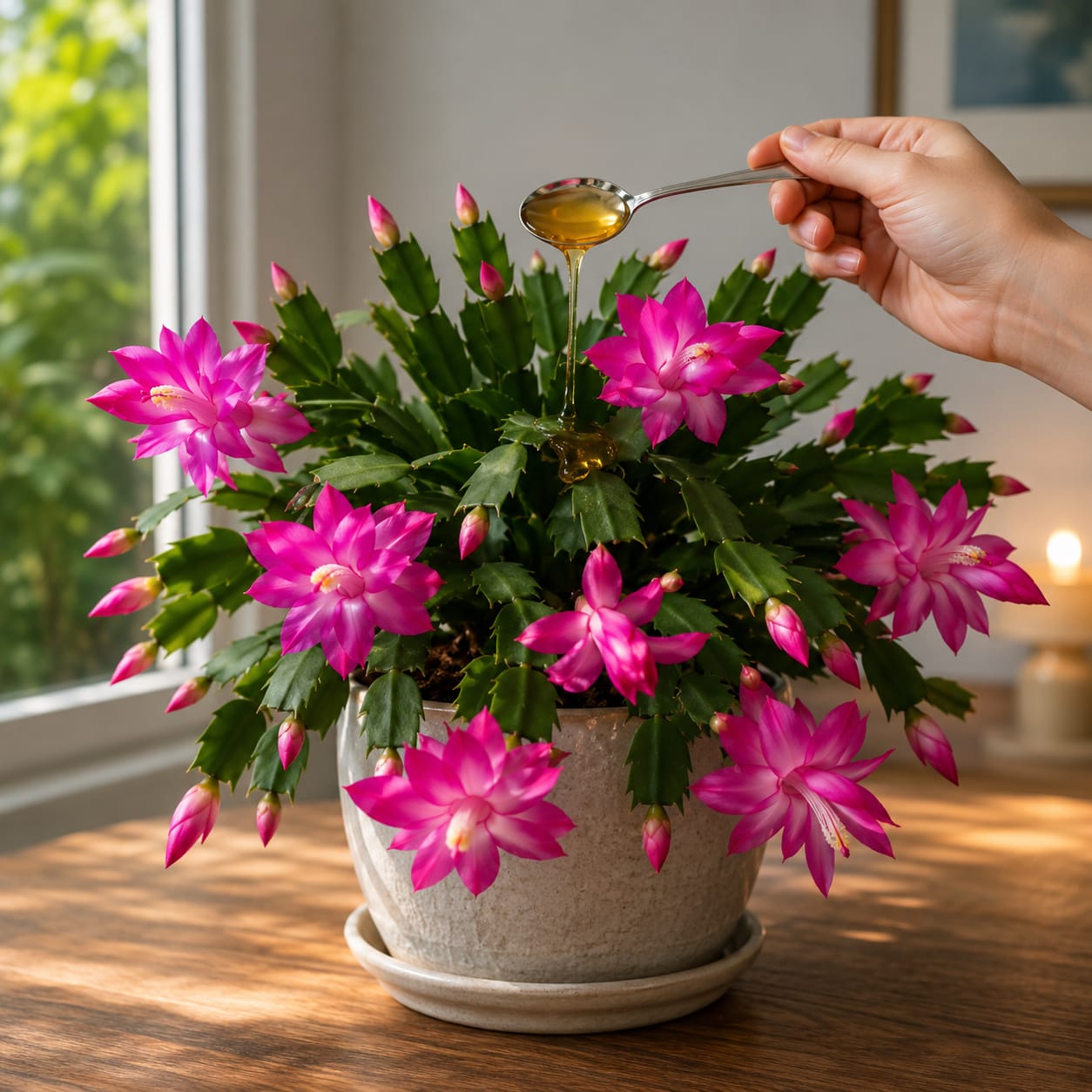
How Often to Feed Christmas Cactus
Christmas cactus does not need constant feeding. A gentle feeding routine during active growth is enough. Too much fertilizer can cause weak growth or root stress.
A simple feeding routine:
- Feed lightly in spring and summer
- Use diluted houseplant fertilizer
- Stop heavy feeding before bloom season
- Do not fertilize a stressed plant
- Do not fertilize when soil is soggy
- Flush the soil occasionally if buildup appears
A homemade tonic should be treated as an occasional support step, not a weekly requirement.
Can a Golden Liquid Make Christmas Cactus Bloom Faster?
Not instantly. A Christmas cactus blooms when the plant is mature, healthy, and exposed to the right seasonal conditions. A mild tonic may help support general health, but it cannot force flowers overnight.
Better blooming usually comes from:
- Bright indirect light
- Correct watering
- Good drainage
- A cool rest period
- Longer darkness before bloom season
- Stable placement
- Healthy roots
The tonic is only one small part of the routine.
What to Avoid With Christmas Cactus Tonics
Homemade plant tricks can be useful, but they can also create problems when used too strongly. Christmas cactus roots are not designed for heavy, sticky, or concentrated mixtures.
Avoid:
- Undiluted sugary liquids
- Thick honey poured directly into soil
- Oily mixtures
- Strong vinegar solutions
- Too much banana water
- Unknown chemical liquids
- Repeated feeding every few days
- Pouring liquid directly over flowers
- Leaving the pot in standing water
If the soil starts smelling sour, grows mold, or attracts insects, stop using homemade tonics and refresh the soil care routine.
Signs Your Christmas Cactus Likes Its Care
A happy Christmas cactus will show steady, firm growth. It may not bloom all year, but its stems should look healthy and hydrated.
Good signs include:
- Firm green stems
- New segmented growth
- No mushy areas
- Stable roots
- Healthy buds during bloom season
- Flowers that open fully
- No bad smell from the soil
If the plant looks limp, wrinkled, yellow, or mushy, check the roots and watering routine before adding any extra tonic.
Signs of Overwatering
Overwatering can be dangerous for Christmas cactus. Even though it likes more moisture than desert cacti, it still needs oxygen around the roots.
Overwatering signs include:
- Limp stems
- Mushy segments
- Yellowing growth
- Blackened base
- Sour-smelling soil
- Fungus gnats
- Soil that stays wet for too long
If these signs appear, stop watering, improve airflow, and check whether the potting mix is too heavy.
How to Style Christmas Cactus Indoors
Christmas cactus is not only a plant-care favorite; it is also a beautiful decor plant. Its arching stems and colorful blooms create a soft, festive look that works well in cozy interiors.
Beautiful styling ideas include:
- Place it on a bright windowsill
- Use a white ceramic pot for a clean look
- Choose terracotta for a warm natural style
- Display it on a small wooden plant stand
- Place it near neutral curtains for contrast
- Group it with green foliage plants
- Use it as a holiday table accent
- Let stems trail from a shelf or hanging basket
When the plant blooms, it becomes a natural centerpiece. Pink or red flowers look especially beautiful against white walls, wood furniture, and soft morning light.
Best Rooms for Christmas Cactus
Christmas cactus can brighten many indoor spaces. It works best where it gets gentle light and stable temperatures.
Good places include:
- Living room windowsills
- Kitchen counters near bright windows
- Bedroom shelves
- Home office desks
- Dining room sideboards
- Bright bathrooms with airflow
- Enclosed porches with filtered light
Avoid placing it directly beside heaters, fireplaces, air conditioners, or drafty windows. Sudden temperature swings can stress buds and flowers.
Christmas Cactus Care Table
| Care Factor | Best Choice | Why It Matters |
|---|---|---|
| Light | Bright indirect light | Supports healthy stems and better blooming |
| Water | Water when top soil begins to dry | Prevents both dehydration and root rot |
| Soil | Light, airy, well-draining mix | Keeps roots healthy |
| Golden tonic | Very diluted and occasional | Supports roots without overwhelming them |
| Bloom trigger | Cool nights and longer darkness | Encourages bud formation |
| Decor style | Bright window, clean pot, simple display | Makes blooms look more elegant |
Frequently Asked Questions
What is the golden liquid for Christmas cactus?
It is best understood as a mild diluted plant tonic used around the root zone. The exact liquid can vary, so it should always be gentle, plant-safe, and used in small amounts.
Can golden liquid make Christmas cactus bloom?
It may support overall plant health, but blooming depends mostly on light, temperature, rest period, and correct watering.
How often should I use a homemade tonic?
Use it only occasionally during active growth or when the plant is healthy. Do not use it every few days.
Should I pour tonic on the flowers?
No. Keep any tonic on the soil surface only. Flowers and buds should stay clean and dry.
Why is my Christmas cactus limp?
Limp stems can come from underwatering, overwatering, root problems, or temperature stress. Check the soil and roots before adding fertilizer or tonic.
Why are the buds falling off?
Bud drop is usually caused by sudden changes in watering, light, temperature, humidity, or plant location. Stability is very important once buds appear.
Final Thoughts
A light golden liquid tonic can be an interesting care step for Christmas cactus when used carefully. It should be treated as a gentle root-zone support method, not a miracle bloom solution. The mixture should be weak, the amount should be small, and the plant should already be growing in healthy conditions.
The real secret to a beautiful Christmas cactus is balanced care: bright indirect light, breathable soil, careful watering, good drainage, stable temperatures, and a cool rest period before blooming. When those basics are right, the plant can reward you with bright flowers and a soft elegant shape that looks beautiful in almost any indoor space.
Used wisely, this simple golden liquid step can become part of a calm plant-care routine that supports cleaner growth, healthier roots, and a more refined blooming display.