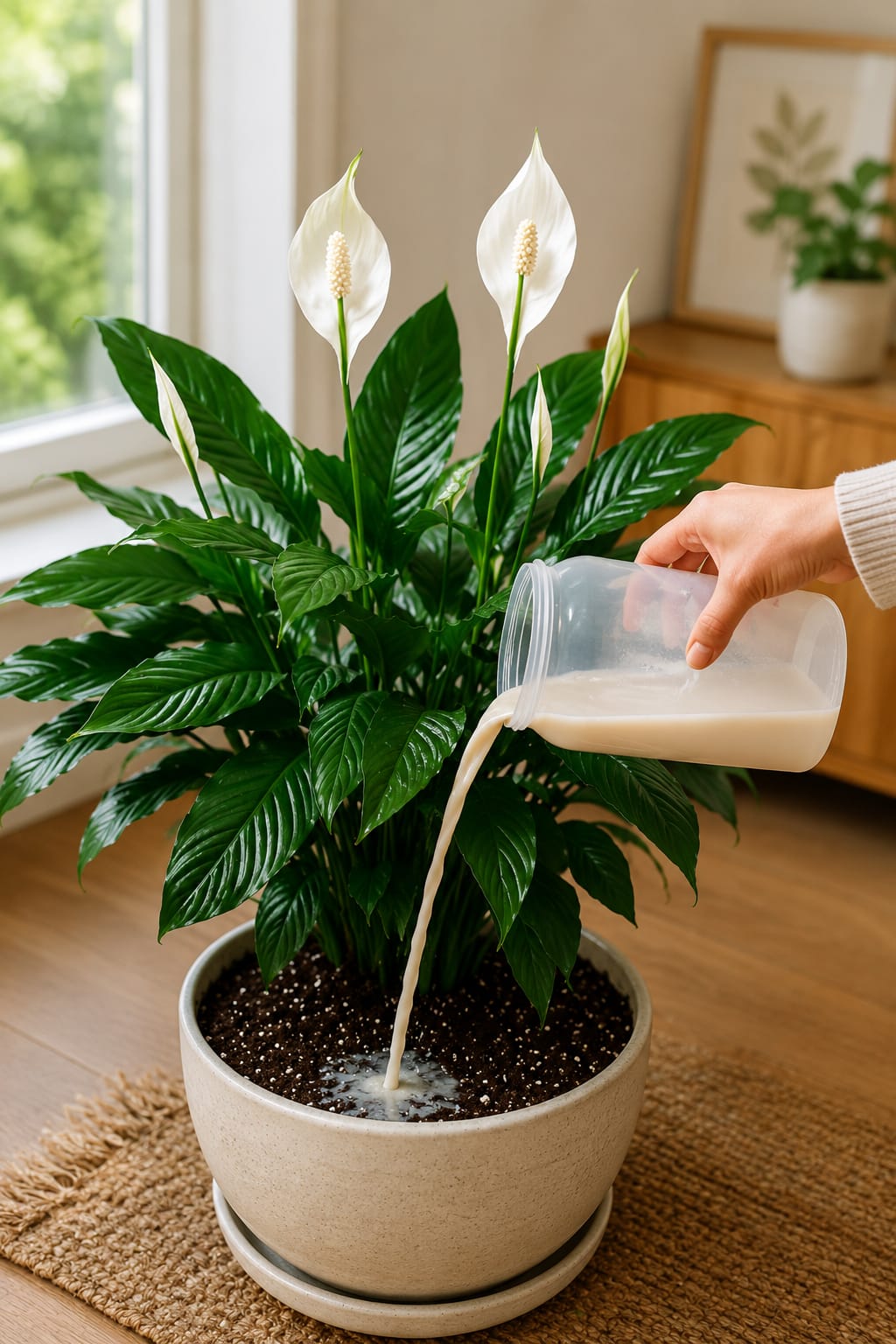
Signs Your Peace Lily Likes the Routine
A peace lily responding well to care will produce fresh green leaves, stand more upright, hold moisture evenly, and gradually look fuller. New leaves may appear lighter green at first, then darken as they mature. White blooms may appear when the plant has enough light and energy.
The soil should smell fresh and earthy. The leaves should feel firm, not limp. The plant should not remain droopy after watering. If these signs are present, the routine is working.
Remember that plant improvement is usually gradual. A peace lily may look better within days after proper watering and leaf cleaning, but blooming can take weeks or months depending on the plant’s condition.
Signs the Tonic Is Too Strong
If the soil develops a sour smell, white fuzzy mold, fungus gnats, sticky residue, or sudden yellowing leaves after using a homemade tonic, stop immediately. Flush the soil gently with plain water and allow the plant to drain well. Reduce organic mixtures indoors.
If the plant continues to decline, check the roots. Healthy roots are firm and light-colored. Rotten roots are brown, black, mushy, or smelly. Trim damaged roots and repot into fresh soil if necessary.
Natural does not always mean safe. Indoor plants need clean, controlled care. A little goes a long way.
How to Style Peace Lilies for a More Elegant Home
Peace lilies are naturally elegant because of their contrast: dark green leaves and white flowers. To make them look more luxurious, choose a simple pot that complements the plant. White ceramic pots create a clean modern look. Terracotta adds warmth. Black planters make the leaves look dramatic. Stone-textured pots give a high-end natural feel.
Place the plant where its leaves have enough space to spread. A crowded corner can make the foliage bend awkwardly. A plant stand can lift the peace lily and make it look more intentional. In a living room, place it beside a sofa, near a filtered window, or on a low table if the plant is compact. In a bedroom, it works beautifully near a bright curtain-filtered window. In an office, it softens the space and adds calm greenery.
For a polished display, keep the pot surface neat. Remove dead leaves, wipe water marks from the pot, and avoid letting old plant debris sit on the soil. A tidy plant always looks healthier and more expensive.
Peace Lily Decor Ideas for Different Rooms
In a minimalist home, use a white or matte black pot and place the peace lily against a plain wall. The clean background makes the flowers stand out. In a boho-style room, use a woven basket cover pot and pair the plant with wood, rattan, and warm textiles. In a modern apartment, place the peace lily in a tall ceramic planter near a window to create vertical elegance.
In bathrooms with bright indirect light, peace lilies can enjoy the extra humidity. However, the room still needs enough brightness. A dark bathroom is not ideal. In entryways, a large peace lily can create a welcoming, fresh look. In dining rooms, a compact peace lily can be used as a living centerpiece if it receives enough light.
The key is balance. The plant should look like part of the room design, not like an afterthought.
Common Peace Lily Problems and Fixes
Drooping leaves: Check soil moisture. If dry, water thoroughly. If wet, inspect roots for rot.
Brown tips: Improve watering consistency, use cleaner water, avoid overfertilizing, and increase humidity slightly.
No flowers: Move the plant to brighter indirect light and feed lightly during active growth.
Yellow leaves: Check for overwatering, old leaves, poor drainage, or sudden changes in temperature.
Small new growth: Refresh soil, improve light, and make sure the plant is not root-bound.
A Simple Monthly Peace Lily Care Routine
Once a month, give your peace lily a gentle refresh. Remove faded flowers and yellow leaves. Wipe the leaves with a damp cloth. Check the soil and roots if possible. Flush the pot with plain water to remove buildup. Rotate the plant slightly so it grows evenly. If the plant is actively growing and healthy, use a mild natural tonic or diluted fertilizer.
This routine keeps the plant clean, balanced, and attractive. It also helps you notice problems early before they become serious.
Final Thoughts
A simple natural peace lily tonic can be a helpful occasional addition to your plant-care routine, but it works best when the basics are already right. Peace lilies need bright indirect light, steady moisture, clean leaves, airy soil, and gentle feeding. When those needs are met, the plant can become fuller, greener, and more likely to produce elegant white blooms.
The secret is not using a strong mixture or pouring too much at once. The secret is consistency. A little extra care, used carefully, can make the peace lily look refreshed and refined. With the right pot, clean foliage, balanced watering, and soft natural light, this plant can become one of the most beautiful features in the home.
For the best result, keep the tonic mild, use it rarely, and let the plant guide you. Healthy leaves, firm stems, fresh growth, and graceful white flowers are signs that your peace lily is receiving the care it needs.