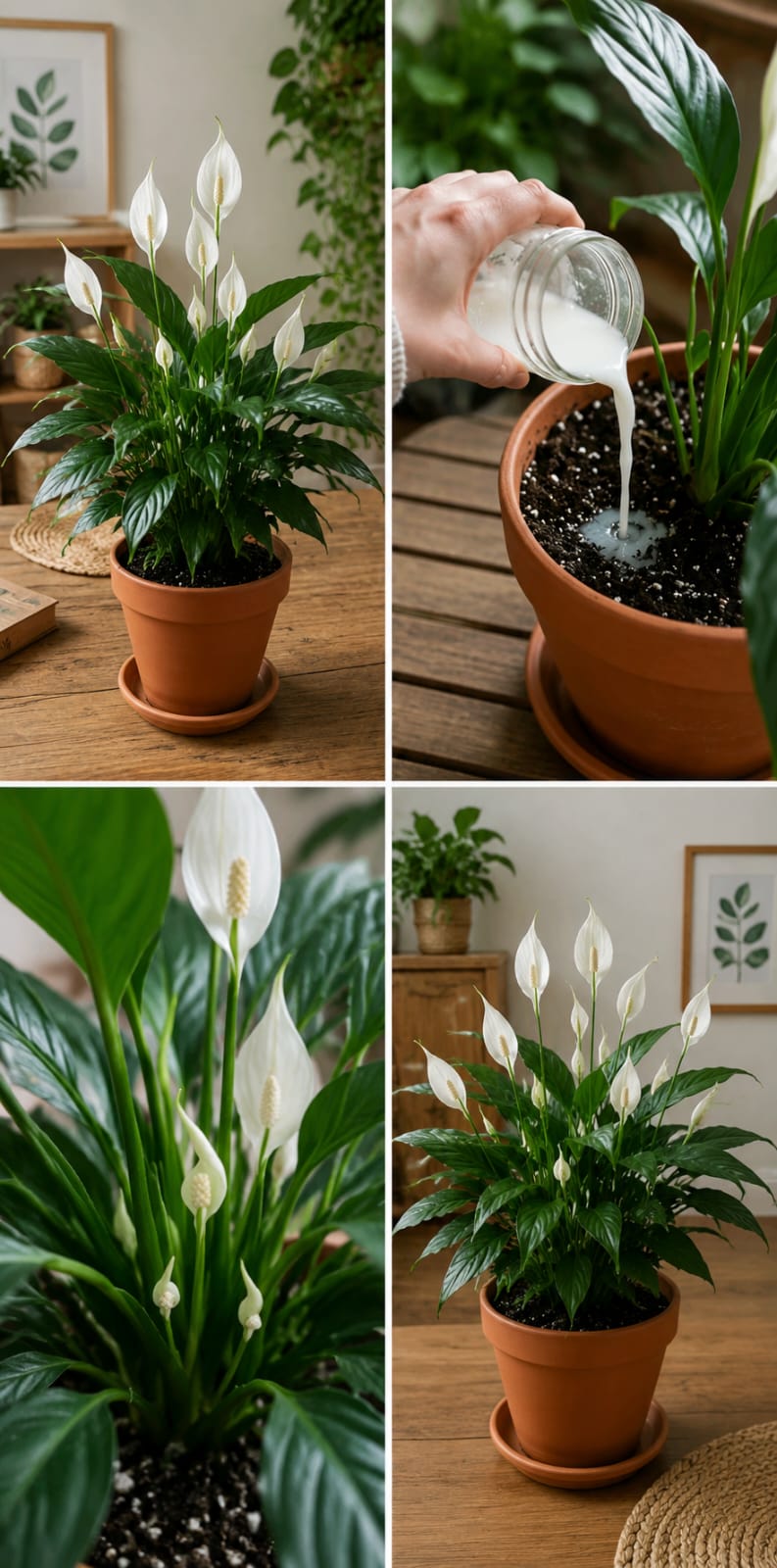
Using Fertilizer With the Milky Water Trick
Peace lilies benefit from a balanced houseplant fertilizer during active growth, but they do not need heavy feeding. Use fertilizer at half strength once a month in spring and summer. Avoid fertilizing dry soil; water first or apply fertilizer when the soil is slightly moist.
Do not use fertilizer and milky water on the same day. Give the plant space between treatments. For example, you might use regular fertilizer one month and skip the milky water, or use a very weak tonic in a month when you are not fertilizing.
If leaf tips turn brown, the plant may be receiving too much fertilizer, poor-quality water, dry air, or inconsistent watering. Flush the soil with plain water occasionally to reduce buildup.
How to Keep the Soil Fresh
Indoor soil can become compacted over time. Gently loosen the top layer with your fingers or a small wooden stick, being careful not to damage roots. This improves airflow and helps water absorb more evenly.
If the top of the soil develops white crust, it may be mineral buildup from water or fertilizer. Remove the crusty top layer and replace it with fresh mix. If mold appears, improve airflow and reduce moisture. A small amount of harmless surface mold can happen in damp organic soil, but it is a sign that conditions are too wet.
Using diluted homemade liquids makes soil freshness even more important. Always keep the pot clean and well-drained.
Decor Tips for a Luxury Peace Lily Display
A peace lily looks best when styled simply. Choose a pot that complements the plant’s natural elegance. Terracotta gives a warm organic look. White ceramic makes the white blooms feel brighter. Matte black creates a dramatic modern contrast. A woven basket can soften the display, but keep the nursery pot inside so drainage still works.
Place the plant on a small stool, wooden side table, or plant stand near filtered light. The height allows the leaves to arch naturally. Avoid crowding the plant with too many decorations. Peace lilies look most expensive when they have space around them.
For a peaceful corner, combine the plant with soft curtains, neutral cushions, natural wood, and warm light. For a fresher modern look, pair it with glass, ceramic, and a clean white wall. The plant itself becomes the main decoration.
Best Rooms for Peace Lilies
A living room with bright filtered light is ideal. A bedroom can also work if there is enough window light. Bathrooms are sometimes good because peace lilies enjoy humidity, but only if the room has natural light. A dark bathroom will not support healthy growth long term.
Home offices are another excellent spot. A peace lily adds calm and softness near a desk, especially in a simple pot. Keep it away from heating vents, air conditioners, and cold drafts. Sudden temperature changes can stress the leaves.
If the plant is near a window, rotate it every couple of weeks so it grows evenly.
How to Make the Plant Look Fuller
A fuller peace lily usually comes from strong roots and consistent light. Remove dead or damaged leaves, clean the remaining foliage, and keep the plant in a bright indirect spot. If the plant is crowded and root-bound, repotting into a slightly larger pot may help.
Do not choose a pot that is too large. Oversized pots hold too much moisture and can cause root problems. A pot one size larger is usually enough.
When repotting, divide the plant only if it is very crowded and healthy. Dividing a weak plant can stress it. A single full peace lily often looks more luxurious than several small divisions.
Common Mistakes With Homemade Plant Tonics
The biggest mistake is using too much. Many natural ingredients can become harmful when overused. Milk, rice water, potato water, banana peel water, and other kitchen mixtures can all sour or attract pests if applied too heavily.
Another mistake is using homemade tricks on plants with root rot. A stressed plant needs diagnosis first. If the roots are damaged, the solution is not more liquid. The solution is better drainage, trimming dead roots, fresh soil, and careful watering.
A third mistake is expecting instant blooms. Peace lilies bloom when they are ready and when conditions support flowering. A tonic can support care, but it cannot replace time and correct environment.
A Simple Monthly Peace Lily Routine
Once a week, check the soil moisture. Water when the top layer begins to dry. Every two weeks, wipe the leaves with a damp cloth and rotate the pot. Once a month during the growing season, feed lightly with diluted houseplant fertilizer or use a very mild natural tonic, but not both at once.
Every few months, inspect the roots if growth seems slow or the soil smells unpleasant. Refresh the top layer of soil if needed. Repot every one to two years, depending on growth.
This steady routine is what creates a full, glossy, blooming peace lily over time.
Final Thoughts
The gentle milky water trick can be an interesting natural addition to peace lily care when used carefully. The safest approach is a very diluted mixture, applied only occasionally, with excellent drainage and good airflow. It should never be used heavily, stored for long periods, or poured into already unhealthy soil.
For the best results, focus first on the essentials: bright indirect light, evenly moist but well-drained soil, clean leaves, light feeding, and stable indoor conditions. These are the true secrets behind glossy foliage and elegant white blooms.
When cared for with patience and balance, a peace lily can become one of the most beautiful plants in the home. Its white flowers bring a calm, fresh feeling, while its dark leaves add depth and richness to the room. A small natural tonic may support the routine, but consistent care is what turns the plant into a fuller, cleaner, more refined indoor display.