Room-by-Room Styling
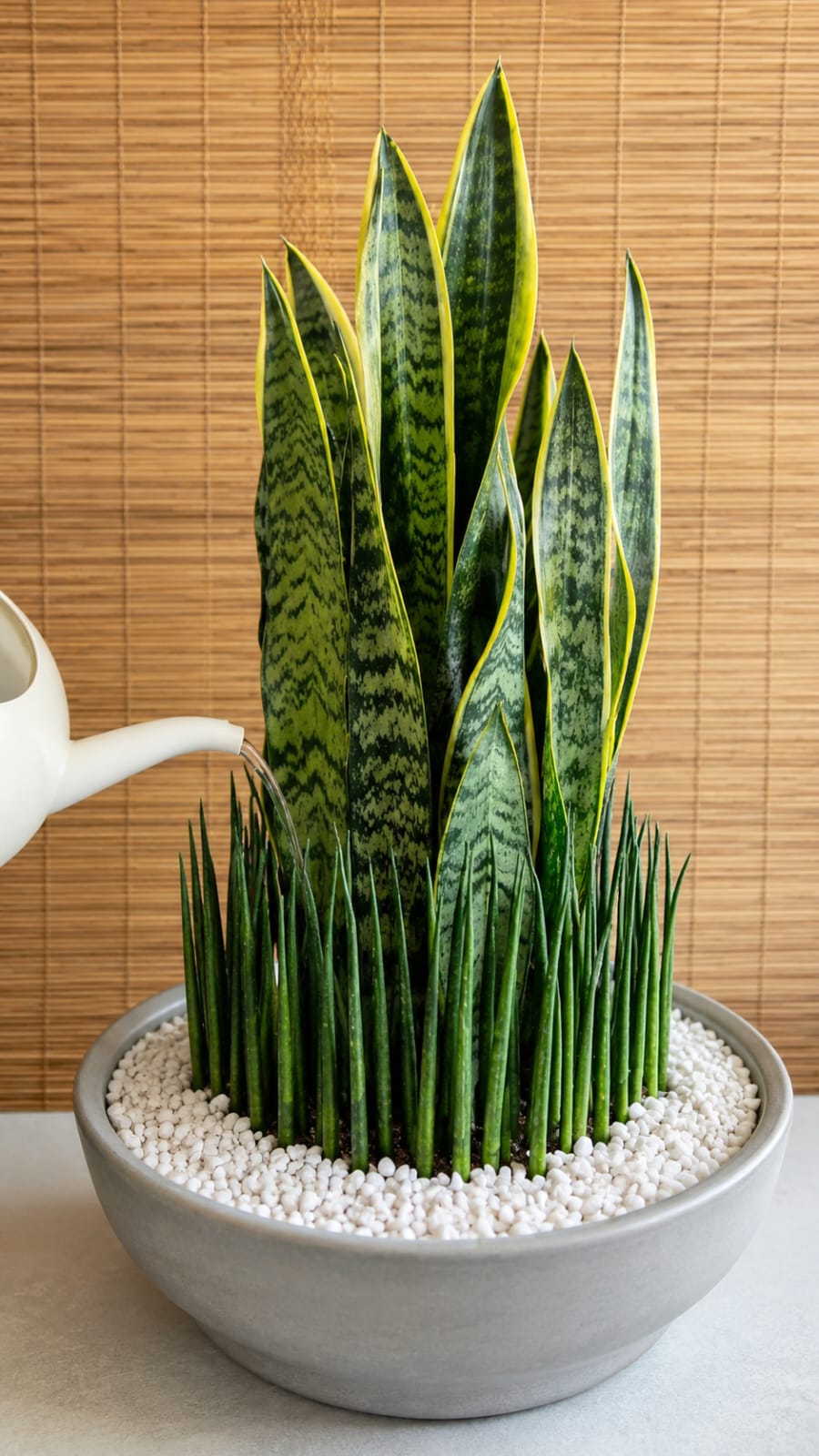
In the living room, a fuller snake plant can sit beside a sofa, near a bright window, on a plant stand, or in a styled corner. The contrast between white stones and green leaves can create a clean focal point. A wide pot can make the baby plant ring look especially dramatic.
In the bedroom, snake plant creates a calm and minimal accent. A neat surface with white stones can feel peaceful and bright. Watering should be reduced if the room has lower light. Avoid keeping the soil wet beneath the stones.
In a home office, a snake plant with pups looks professional and fresh. It can improve a desk area, shelf, or video-call background. A tidy pot surface makes the plant look more polished and less messy.
On a patio or bright balcony, snake plants can produce pups more actively if the weather is warm and the light is bright but not harsh. Outdoor pots must drain well, especially during rain. White stones can heat up in strong sun, so monitor the plant carefully.
Office and Commercial Styling
Snake plants are widely used in commercial interior landscaping because they are durable, structured, and visually clean. A fuller plant with many pups can work beautifully in reception areas, office corners, meeting rooms, hotel-style interiors, boutique displays, wellness spaces, and staged properties.
For commercial displays, white stones can make the soil surface look tidy and upscale. However, maintenance teams must still check moisture beneath the stones. Hidden wet soil is a common problem in decorative plant installations.
A premium commercial snake plant should have firm leaves, healthy pups, clean stones, no standing water, no odor, and a planter that matches the interior. The care routine should be invisible. The plant should look naturally full and healthy.
Product and Tool Guide
Helpful materials for encouraging snake plant babies include a pot with drainage holes, cactus and succulent mix, perlite, pumice, a narrow-spout watering can, room-temperature water, a moisture meter if needed, clean scissors, and diluted cactus or succulent fertilizer for active growth. A grow light can help in darker rooms.
For the white stone display, use clean decorative gravel, small white pebbles, or mineral top dressing that has been rinsed and dried. Avoid limestone-heavy materials if you are unsure how they affect your potting mix, and avoid dusty construction gravel. The top dressing should be decorative, clean, and thin.
The best toolkit is simple. Healthy soil, drainage, light, warmth, patience, and careful watering create stronger pups than heavy treatments. White stones can improve presentation, but strong roots create the babies.
Care Timeline for Baby Growth
During the first month, improve the environment. Move the plant to brighter indirect light, make sure the pot drains, check that the soil is fast-draining, and water only when dry. If using stones, keep the layer thin and leave space around the plant base.
After two to three months during active growth, the rhizomes may become more active if conditions are good. Small pointed shoots may appear near the base. Do not dig around them or cover them heavily with stones. Let them emerge naturally.
After several months, the pups may become large enough to create a fuller clump. At that point, you can keep the plant together for a lush display or divide strong pups into separate pots. The best choice depends on whether you want one dramatic plant or several new babies.
Professional Styling Note
In high-end indoor horticulture, snake plant is valued because it offers bold architectural foliage with very little visual clutter. A plant with many pups looks fuller, richer, and more established. White stones can add a clean premium finish when used lightly and maintained properly.
However, the luxury look depends on root health and restraint. The top dressing should never hide soggy soil, rotten roots, pests, or poor drainage. A premium snake plant display should look clean, dry, firm, and naturally full. The care routine should support growth without becoming messy or risky.
A beautiful snake plant display depends on healthy rhizomes, bright indirect light, fast-draining soil, drainage holes, controlled watering, and gentle feeding. Pup production is a sign of a strong plant, not a trick that should be forced aggressively.
Final Thoughts
The snake plant baby hack works best when it focuses on healthy rhizomes rather than shortcuts. Tiny babies appear when the plant has bright indirect light, dry-friendly soil, drainage holes, warm stable conditions, a slightly snug pot, controlled watering, and gentle feeding during active growth. White decorative stones can make the surface look cleaner and more elegant, but they do not create pups by themselves.
Avoid the mistake of overwatering, using an oversized wet pot, packing stones too thickly, or trying to force unlimited babies with strong liquids and heavy fertilizer. Snake plants produce pups slowly and naturally when the root system is strong. The safest strategy is to encourage growth, not stress the plant.
With clean care and the right presentation, snake plant can become a fuller and more beautiful accent for living rooms, bedrooms, home offices, patios, balconies, modern apartments, commercial interior landscaping, luxury home staging, decorative planters, and polished property presentation. Healthy rhizomes, firm upright leaves, tidy white stones, and patient care will always create stronger baby plants than risky growth hacks or aggressive plant-care shortcuts.