When to Repot
Repotting may be needed if the soil stays wet too long, smells sour, has fungus gnats, or has become compacted. It may also be needed if the plant is root-bound and drying too fast. Repotting should be done gently because snake plant rhizomes can be firm but sensitive to rot if damaged and overwatered afterward.
Choose a pot with drainage and use a fast-draining mix. Keep the plant at the same depth. Do not bury the crown deeply. After repotting, wait before watering if the soil is already slightly moist, especially if roots were disturbed.
Repotting is not needed for every crispy tip. If the plant is otherwise healthy and the soil drains well, trimming and routine correction may be enough. Repot only when the root zone needs improvement.
How to Prevent Future Crispy Tips
Prevention comes from stable care. Water only when the soil has dried well. Avoid letting the plant stay bone dry for extremely long periods in warm bright conditions. Avoid watering too frequently in low light. Keep the plant away from heat vents, cold drafts, and sudden harsh sun.
Use a fast-draining mix and a pot with drainage holes. Feed lightly during active growth if needed, and avoid strong fertilizer. Use clean water if mineral buildup is a problem. Wipe leaves regularly and trim damaged tips neatly.
Snake plants do not need complicated routines. They need consistency. A calm routine produces stronger leaves and fewer dry tips over time.
Indoor Decor Value
Snake plant has strong indoor decor value because it grows upright and adds structure without taking up much space. Its tall leaves create vertical lines that work beautifully in modern interiors, neutral rooms, bedrooms, offices, entryways, and styled plant corners.
Dry crispy tips can reduce the premium look, especially in close-up displays. Neatly trimming damaged tips and cleaning the leaves can quickly improve presentation. The plant does not need to be perfect, but it should look cared for, firm, and tidy.
A textured planter, ceramic pot, terracotta container, or dark modern planter can enhance the plant’s architectural form. The pot should match the room while still supporting drainage. A beautiful display begins with healthy roots and clean leaves.
Room-by-Room Styling
In the living room, a snake plant can sit beside a sofa, near a window, on a plant stand, or in a quiet corner with bright indirect light. Its upright leaves add height and structure. Clean trimmed tips keep the display polished.
In the bedroom, snake plant creates a calm minimal accent. Because bedrooms may have lower light, watering should be reduced. Avoid placing the plant near heaters or cold windows where tips may dry or stress.
In a home office, snake plant works well because it looks professional and low-maintenance. It can improve a desk corner, shelf, or video-call background. Wiping leaves regularly keeps the plant looking fresh and camera-ready.
In an entryway, snake plant can make a strong first impression if there is enough light. Avoid drafty doors and cold corners. A stable planter and tidy foliage create a clean welcome.
Office and Commercial Styling
Snake plants are widely used in commercial interior landscaping because they are durable, structured, and visually clean. They work well in reception areas, office corners, meeting rooms, hotel-style interiors, boutique displays, wellness spaces, and staged properties. Their upright shape creates a polished professional look.
In commercial spaces, crispy tips should be trimmed neatly because small damage can make a plant look neglected. A routine of checking soil moisture, wiping leaves, trimming brown tips, and removing damaged leaves keeps the display premium.
A professional snake plant display should have firm leaves, tidy soil, no standing water, no dust, and a planter that matches the interior. The care routine should be simple and consistent. Overwatering by multiple people is one of the biggest risks in office plants.
Product and Tool Guide
Helpful materials for fixing crispy tips include clean sharp scissors, rubbing alcohol for cleaning tools, a soft cloth, a narrow-spout watering can, a moisture meter, cactus and succulent mix, perlite, pumice, and a pot with drainage holes. A diluted cactus or succulent fertilizer can be used only during active growth if the plant is healthy.
Filtered water may help if mineral buildup is causing dry tips. A decorative saucer can protect furniture, but it should not hold standing water after watering. A grow light can help if the room is too dark for steady growth.
The best toolkit is simple. Clean tools, proper soil, controlled water, good light, and careful observation are more useful than strong homemade remedies. Snake plants thrive when care stays calm and predictable.
Care Timeline After Fixing Crispy Tips
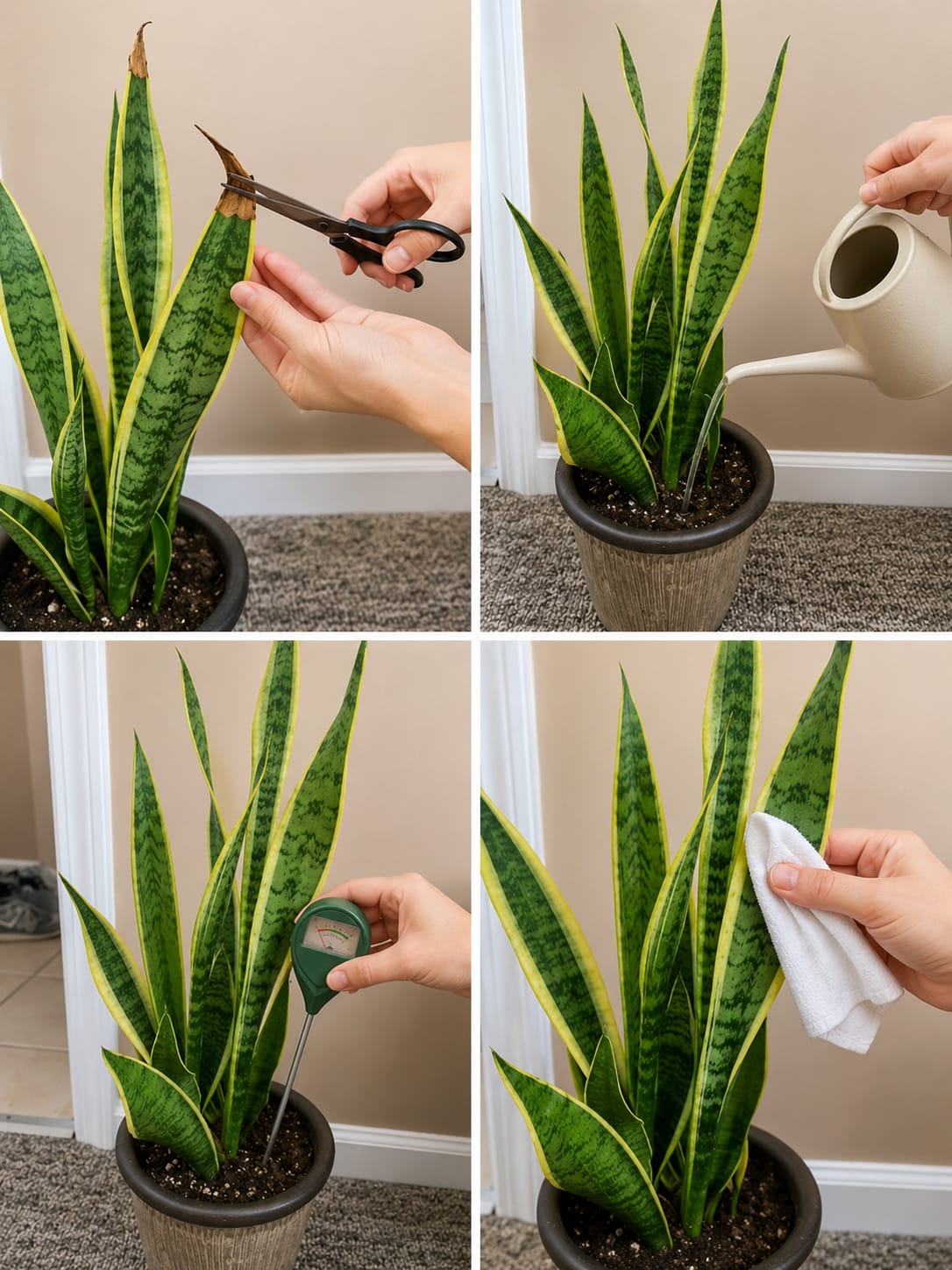
During the first 24 hours, trim only the dry damaged tips with clean scissors and check the soil moisture. Do not water unless the soil is dry enough. Wipe dust from the leaves and remove any dead debris from the soil surface.
During the first week, monitor the plant for soft bases, yellowing, more browning, or soil that stays wet too long. Adjust light and watering if needed. Keep the plant away from heat vents, cold drafts, and harsh sun.
After two to four weeks, the plant should remain firm if the routine is correct. The trimmed tips will not regrow, but they should not keep spreading quickly. After one to two months, new growth may appear if the plant has strong roots, bright indirect light, and stable care.
Professional Styling Note
In high-end indoor horticulture, snake plant is valued because it offers bold architectural foliage with very little visual clutter. It works beautifully in modern apartment decor, bedroom styling, office plant design, commercial plant displays, luxury home staging, and polished property presentation.
However, the premium look depends on clean details. Crispy tips, dusty leaves, water stains, soggy soil, or uneven trimming can reduce the effect. A refined snake plant display should have firm leaves, tidy soil, clean edges, and a pot that supports the room’s style.
A beautiful snake plant display depends on healthy rhizomes, bright indirect light, fast-draining soil, drainage holes, controlled watering, and simple grooming. Correct care creates a stronger decorative result than quick fixes or excessive treatments.
Final Thoughts
Dry and crispy snake plant tips are usually a sign of stress, but they do not always mean the plant is dying. The most common causes include inconsistent watering, long dryness, overwatering-related root stress, strong sun, heat, low humidity, fertilizer burn, mineral buildup, physical damage, or natural aging. The damaged brown tip will not turn green again, but it can be trimmed neatly.
The safest fix is to correct the care routine. Use fast-draining cactus or succulent mix, choose a pot with drainage holes, water only when the soil has dried well, avoid strong fertilizer, keep the plant in bright indirect light, wipe dust from the leaves, and protect it from drafts and heat vents. Do not overwater to compensate for dry tips because wet soil can create root rot.
With clean care and the right presentation, snake plant can remain a beautiful accent for living rooms, bedrooms, home offices, entryways, modern apartments, commercial interior landscaping, luxury home staging, decorative planters, and polished property presentation. Healthy roots, firm upright leaves, tidy trimmed tips, and controlled watering will always create a stronger display than panic watering or risky plant-care shortcuts.