🌿 Must-Know Tips to Fertilize Your Snake Plant Without Harming It
If you’ve ever wondered why your Snake Plant isn’t growing new leaves or producing pups, the answer might be simple: fertilizing mistakes.
The Snake Plant (also known as mother-in-law’s tongue) is one of the toughest houseplants — but even tough plants can suffer from overfeeding.
Here’s exactly how to fertilize your snake plant safely — without causing root rot, leaf burn, or slow decline.
🌱 1. Less Is More (Seriously!)
Snake plants are slow growers. They don’t need heavy feeding like flowering plants.
Golden Rule:
Fertilize only during active growing season:
✅ Spring
✅ Summer
❌ Avoid fall and winter
During dormancy, feeding can damage roots because the plant isn’t actively absorbing nutrients.
💧 2. Always Dilute Your Fertilizer
One of the biggest mistakes? Using fertilizer at full strength.
Snake plants prefer weak feeding.
✔ Use a balanced houseplant fertilizer (like 10-10-10 or 20-20-20).
✔ Dilute it to half strength or even quarter strength.
Too much fertilizer causes:
Brown leaf tips
Yellowing leaves
Salt buildup in soil
Root burn
When in doubt — dilute more.
🪴 3. Use Well-Draining Soil First
Fertilizer + soggy soil = disaster.
Make sure your snake plant is planted in:
Cactus or succulent mix
Soil mixed with perlite or sand
A pot with drainage holes
Healthy roots absorb nutrients properly. Rotting roots cannot.
🌊 4. Never Fertilize Dry Soil
This is critical.
Always water lightly before applying fertilizer.
Applying fertilizer to completely dry soil can shock and burn roots.
Best method:
Lightly water the plant
Wait a few minutes
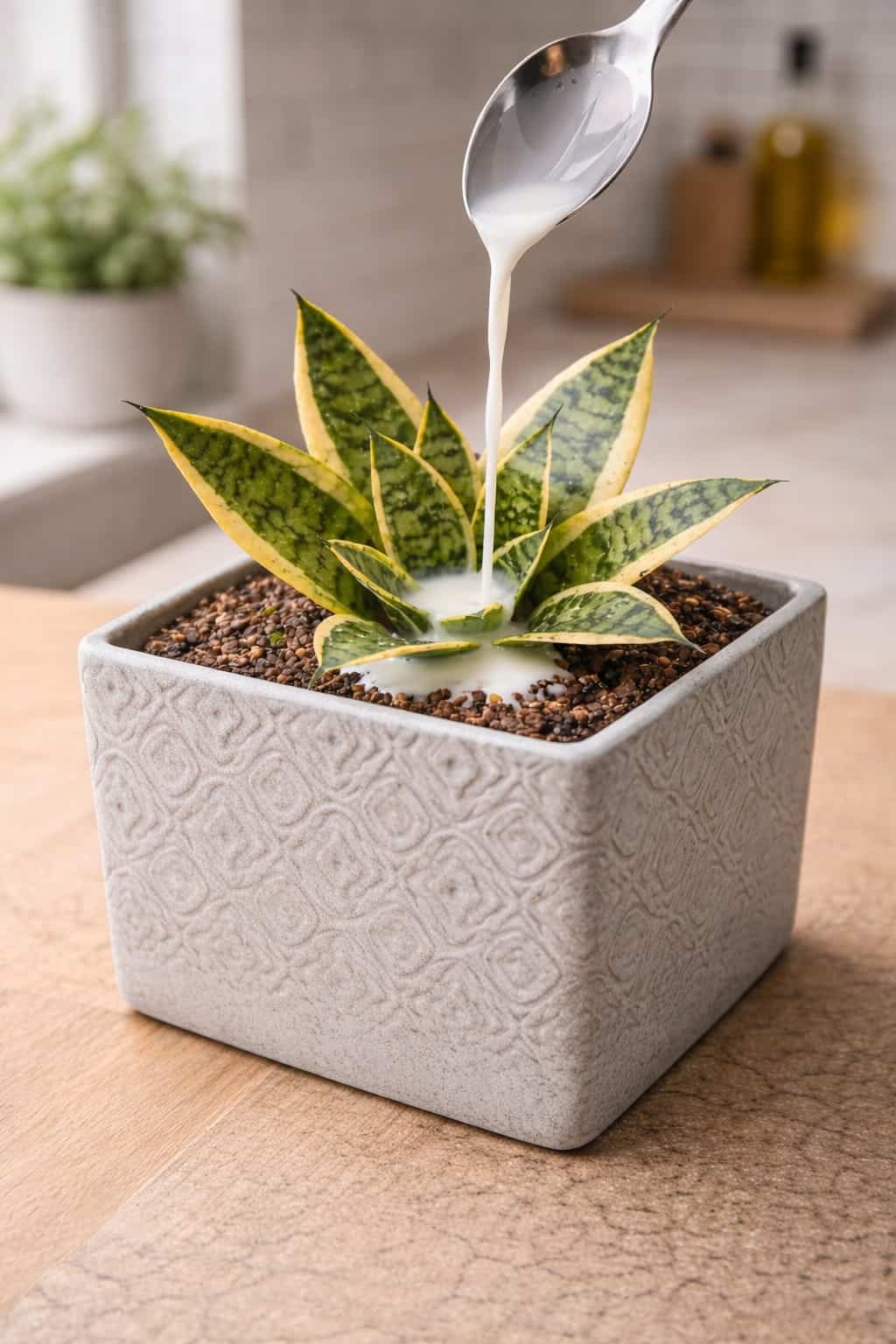
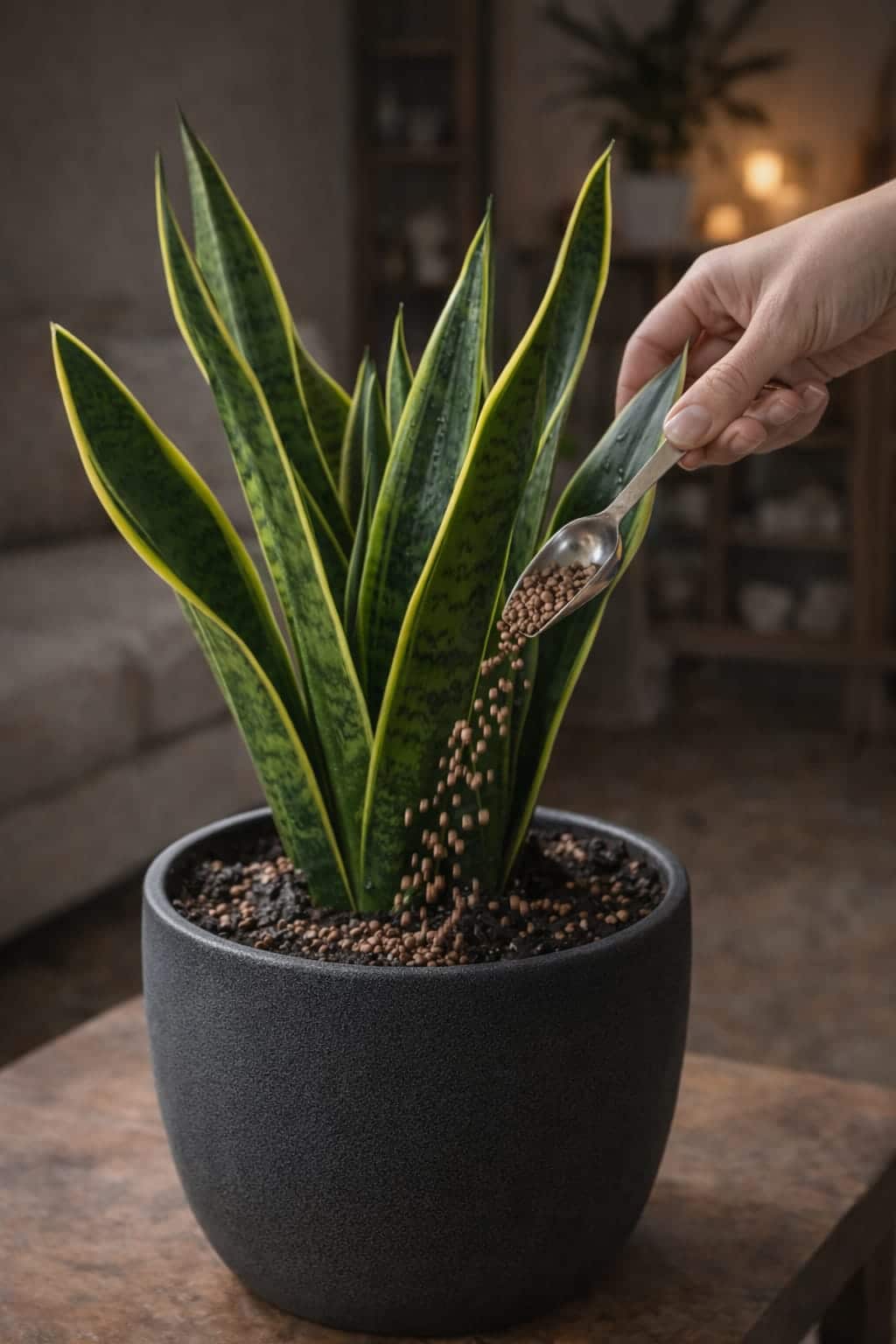
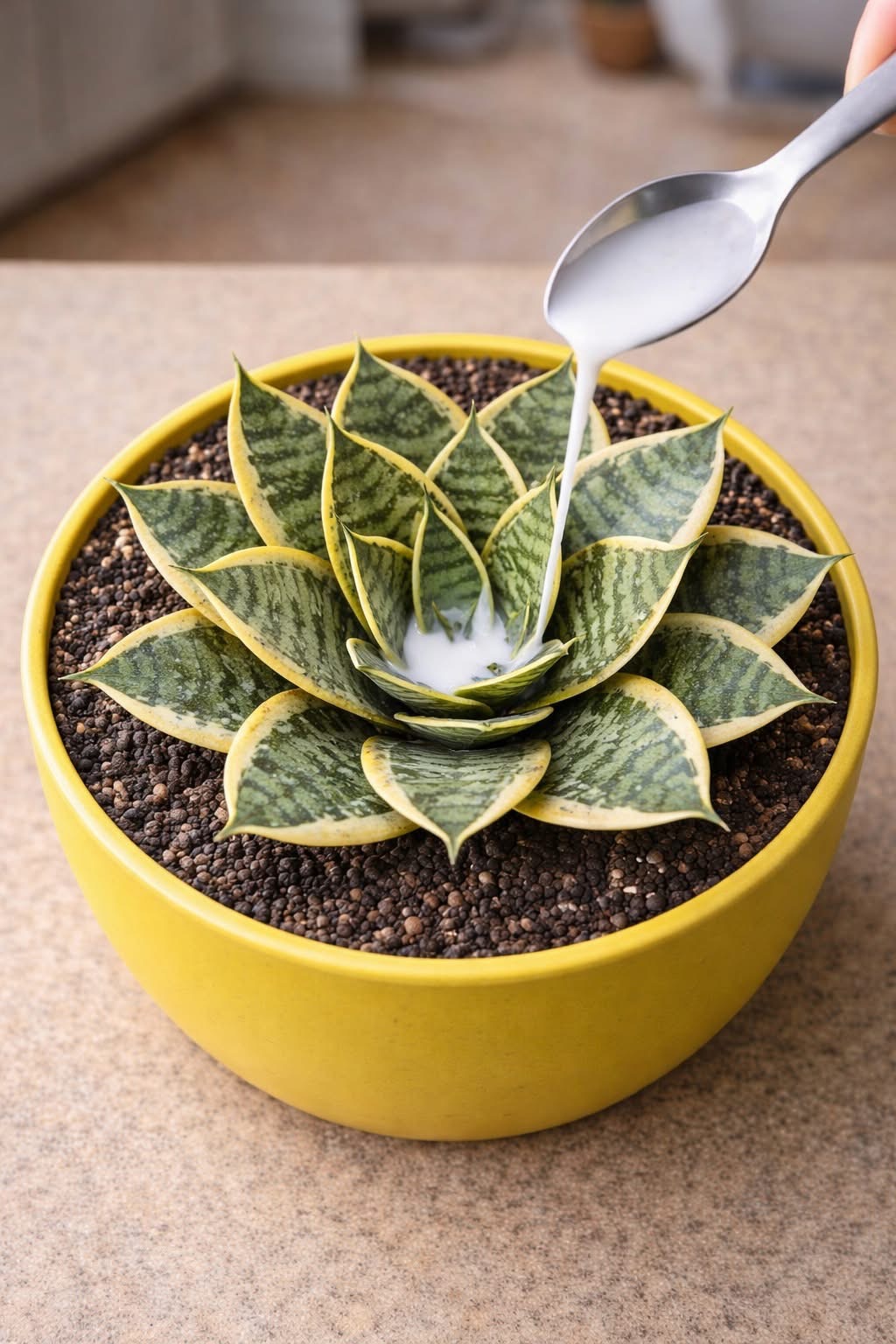
Apply diluted fertilizer
🧂 5. Flush the Soil Occasionally
Over time, fertilizer salts build up.
Every 2–3 months:
Water deeply until water runs out the drainage holes
Let excess drain completely
This prevents salt toxicity and keeps roots healthy.
🌿 6. Natural Alternatives (Gentle Options)
If you prefer organic methods, try:
Banana peel water (very diluted)
Compost tea (weak solution)
Worm castings (light top dressing)
Avoid heavy kitchen scraps directly in soil — they can cause fungus or odor.
⚠️ Signs You’re Over-Fertilizing
Watch for:
Brown tips
Leaf curling
White crust on soil surface
Mushy roots
If this happens:
Stop fertilizing immediately
Flush soil thoroughly
Repot if necessary
🌟 Ideal Fertilizing Schedule
For most homes:
Once every 4–6 weeks during spring and summer is enough.
That’s it.
No weekly feeding. No heavy doses.
💚 Final Tip
A healthy snake plant depends more on:
Proper light
Correct watering
Good drainage
Fertilizer is just a small boost — not the main ingredient.
Treat it gently, feed it lightly, and your snake plant will reward you with stronger leaves and maybe even new pups 🌿✨
If you’d like, I can also turn this into:
Just tell me 👇
-

The Low Cost Snake Plant Boost That’s Trending in Modern Homes – The Complete Guide to Using Diluted Milk Safely
Discover the low‑cost “milky liquid” boost trending for snake plants. Learn how to use diluted milk safely, avoid common mistakes, … Read more
-
The Best Way to Grow a Snake Plant in a Spiral or Circular Shape – A Complete Step‑by‑Step Guide
Learn how to train your snake plant into a stunning spiral or circular shape. Step‑by‑step guide from choosing the right … Read more
-
How To Keep Anthuriums Happy And Flowering All Year Round – The Complete Care Guide
Want your Anthurium to bloom all year? Learn the secrets – proper watering, bright indirect light, humidity, fertilizing, and pruning. … Read more