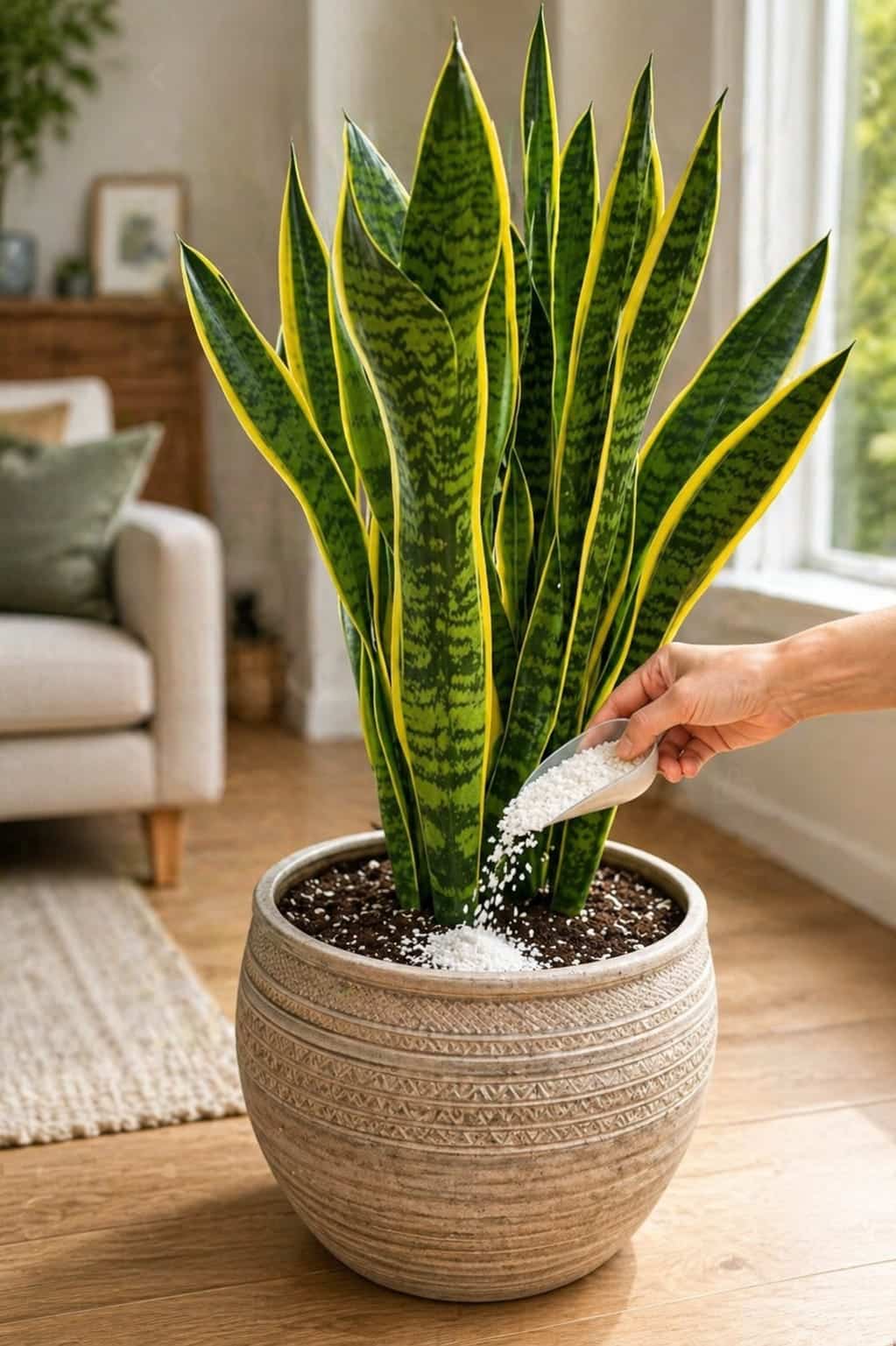
What Results Can You Expect from the 2-Ingredient Routine?
With rice water and banana peel water, the most realistic results are improved care consistency, slightly stronger growth, and a healthier-looking plant over time. You may notice firmer leaves, deeper color, or new pups during the active season. If the plant is mature and the light is strong, flowering may eventually happen.
Do not expect blooms overnight. Snake plants are slow. A natural routine may take weeks or months to show visible changes. The plant must build energy first.
The “bloom like never before” effect comes when all parts of the routine work together: bright light, dry-down watering, healthy roots, snug pot, and occasional gentle nutrition. The two ingredients help support that process, but the full care routine creates the real transformation.
Common Mistakes with Rice Water and Banana Peel Water
Using Them Too Often
More is not better. Snake plants do not want constant organic feeding. Use homemade tonics occasionally.
Pouring on Wet Soil
If the soil is already damp, wait. Adding more liquid can cause root rot.
Leaving Rice or Banana Pieces in the Pot
Solid pieces can mold, rot, and attract pests. Always strain homemade liquids.
Using Salted or Cooked Rice Water
Never use rice water that contains salt, oil, or seasoning. Plain uncooked rice rinse water is safest.
Ignoring Light
No homemade ingredient can replace bright light. If the plant is in deep shade, blooms are unlikely.
Using a Pot Without Drainage
Drainage is essential. Snake plants cannot sit in trapped water.
What If Mold Appears?
If mold appears on the soil after using rice water or banana peel water, stop using homemade tonics immediately. Mold usually means there is too much organic residue, too much moisture, not enough airflow, or poor drainage.
Remove the moldy top layer if possible. Let the soil dry properly. Increase airflow around the plant. Water less often. If the problem continues, repot the snake plant into fresh, fast-draining soil.
Mold is a sign that the routine is too heavy. Use weaker mixtures and apply less often in the future.
What If Fungus Gnats Appear?
Fungus gnats are tiny flying insects that often appear when soil stays moist and organic material is present. If they show up after using banana peel water or rice water, reduce watering and stop organic supplements for a while.
Let the soil dry more thoroughly. Use sticky traps to catch adult gnats. If needed, replace the top layer of soil. In severe cases, repot into fresh gritty mix.
Snake plants should not be kept in constantly damp soil. Fungus gnats are usually a sign that the soil environment needs to be drier and cleaner.
Can You Use These Ingredients on Young Snake Plants?
You can use very diluted rice water or banana peel water on young snake plants, but it is usually better to keep care simple. Young plants need light, drainage, and correct watering more than they need homemade supplements.
If you do try the routine on a young plant, use half-strength mixtures and apply rarely. Young roots can be more sensitive to buildup.
For blooming, remember that young snake plants are unlikely to flower. They need maturity first. Focus on growing a strong plant now, and blooms may come later.
Can You Use These Ingredients in Winter?
In most homes, winter is not the best time to use rice water or banana peel water. Light levels are lower, temperatures may be cooler, and the soil dries more slowly. Organic liquids can linger in the pot and cause problems.
During winter, water less often and avoid feeding unless the plant is actively growing under strong light. Save the two-ingredient routine for spring and summer, when the plant can use the extra support.
If your home stays warm and bright year-round, you can use the routine sparingly, but still watch the soil carefully.
Should You Use Fertilizer Too?
Rice water and banana peel water are not complete fertilizers. They may provide gentle support, but they do not contain a predictable balance of nutrients. A diluted cactus or houseplant fertilizer can still be useful during the growing season.
Use fertilizer lightly. Snake plants are not heavy feeders. Once every one to two months at half strength during spring and summer is usually enough.
Do not use fertilizer, rice water, and banana peel water all at once. Too much feeding can cause buildup and stress. Keep the routine simple and spaced out.
A Simple Monthly Bloom-Boosting Schedule
Here is a gentle schedule for a mature snake plant in bright light during spring and summer:
- Water only when the soil is dry.
- Use plain water for most waterings.
- Use diluted rice water once a month at most.
- Use diluted banana peel water the following month, not on the same day as rice water.
- Use diluted cactus fertilizer occasionally if the plant is actively growing.
- Flush the soil with plain water every few months to prevent buildup.
This schedule gives the plant support without overwhelming it. Always adjust based on how quickly your soil dries and how your plant responds.
How to Tell If the Routine Is Working
A happy snake plant will have firm leaves, strong color, and stable upright growth. You may see new pups emerging from the soil during active growth. The leaves may look fuller and healthier over time.
If the plant is mature and receives enough light, you may eventually see a flower stalk. This is the most exciting sign, but it may take time. Do not keep adding more ingredients in an attempt to force it.
If the plant develops yellow leaves, mushy bases, brown tips, mold, or gnats, stop the routine and return to basic care. The plant may be receiving too much moisture or organic material.
What to Do If Your Snake Plant Still Does Not Bloom
If your snake plant still does not bloom, do not panic. Many healthy snake plants never flower indoors. The plant may not be mature enough, the light may still be too low, or the environment may not trigger blooming.
Try moving it to brighter indirect light. Make sure it is in a snug pot with fast-draining soil. Let it dry between waterings. Avoid overfeeding. Give it time.
Even without flowers, a snake plant can be beautiful and valuable. Its upright leaves and strong shape are the main reason people love it. Blooms are a bonus, not the only measure of success.
Frequently Asked Questions
What are the two ingredients for snake plant blooms?
The two ingredients are diluted rice water and diluted banana peel water. They can be used occasionally as gentle natural supplements during the growing season.
Can rice make a snake plant bloom?
Rice water may support healthy growth, but it does not directly force blooms. Bright light, maturity, dry-down watering, and healthy roots are more important.
Can I sprinkle rice directly on snake plant soil?
It is better to use rice water instead. Dry rice grains can swell, mold, or attract pests if left in the pot.
How often should I use banana peel water?
Use diluted banana peel water once every four to six weeks during active growth. Do not use it every time you water.
Can I mix rice water and banana peel water together?
It is better to use them separately and occasionally. Mixing too many organic liquids can overload the soil.
Why is my snake plant not blooming?
The most common reasons are low light, young plant age, too much water, poor drainage, or lack of maturity. Snake plants bloom only when conditions are right.
Is banana peel water a complete fertilizer?
No. It is a mild homemade supplement, not a complete fertilizer. A diluted balanced fertilizer may still be useful during active growth.
Can these ingredients damage my snake plant?
Yes, if used too often or too strongly. Too much organic liquid can cause mold, gnats, sour soil, and root stress. Always dilute and use sparingly.
Should I use these ingredients in winter?
Usually no. Winter growth is slower, and soil stays wet longer. It is safer to use these ingredients in spring and summer.
What is the fastest way to encourage snake plant blooms?
Give the plant brighter indirect light, keep it slightly snug in its pot, let the soil dry between waterings, and provide gentle feeding during the growing season.
Final Thoughts
Snake plant blooms are rare enough indoors that they feel special every time they appear. If your plant has never bloomed, the idea of using two simple kitchen ingredients can be exciting. Rice water and banana peel water are both popular natural options because they are easy to make, gentle when diluted, and satisfying to use.
But the real secret is balance. These ingredients will not work if the snake plant is sitting in a dark corner, drowning in wet soil, or growing in a pot without drainage. They are helpers, not miracles. The plant still needs bright indirect light, fast-draining soil, careful watering, warmth, and maturity.
Use rice water as a light monthly tonic. Use banana peel water occasionally as a mild natural supplement. Strain everything, dilute everything, and never let the plant sit in leftover liquid. Keep the soil clean and airy, and watch how your snake plant responds.
With patience, your snake plant may become stronger, fuller, and more active. It may produce new pups, richer leaves, and, if the conditions are just right, that surprising flower stalk you have been waiting for. And when those delicate blooms finally appear, the result will feel truly rewarding.
Sometimes the most impressive plant results come from simple habits repeated carefully. These two surprising ingredients can be part of that routine, helping your snake plant grow with strength, beauty, and the possibility of blooms like never before.