🌿 Must-Know Tips to Fertilize Your Snake Plant Without Harming It
If you’ve ever wondered why your Snake Plant isn’t growing new leaves or producing pups, the answer might be simple: fertilizing mistakes.
The Snake Plant (also known as mother-in-law’s tongue) is one of the toughest houseplants — but even tough plants can suffer from overfeeding.
Here’s exactly how to fertilize your snake plant safely — without causing root rot, leaf burn, or slow decline.
🌱 1. Less Is More (Seriously!)
Snake plants are slow growers. They don’t need heavy feeding like flowering plants.
Golden Rule:
Fertilize only during active growing season:
✅ Spring
✅ Summer
❌ Avoid fall and winter
During dormancy, feeding can damage roots because the plant isn’t actively absorbing nutrients.
💧 2. Always Dilute Your Fertilizer
One of the biggest mistakes? Using fertilizer at full strength.
Snake plants prefer weak feeding.
✔ Use a balanced houseplant fertilizer (like 10-10-10 or 20-20-20).
✔ Dilute it to half strength or even quarter strength.
Too much fertilizer causes:
Brown leaf tips
Yellowing leaves
Salt buildup in soil
Root burn
When in doubt — dilute more.
🪴 3. Use Well-Draining Soil First
Fertilizer + soggy soil = disaster.
Make sure your snake plant is planted in:
Cactus or succulent mix
Soil mixed with perlite or sand
A pot with drainage holes
Healthy roots absorb nutrients properly. Rotting roots cannot.
🌊 4. Never Fertilize Dry Soil
This is critical.
Always water lightly before applying fertilizer.
Applying fertilizer to completely dry soil can shock and burn roots.
Best method:
Lightly water the plant
Wait a few minutes
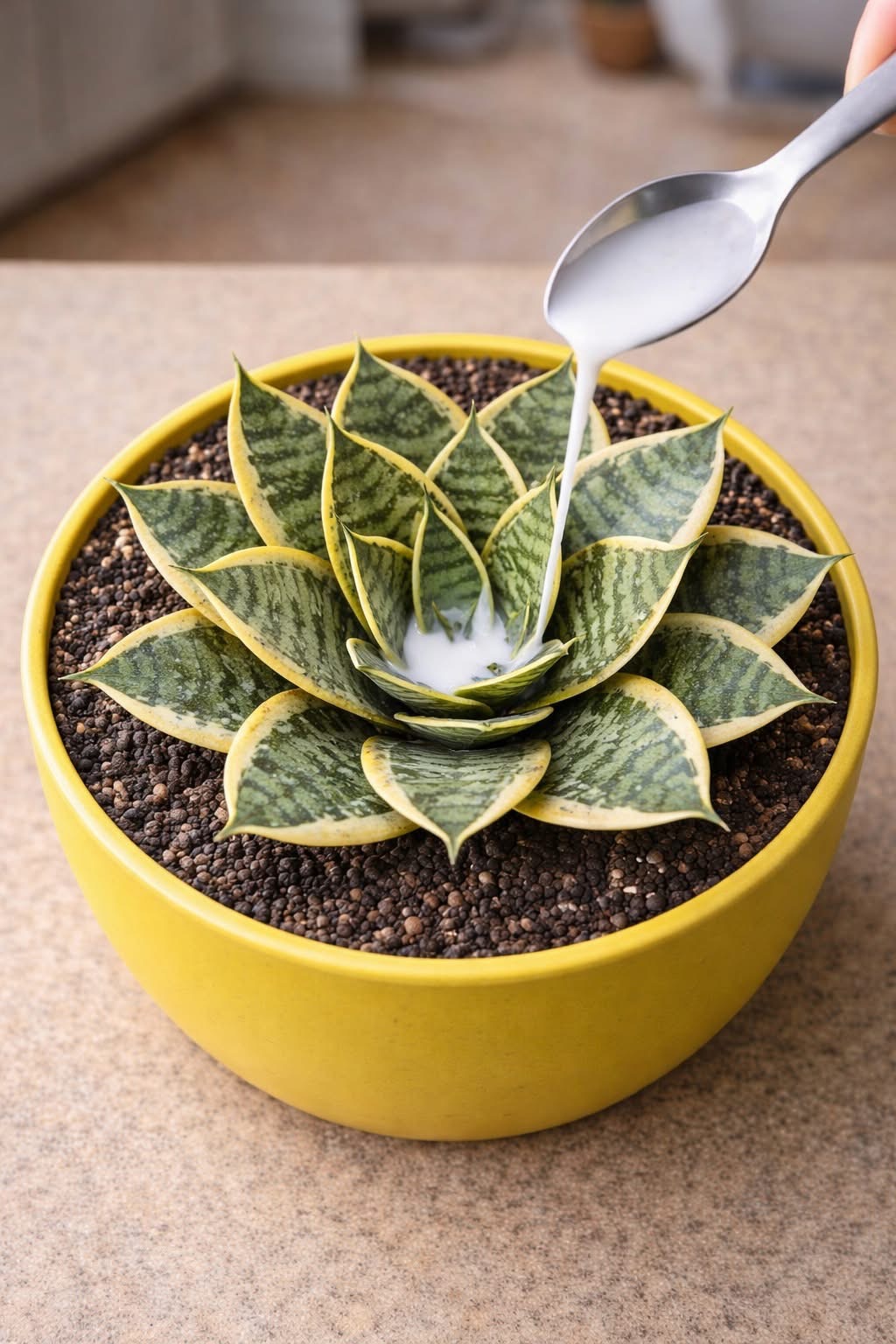
Apply diluted fertilizer
🧂 5. Flush the Soil Occasionally
Over time, fertilizer salts build up.
Every 2–3 months:
Water deeply until water runs out the drainage holes
Let excess drain completely
This prevents salt toxicity and keeps roots healthy.
🌿 6. Natural Alternatives (Gentle Options)
If you prefer organic methods, try:
Banana peel water (very diluted)
Compost tea (weak solution)
Worm castings (light top dressing)
Avoid heavy kitchen scraps directly in soil — they can cause fungus or odor.
⚠️ Signs You’re Over-Fertilizing
Watch for:
Brown tips
Leaf curling
White crust on soil surface
Mushy roots
If this happens:
Stop fertilizing immediately
Flush soil thoroughly
Repot if necessary
🌟 Ideal Fertilizing Schedule
For most homes:
Once every 4–6 weeks during spring and summer is enough.
That’s it.
No weekly feeding. No heavy doses.
💚 Final Tip
A healthy snake plant depends more on:
Proper light
Correct watering
Good drainage
Fertilizer is just a small boost — not the main ingredient.
Treat it gently, feed it lightly, and your snake plant will reward you with stronger leaves and maybe even new pups 🌿✨
If you’d like, I can also turn this into:
Just tell me 👇
-

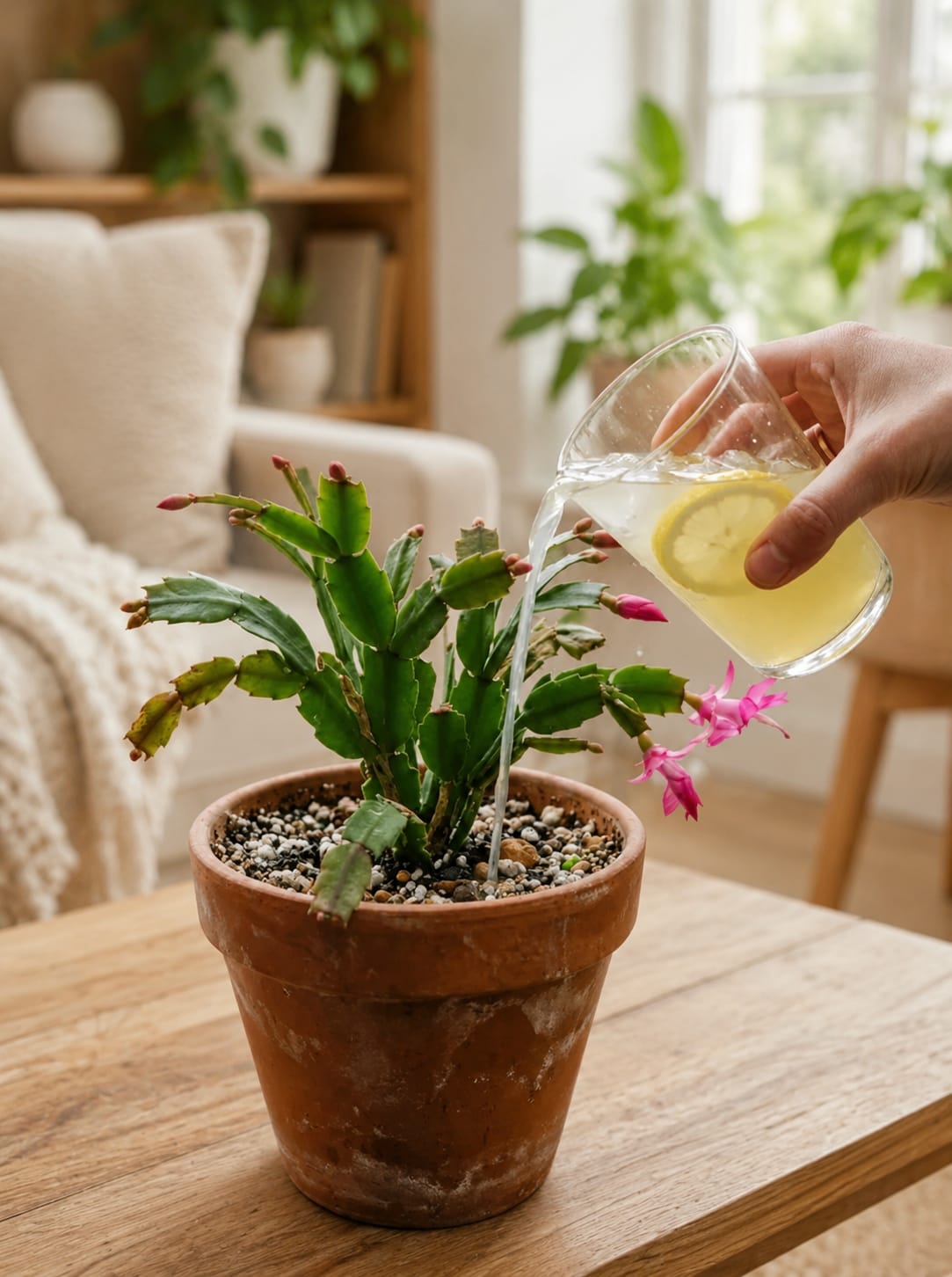
Christmas Cactus Care Guide: How to Use Lemon Water Safely Without Damaging Roots, Buds, or Beautiful Winter Blooms
Christmas cactus is one of the most charming flowering houseplants because it brings color at a time when many other indoor plants are quiet. Its flat green segments, arching shape, and bright flowers make it perfect for windowsills, shelves, hanging baskets, and cozy rooms. When the plant is healthy, the tips can fill with buds…
-

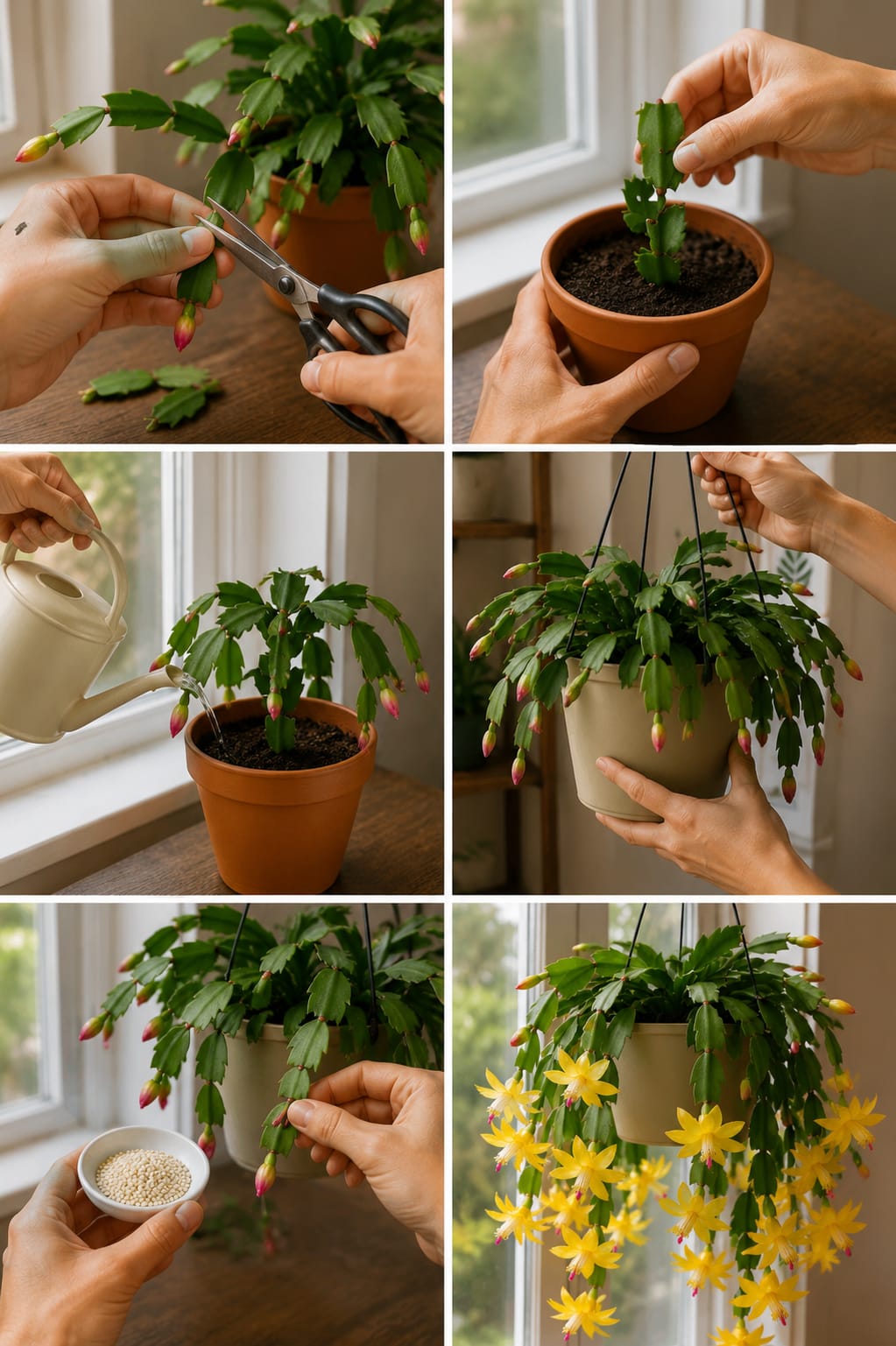
Christmas Cactus Care Guide: How to Grow a Full Hanging Basket With Healthy Segments, Strong Buds, and Bright Flowers
Christmas cactus is one of the most loved flowering houseplants because it can turn a quiet indoor corner into a bright display of color. Its soft green segmented stems hang gracefully over the edge of a pot, and when the plant is happy, the tips fill with buds that open into beautiful flowers. Many people…
-

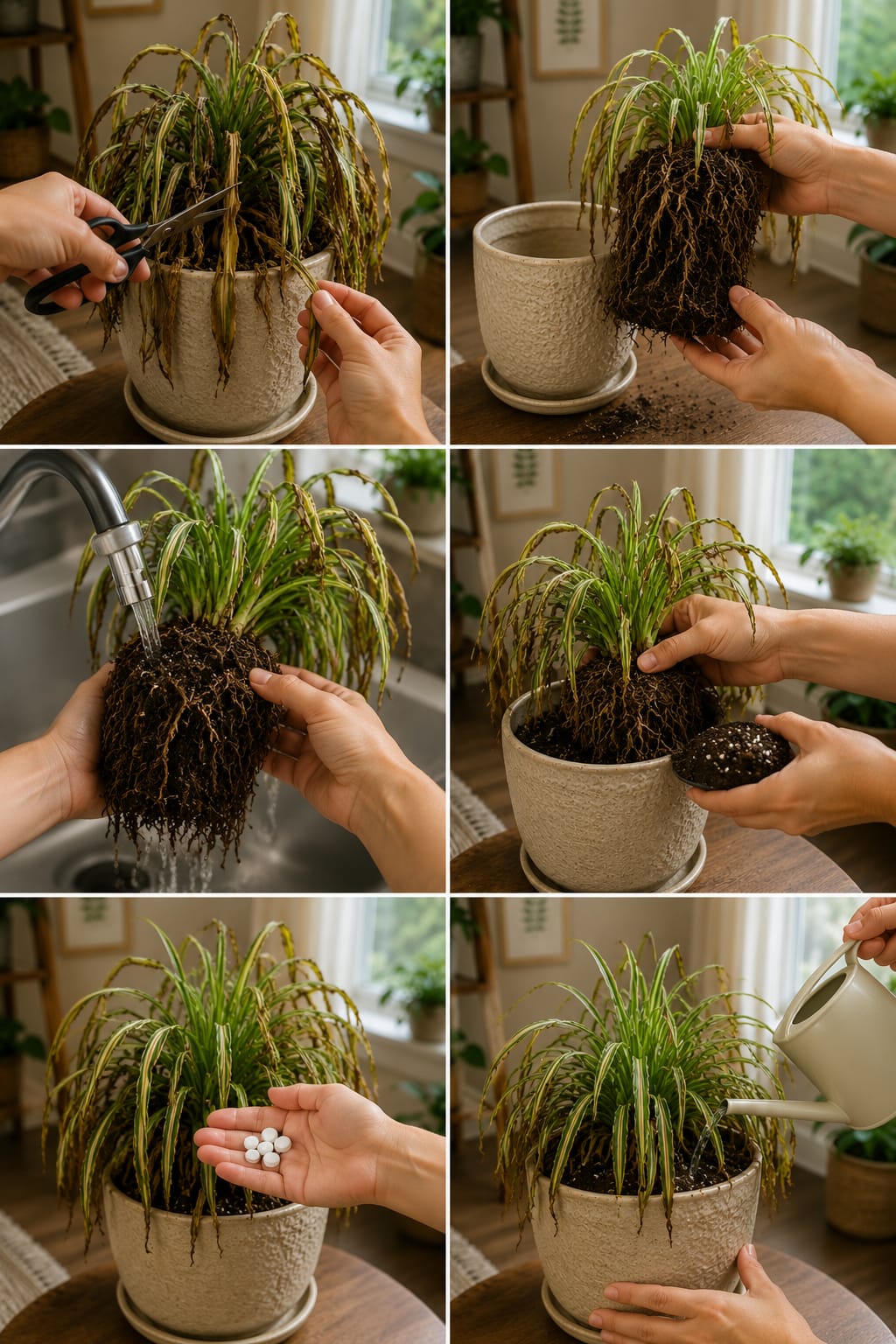
Spider Plant Rescue Guide: How to Revive a Tired Spider Plant With Pruning, Root Care, Fresh Soil, and Safe Watering
Spider plants are usually known as easy, forgiving, and fast-growing houseplants, but even this strong plant can begin to look tired when its roots, soil, water, and light are out of balance. The image shows a struggling spider plant with drooping leaves, brown tips, dry edges, and weak growth being rescued step by step. The…