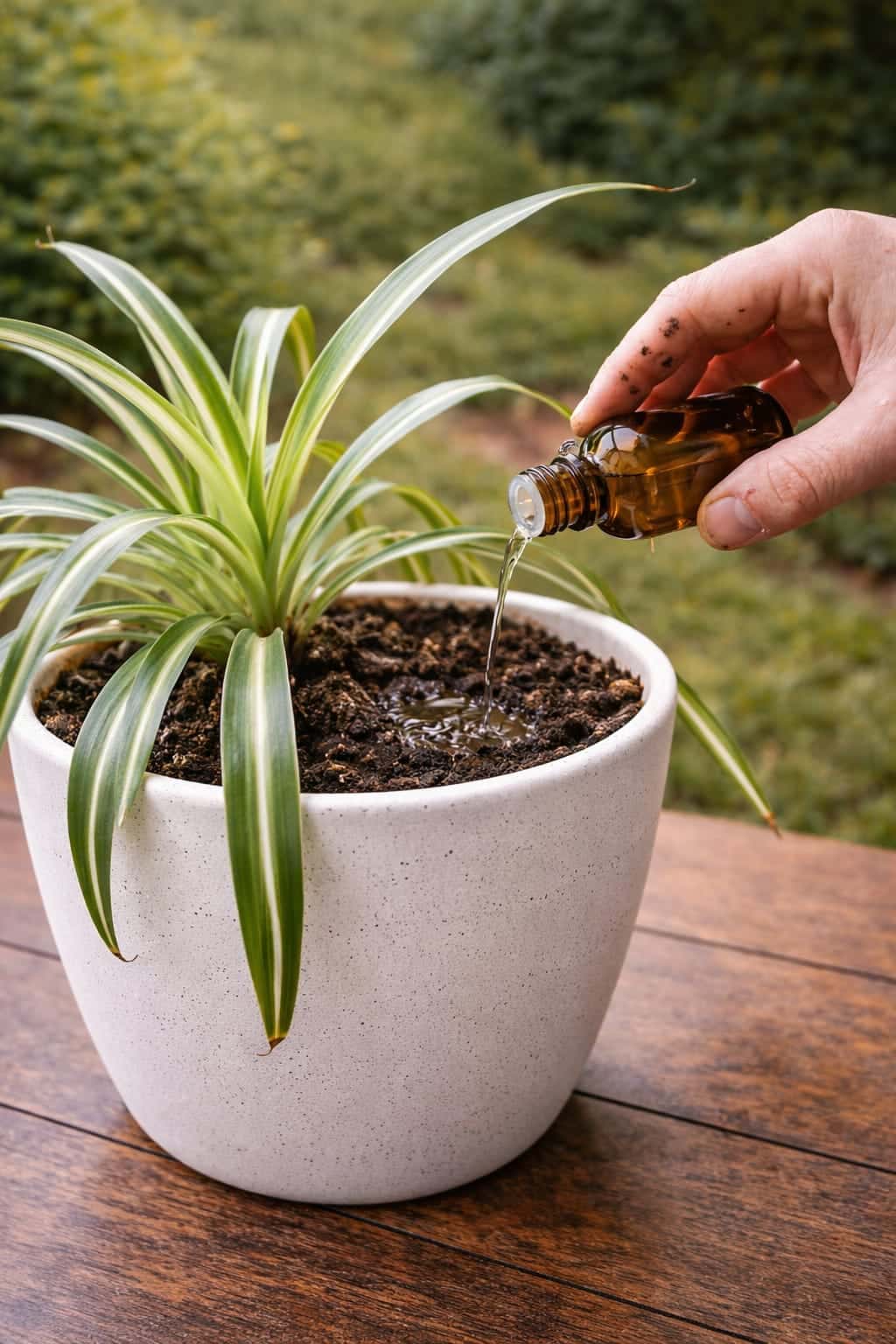
Want huge, lush spider plants with cascading babies? Discover the top 10 secrets – from lighting and watering to coffee grounds, pruning, and propagation. Transform your spider plant today.
Let’s be honest: spider plants (Chlorophytum comosum) are one of the easiest and most rewarding houseplants to grow. Their cascading green and white‑striped leaves and adorable “babies” (spiderettes) make them a favorite for beginners and seasoned plant lovers alike. But there’s a difference between a spider plant that simply survives and one that truly thrives – sprawling, vibrant, and covered in offsets.
Over the years, I’ve experimented with different techniques to grow my spider plants into lush, sprawling masterpieces. Let me share with you the tricks I’ve learned to ensure your spider plants thrive and grow to their full potential.
- Pick the Right Spot
Spider plants are remarkably adaptable, but if you want them to grow big and healthy, proper lighting is key. They thrive in bright, indirect sunlight.
· Too much direct sun – scorches leaves, causes brown tips.
· Too little light – slow growth, loss of variegation.
I keep my spider plants near east‑facing windows where they get gentle morning sunlight. If you don’t have a bright spot, don’t worry – they also do well under fluorescent lighting, which makes them great for offices.
Pro tip: If your spider plant’s leaves are pale or the white stripes are fading, move it closer to a light source.
- Sip Some Caffeine
Coffee grounds can act as a mild fertilizer, providing nitrogen and other nutrients that boost leaf growth. The grounds also improve soil drainage and deter pests like fungus gnats.
How to Use Coffee Grounds
· Let used coffee grounds dry out completely.
· Sprinkle a thin layer over the soil.
· Alternatively, mix used grounds with water to create a gentle “coffee tea” and pour it onto the soil every few weeks.
Pro tip: Don’t overdo it – a light dusting once a month is plenty. Too many grounds can acidify the soil.
- Choose the Perfect Pot and Soil
Spider plants like a little room to spread out, but not too much. A pot that is too large can lead to waterlogged soil and root rot.
· Always choose a pot with good drainage holes – this is non‑negotiable.
· Soil: A well‑draining mix works best. I usually combine regular potting soil with a handful of perlite or sand to improve aeration.
Pro tip: Terracotta pots are excellent for spider plants – they wick away excess moisture, preventing overwatering.
- Water Wisely
One of the biggest mistakes people make with spider plants is overwatering. These plants store water in their fleshy roots, so they don’t need to be watered too frequently.
· When to water: Let the top inch of soil dry out before giving your plant a good soak.
· Frequency: During the growing season (spring and summer), about once a week. In cooler months, cut back to every two to three weeks.
· Signs of overwatering: Yellowing leaves, mushy roots, foul smell.
· Signs of underwatering: Brown tips, drooping leaves.
Pro tip: When in doubt, wait another day. Spider plants tolerate underwatering far better than overwatering.
- Feed Them Right
To grow big, spider plants need the right nutrients. I feed mine with a balanced liquid houseplant fertilizer diluted to half strength every two weeks during the growing season.
Continue to Page 2
Continue to page 2 for more details about this article and the key points many readers miss on the first page.