Want your peace lily to bloom more and grow lush, glossy leaves? Discover the secret milk fertilizer trick, optimal light, watering, repotting, and pruning tips that sellers don’t share. Transform your plant today.
Let’s be honest: peace lilies (Spathiphyllum) are a favorite among houseplant enthusiasts – and for good reason. Their glossy green leaves and elegant white blooms instantly brighten any room. Plus, NASA’s famous Clean Air Study showed that these plants are excellent at removing toxins like benzene and formaldehyde from indoor air. They’re beautiful, functional, and relatively easy to care for.
However, if you’re not seeing those signature white blooms or if your plant looks a little lackluster, it might need a little extra love. Over the years, I’ve discovered a few tricks that transformed my peace lily into a lush, flower‑producing masterpiece. And here’s the kicker: most sellers don’t share these tips. They want you to buy a new plant when yours struggles – but with the right care, your peace lily can thrive for years.
In this complete guide, I’ll walk you through the secrets to growing an unstoppable peace lily. You’ll learn about the surprising power of milk fertilizer, optimal light, moisture maintenance, repotting, pruning, and more. Plus, I’ll share common problems and solutions that sellers won’t tell you.
Let’s turn your peace lily into the star of your indoor jungle.
The Secret Weapon: Milk Fertilizer (What Sellers Don’t Want You to Know)
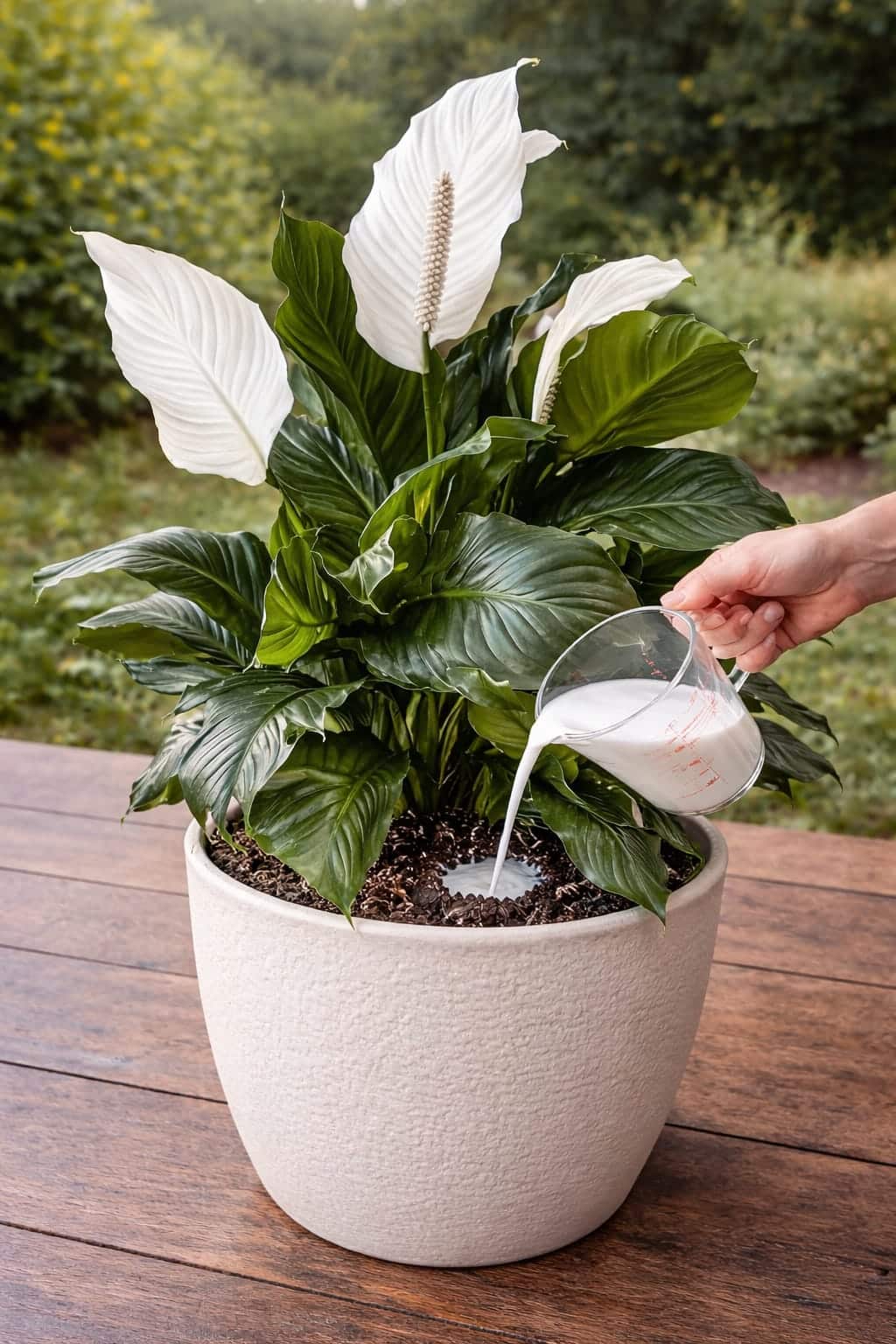
Here’s a trick that has completely transformed my peace lilies – and it’s probably sitting in your refrigerator right now. Milk is packed with calcium, phosphorus, and vitamins, all of which are essential for plant health.
Why Milk Works
Nutrient Benefit for Peace Lily
Calcium Strengthens cell walls, prevents root rot, supports new growth.
Phosphorus Boosts flower production – more blooms, bigger blooms.
Vitamins (B, etc.) Helps maintain lush, deep green leaves.
How to Make and Use Milk Fertilizer
- Mix equal parts water and whole milk – for example, 500ml water + 500ml whole milk. (Do not use skim or low‑fat – whole milk works best.)
- Use this mixture to water your peace lily once a month – instead of plain water.
- Pour directly onto the soil – avoid getting milk on the leaves.
- Do not overdo it – once a month is plenty. Too much milk can lead to sour‑smelling soil or mold.
I’ve been doing this for years, and it’s been the key to those vibrant leaves and frequent blooms. The milk provides gentle nutrients without the risk of chemical burn from synthetic fertilizers.
Pro tip: If you notice a slight odor after applying milk, water lightly with plain water the next day. Always use fresh milk, never spoiled.
Optimal Light: Bright, Indirect Light Is Key
While peace lilies are known for tolerating low light, they truly thrive in bright, indirect sunlight. Sellers often market them as “low‑light plants” – and they will survive there. But to get those stunning white blooms, you need more.
Where to Place Your Peace Lily
· Ideal: Near a north‑ or east‑facing window. This provides gentle morning sun and bright indirect light for the rest of the day.
· Acceptable: A few feet back from a south or west window, behind a sheer curtain.
· Avoid: Direct afternoon sun – it scorches leaves, causing brown spots.
· Avoid: Dark corners – no energy for blooms.
If Your Home Lacks Natural Light
Consider using a grow light. I’ve had success with LED grow lights, which mimic sunlight and keep my peace lilies blooming even during winter. Position the light 12–18 inches above the plant for 10–12 hours per day.
Pro tip: If your peace lily has dark green leaves but no flowers, it’s not getting enough light. Move it closer to a window, and you’ll likely see buds within weeks.
Moisture Maintenance: Water and Humidity
Peace lilies come from tropical rainforests, so they love consistent moisture and high humidity. Getting this right is the difference between a thriving plant and a struggling one.
Watering Guidelines
· When to water: Stick your finger into the soil. If the top inch feels dry, it’s time to water.
· How to water: Water thoroughly until it runs out the drainage holes.
· Empty the saucer – never let the plant sit in standing water. This prevents root rot.
· Frequency: In typical indoor conditions, every 7–10 days. Adjust based on light and temperature.
Humidity – The Missing Factor
Peace lilies love humidity. Dry indoor air (especially in winter) causes brown leaf tips and slow growth.
· Mist the leaves occasionally – I like to mist mine every few days, especially during dry winter months when indoor heating lowers humidity levels.
· Use a pebble tray – place the pot on a tray filled with water and pebbles (pot sits on pebbles, not in water).
· Group plants together – they create a humid microclimate.
· Run a humidifier – the best solution for very dry homes.
Pro tip: If you see brown, crispy leaf tips, increase humidity. Misting alone may not be enough – try a pebble tray or humidifier.
Continue to Page 2
Continue to page 2 for more details about this article and the key points many readers miss on the first page.