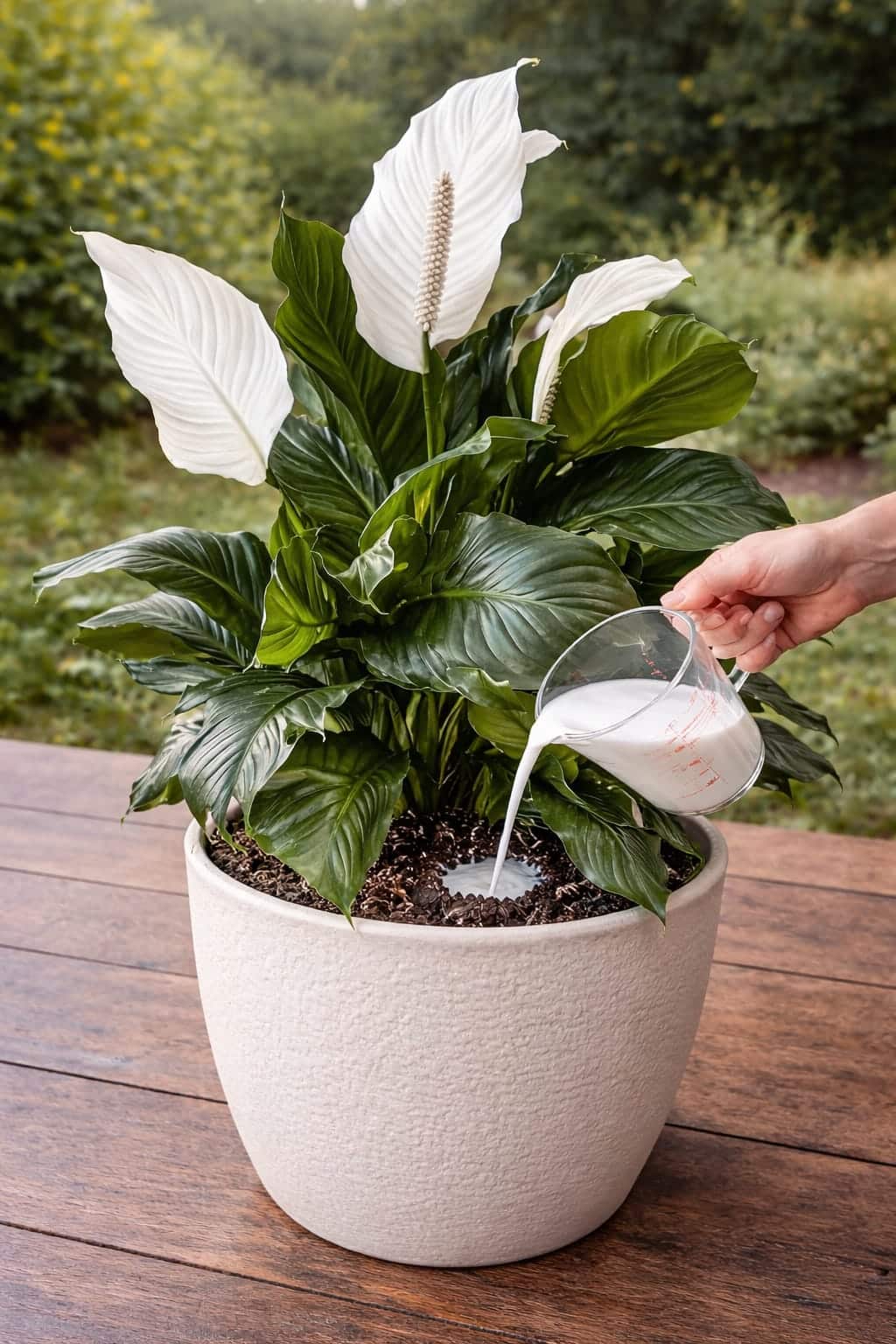
Repot When It’s Root‑Bound
Peace lilies are fast growers, and before you know it, they’ll outgrow their pots. Sellers rarely mention this, but a root‑bound peace lily will struggle to absorb water and nutrients – and it will stop blooming.
How Often to Repot
· Every 1–2 years – or whenever you see roots poking out of the drainage holes.
· Best time: Spring or early summer.
Step‑by‑Step Repotting Guide
- Choose a pot that’s one size larger than the current one (2 inches wider in diameter).
- Use a blend of regular potting soil and perlite (80% soil + 20% perlite) to ensure roots don’t sit in water.
- Gently remove the plant from its old pot – loosen the root ball carefully.
- Remove any dead or mushy roots – trim with clean scissors.
- Place the plant in the new pot and fill with fresh soil.
- Water thoroughly – but then keep it in a shaded spot for a few days to reduce transplant shock.
Pro tip: If you don’t want a larger pot, you can divide the plant. Cut the root ball into 2–3 sections, each with leaves and roots, and repot into separate pots. Share with friends or create a fuller display.
Pruning for Health and Beauty
Occasionally, peace lilies develop yellowing or browning leaves. This is normal – but leaving them on the plant drains energy. Pruning redirects energy to new growth and flowers.
How to Prune
· Use clean scissors or pruning shears – sterilize with rubbing alcohol to prevent disease.
· Cut off damaged leaves at the base – remove the entire leaf stem.
· Remove spent blooms – cut the flower stalk at the base after the white spathe turns green and fades.
· Best time: Spring or early summer, when the plant is actively growing.
Pro tip: Don’t remove more than ⅓ of the leaves at once. Too much pruning can stress the plant.
Bonus Tips for Thriving Peace Lilies
- Feed Regularly – Beyond Milk
While milk fertilizer is great, you can also use a balanced liquid fertilizer (like 20-20-10) diluted to half strength once a month during spring and summer. This provides a more complete nutrient profile.
- Keep the Leaves Clean
Dust can accumulate on the leaves and block light absorption. I wipe mine with a damp cloth every couple of weeks. This also helps prevent pests like spider mites.
- Temperature Matters
Keep your peace lily in a room that stays between 65–80°F (18–27°C). Avoid placing it near cold drafts (air conditioners, open windows in winter) or hot heaters.
- Use Filtered Water
Peace lilies are sensitive to fluoride and chlorine in tap water, which can cause brown tips. If possible, use distilled or rainwater. Let tap water sit out overnight to allow chlorine to dissipate (though fluoride remains).
Common Problems and Solutions – Troubleshooting Table
Problem Likely Cause Solution
Drooping leaves Underwatering or overwatering Check soil moisture. If dry, water thoroughly. If wet, let soil dry out and improve drainage.
Brown leaf tips Low humidity or fluoride in tap water Increase humidity (pebble tray, misting, humidifier). Use distilled or rainwater.
Yellow leaves Overwatering or old age Check soil moisture. If wet, reduce watering. If lower leaves only, normal aging.
No blooms Insufficient light Move to brighter indirect light. Consider a grow light.
Leaves turning black Root rot or cold damage Check roots; trim rot; repot in fresh soil. Move away from cold drafts.
White fuzzy spots on soil Mold from overwatering or milk fertilizer Scrape off; let soil dry; reduce watering; apply cinnamon powder lightly.
Frequently Asked Questions (FAQs)
Q: Can I use skim milk instead of whole milk?
Whole milk is best because it contains more fats and nutrients. Skim milk lacks some of the beneficial compounds. If you only have skim, it’s fine occasionally, but whole milk works better.
Q: How often should I use milk fertilizer?
Once a month is ideal. Overusing it can cause sour soil or mold.
Q: My peace lily has droopy leaves even after watering – why?
This could be a sign of root rot. If the soil is wet and leaves are droopy, roots may be damaged. Remove the plant, trim rotten roots, and repot in fresh, dry soil.
Q: Can I grow a peace lily in a bathroom with no window?
It will survive under fluorescent lights, but it may not bloom. For flowers, it needs bright indirect light. Consider adding a grow light.
Q: Why are my peace lily flowers green instead of white?
As flowers age, the white spathe naturally turns green. This is normal. Cut the stalk at the base to encourage new blooms.
Q: Is peace lily safe for pets?
No – peace lilies are toxic to cats and dogs. They contain calcium oxalate crystals, which cause mouth irritation and vomiting. Keep them out of reach.
Q: How do I get my peace lily to bloom again after a long rest?
Provide bright indirect light, fertilize lightly (milk or balanced fertilizer), and ensure consistent moisture. A slightly cooler night temperature (60–65°F) can also trigger blooming.
Printable Peace Lily Care Checklist
☐ Place in bright, indirect light (north/east window)
☐ Water when top inch of soil is dry
☐ Empty saucer after watering
☐ Increase humidity (pebble tray, misting, humidifier)
☐ Use milk fertilizer once a month (equal parts water + whole milk)
☐ Wipe leaves with damp cloth every 2 weeks
☐ Keep temperature 65–80°F (18–27°C)
☐ Repot every 1–2 years when root‑bound
☐ Prune yellow leaves and spent blooms
☐ Use filtered or distilled water to prevent brown tips
☐ Watch for drooping – adjust watering
Final Thoughts – Unstoppable Growth Starts Here
Sellers want you to believe that peace lilies are simple, low‑light plants that need little care. And while they are forgiving, unlocking their full potential – lush leaves and abundant white blooms – requires a few insider tricks.
The milk fertilizer trick is a game‑changer. Combined with bright indirect light, proper watering, high humidity, timely repotting, and regular pruning, your peace lily will reward you with year‑round beauty.
Don’t settle for a lackluster plant. Try these tips, and watch your peace lily grow unstoppably.
Now it’s your turn! Have you tried milk on your peace lily? What’s your secret to getting more blooms? Drop a comment below – I’d love to hear your experience.
And if you found this guide helpful, share it with a friend who struggles with peace lilies. Pin it for later, and subscribe to our newsletter for more insider plant tips.
Stay bright, stay consistent, and enjoy those stunning blooms. 🌿🤍✨