Discover the low‑cost “milky liquid” boost trending for snake plants. Learn how to use diluted milk safely, avoid common mistakes, and what actually improves growth. Science‑backed tips inside.
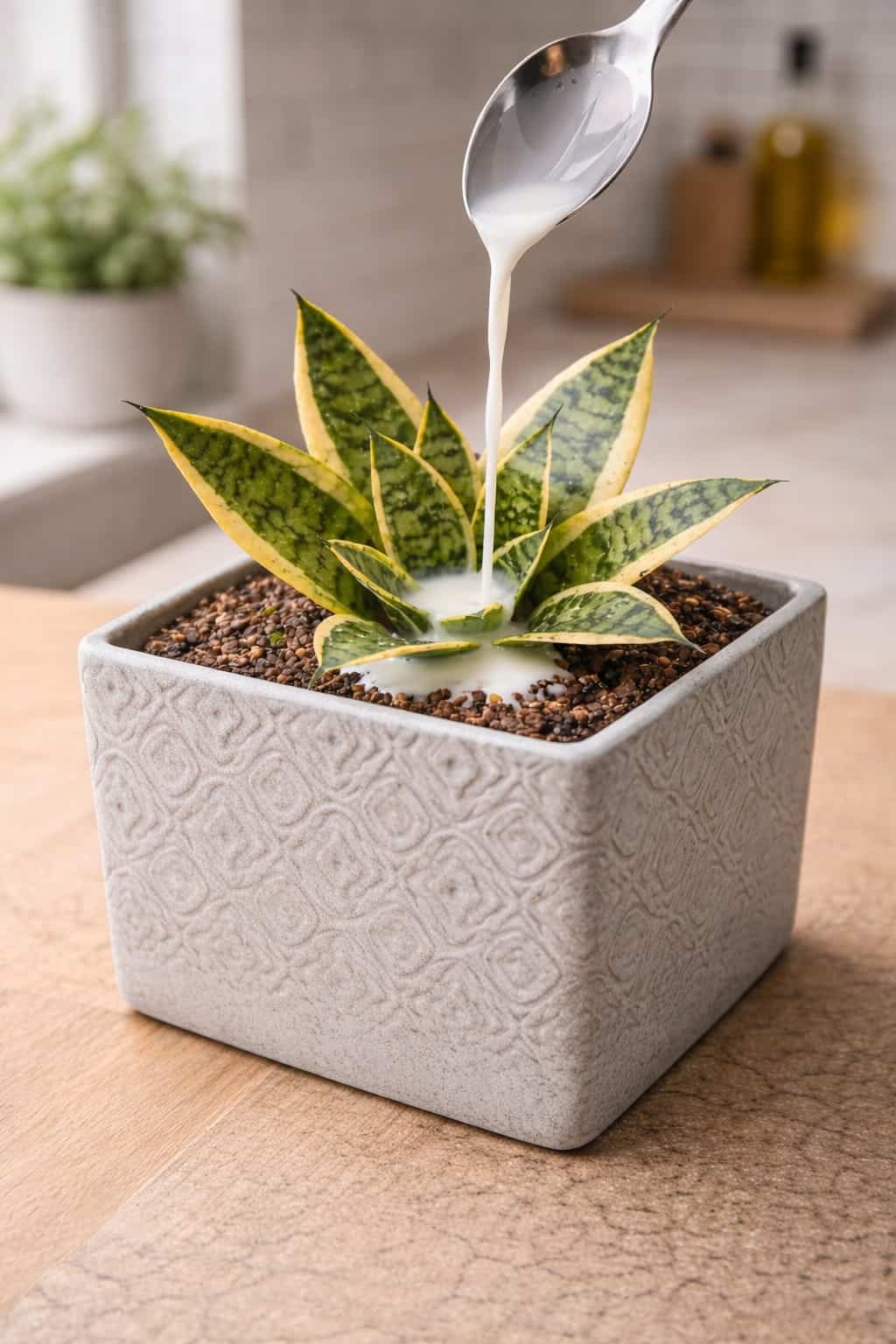
Let’s be honest: snake plants are everywhere right now. From minimalist apartments to luxury home offices, their tall, architectural leaves add a touch of modern elegance to any space. They’re resilient, low‑maintenance, and nearly impossible to kill. But alongside the decor trend, a low‑cost “milky liquid” boost has also been circulating among indoor plant lovers. The idea looks simple in the image: a light white liquid being poured onto the soil. The promise? Healthier roots, glossier leaves, and faster growth.
But here’s what modern homeowners need to understand: success isn’t about pouring random kitchen liquids. It’s about controlled dilution, drainage, and timing. Used correctly, a diluted milk rinse can provide a tiny calcium boost. Used incorrectly, it can cause root rot, foul odors, and pest problems.
In this complete guide, I’ll give you an honest, science‑backed look at this trending method. You’ll learn what the white liquid is, how to use it safely, common mistakes that ruin snake plants, and – most importantly – what actually improves snake plant growth. No hype, just practical advice.
Let’s separate the viral trend from the horticultural reality.
What Is the White Liquid in the Image?
The white liquid typically represents a very diluted mineral‑style kitchen rinse – often inspired by diluted milk‑water blends. The idea is that milk contains calcium, which can strengthen plant cell walls, and proteins that may offer a mild nutrient boost.
Important Clarifications
· It must be extremely diluted. Undiluted milk will sour, smell, and attract pests. The mixture should look faintly cloudy, not thick and white.
· It should never be thick. A creamy consistency means too much milk – this will coat roots and block airflow.
· It should never sit in the center of the plant. Snake plants are highly sensitive to crown moisture. If liquid pools between the leaves, it can cause rot quickly.
The purpose of this trend is light mineral refreshment – not heavy feeding. Think of it as a very occasional supplement, not a fertilizer replacement.
Why Calcium Matters for Snake Plants (The Real Science)
Calcium is an essential nutrient for all plants. It plays a critical role in:
· Cell wall structure – calcium strengthens cell walls, which can help leaves stay upright and firm.
· Root development – healthy roots absorb water and nutrients efficiently.
· Disease resistance – calcium helps plants resist bacterial and fungal infections.
However, most potting mixes already contain adequate calcium. A true calcium deficiency is rare in snake plants. Adding a little extra through diluted milk may offer a tiny boost, but it is not a substitute for proper light, water, and soil.
💧 How to Use a Low‑Cost Liquid Boost Safely
If you want to try this trending method, follow these strict rules. Moderation is everything.
Step‑by‑Step Safe Application
- Dilute heavily – use 1 part whole milk to 4–5 parts water. The mixture should be faintly cloudy, not thick. (Example: ¼ cup milk + 1¼ cups water.)
- Apply to soil only – pour around the edges of the pot, avoiding the leaves and the center crown. Never pour into the rosette.
- Use occasionally – once a month at most, and only during spring and summer (active growing season).
- Ensure the pot has drainage holes – this is non‑negotiable. Stagnant moisture is deadly.
- Allow full dry‑out between waterings – snake plants prefer dry cycles. Do not water again until the soil is completely dry.
What to Avoid
· Pouring thick liquid into the crown – causes rot.
· Using undiluted milk – will sour, smell, and cause mold.
· Applying weekly – more than once a month leads to salt buildup.
· Using heavy, compact soil – traps moisture and accelerates rot.
· Feeding during low‑light winter months – the plant rests and cannot use nutrients.
Pro tip: If you notice a sour smell, white mold on the soil, or fungus gnats, stop immediately and flush the pot with plain water.
❌ Common Mistakes That Ruin Snake Plants
Many homeowners accidentally stress their plants by making these mistakes. The white liquid will not fix them – only proper care will.
Mistake Why It’s Harmful Correct Approach
Pouring thick liquid into the crown Crown rot – often fatal Apply only to soil.
Using undiluted milk Sours, smells, attracts pests Dilute 1:4 or 1:5.
Applying weekly Salt buildup, root burn Use once a month at most.
Using heavy, compact soil Suffocates roots, traps moisture Use cactus/succulent mix.
Feeding during winter Nutrients accumulate, burn roots Feed only in spring/summer.
Keeping soil constantly wet Root rot – #1 killer Let soil dry completely.
Remember: snake plants grow slowly by nature. Forcing growth rarely works. They prefer neglect over fussing.
🪴 What Actually Improves Snake Plant Growth? (Before Any Boost)
Before reaching for any kitchen liquid, optimize these fundamentals. Light is more powerful than any additive.
- Bright Indirect Light – The #1 Growth Driver
Snake plants can survive in low light, but they thrive in bright, indirect light. More light = stronger leaves, faster growth, and more pups.
· Ideal spot: East or west‑facing window.
· Acceptable: A few feet back from a south window with a sheer curtain.
· Avoid: Dark corners (slow growth) and direct afternoon sun (leaf scorch).
- Fast‑Draining Succulent or Cactus Mix
Snake plants need soil that dries quickly. Heavy, moisture‑retentive soil leads to root rot.
· Best mix: Cactus/succulent soil + 30% perlite.
· Avoid: Regular potting soil alone.
- Terracotta or Breathable Planters
Terracotta pots wick away excess moisture, reducing the risk of overwatering. Plastic pots can work, but they require more careful watering
- Deep Watering Followed by Full Dry‑Out
· When to water: Only when the top 2–3 inches of soil are completely dry.
· How to water: Water deeply until it runs out the drainage holes. Empty the saucer.
· Frequency: Every 2–4 weeks, depending on light and temperature.
- Stable Indoor Temperatures
Keep your snake plant between 65–85°F (18–29°C). Avoid cold drafts below 50°F.
Snake Plant Care Balance Table – Quick Reference
Factor Ideal Condition Why It Matters
Light Bright, indirect (east/west window) Drives leaf structure and growth
Soil Airy, fast‑draining cactus mix Prevents root suffocation
Watering Infrequent – let soil dry completely Protects roots from rot
Additives Rare + diluted (once a month, spring/summer) Avoids stress and salt buildup
Pot Drainage holes (terracotta preferred) Prevents standing moisture
How to Use a Diluted Milk Rinse Safely – A Simple Plan
If you want to try this method, follow this safe routine.
- Choose whole milk – skim lacks fat, which helps emulsify.
- Dilute 1 part milk with 4–5 parts water – room temperature.
- Ensure soil is dry – never apply to wet soil.
- Apply only to the soil – pour around the edges, avoiding the crown and leaves.
- Use once a month during spring and summer only.
- Stop immediately if you see mold, smell, or leaf spots.
Pro tip: If you want a calcium boost without the risks, use crushed eggshell powder (finely ground) sprinkled on the soil once a month – no smell, no mold, no pests.
Troubleshooting – Common Problems & Solutions
Problem Likely Cause Solution
Leaves soft after using milk Overwatering or poor drainage Stop milk; let soil dry; check roots.
White mold on soil Excess moisture or milk residue Scrape off; reduce watering; stop milk.
Yellow leaves Overwatering or root rot Let soil dry; repot if needed.
No growth Insufficient light Move to brighter spot.
Brown leaf tips Mineral buildup or low humidity Flush soil; increase humidity.
Fungus gnats Organic matter (milk) in wet soil Stop milk; let soil dry; use sticky traps.
Frequently Asked Questions (FAQs)
Q: Can diluted milk replace fertilizer for snake plants?
A: No – it is not a complete nutrient formula. Milk provides trace calcium but lacks nitrogen, phosphorus, and potassium. Use a balanced fertilizer once or twice a year if needed.
Q: Why are my snake plant leaves soft after trying this method?
A: Likely overwatering or poor drainage. Soft leaves are a sign of root stress. Stop using milk, let the soil dry completely, and check for root rot.
Q: Should I pour the white liquid into the center of the plant?
A: No – always apply to soil only. Liquid in the crown causes rot.
Q: How often should I use this boost?
A: Rarely – once a month at most, and only during active growth seasons (spring and summer). Do not use in fall and winter.
Q: Does more feeding mean faster growth?
A: No – snake plants dislike excess nutrients. Over‑feeding causes brown tips, salt buildup, and root burn. Less is more.
Q: Can snake plants grow without any fertilizer?
A: Yes – they are naturally low‑demand. Snake plants can thrive for years with just light, water, and well‑draining soil.
Q: What’s the biggest mistake people make with snake plants?
A: Keeping soil constantly wet – this is the #1 killer. Snake plants prefer to be underwatered than overwatered.
Q: Is terracotta better than plastic for snake plants?
A: Often yes – terracotta improves airflow and wicks away excess moisture, reducing the risk of root rot.
Q: Why are my snake plant leaves turning yellow after using milk?
A: Possible root stress or mineral buildup. Stop using milk, flush the soil with plain water, and let it dry out completely.
Q: What improves snake plant growth the most?
A: Consistent light and proper drainage. Light is more powerful than any additive.
Printable Snake Plant Care Checklist
☐ Place in bright, indirect light (east/west window)
☐ Use a pot with drainage holes (terracotta preferred)
☐ Fill with fast‑draining cactus/succulent soil (add perlite)
☐ Water only when soil is completely dry (check with finger)
☐ Water deeply, then empty saucer
☐ Do not water again for 2–4 weeks (depending on light)
☐ Optional: use diluted milk rinse (1:4) once a month in spring/summer – not necessary
☐ Apply to soil only – avoid crown and leaves
☐ Do not use in fall/winter
☐ Wipe leaves with damp cloth monthly
☐ Remove dead or yellow leaves at base
☐ Repot every 2–3 years when root‑bound
Final Thoughts – Less Is More
The “low‑cost milky liquid boost” is not magic. A highly diluted milk rinse can provide a tiny calcium boost, but it will never replace the fundamentals: bright indirect light, well‑draining soil, infrequent watering, and a pot with drainage holes.
If your snake plant is struggling, don’t reach for a bottle first. Check the light, the soil, and your watering routine. Once those basics are right, a little diluted milk once a month can be a gentle experiment – but it’s never the cure.
With patience and the right care, your snake plant will reward you with strong, upright leaves and maybe even a few pups. And you’ll save money by not buying expensive products – because the best care is often the simplest.
Now it’s your turn! Have you tried a diluted milk rinse on your snake plant? What results did you see? Drop a comment below – I’d love to hear your experience.
And if you found this guide helpful, share it with a friend who loves snake plants. Pin it for later, and subscribe to our newsletter for more honest, evidence‑based plant care.
Stay dry, stay bright, and watch your snake plant thrive. 🌿✨