Geraniums are one of the easiest ways to fill a windowsill, balcony, or patio with color. When they are happy, they bloom in big cheerful clusters and keep going for weeks. But when they are not getting the right care, they often stay leafy, produce fewer flowers, or look tired much sooner than expected.
The good news is that growing beautiful geraniums is not complicated.
If you want bigger blooms, richer color, and a fuller plant, the secret is not one miracle tablet or random hack. It is a combination of strong light, smart watering, regular feeding, and a little routine care.
In this guide, you will learn exactly how to transform your geraniums from average to spectacular — with bigger flower clusters, longer bloom seasons, and healthier, more vibrant plants.
Why Geraniums Sometimes Bloom Less
A geranium that is alive but not impressive is usually dealing with one of these problems:
· not enough sunlight
· too much water (or inconsistent watering)
· weak or incorrect feeding
· old faded flower heads left on the plant
· a pot that is too crowded or soil that is worn out
· poor air circulation around the plant
Geraniums are generous bloomers, but they need enough energy to keep making flowers. If something is off, they slow down fast.
The good news is that each of these problems has a simple fix. Once you correct the basics, your geraniums will reward you with non‑stop color.
- Give Them as Much Light as Possible
This is the biggest bloom secret.
Geraniums love bright light and usually perform best with several hours of sun each day. A sunny windowsill, balcony, or bright outdoor spot is ideal.
More Light Usually Means:
· more buds and flower clusters
· stronger, thicker stems (less flopping)
· more compact, bushy growth (not leggy)
· brighter, more intense flower color
How Much Light Do Geraniums Need?
· Ideal: 6–8 hours of direct or very bright indirect sunlight daily.
· Good: A south‑facing window indoors, or a sunny balcony.
· Acceptable but not great for heavy blooming: East or west window with a few hours of direct sun.
· Not enough for blooms: A dark corner or north‑facing window with no direct sun.
If your geranium looks green and healthy but blooms very little, the light is often the first thing to improve. Move it to a sunnier spot and watch what happens over the next two weeks.
- Water Correctly, Not Constantly
Geraniums do not like soggy roots. They prefer a balanced routine where the soil dries slightly between waterings.
A Good Approach Is:
· water thoroughly until water runs from the drainage holes
· let all excess water drain away completely
· wait until the top inch of soil feels dry to the touch before watering again
· never let the pot sit in standing water
Signs of Overwatering:
· yellowing lower leaves
· soft, mushy stems
· mold or fungus on the soil surface
· a heavy, waterlogged pot
Signs of Underwatering:
· leaves wilting or drooping
· brown, crispy edges on lower leaves
· the pot feels very light
Geraniums are somewhat drought‑tolerant, but they bloom best when they receive consistent moisture without being constantly wet.
- Feed for Flowers (The Right Way)
Geraniums bloom best when they get regular nutrition during active growth.
What to Use:
· a balanced, water‑soluble fertilizer (like 10‑10‑10 or 20‑20‑20)
· or a fertilizer formulated specifically for blooming plants (higher middle number, like 10‑20‑10)
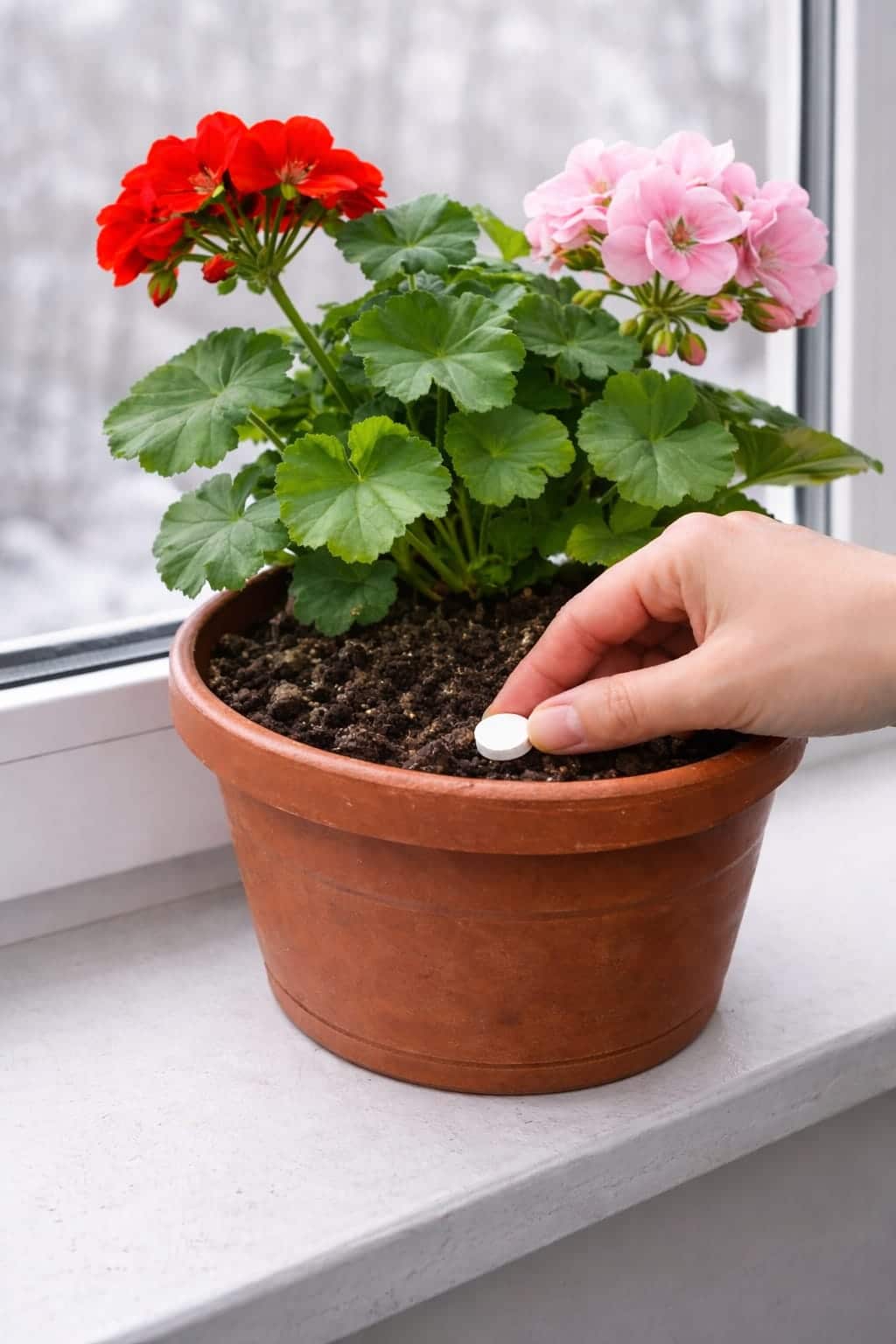
· slow‑release fertilizer tablets or spikes (like the one in your image) can work well if used as directed
When and How Often:
· Spring through early fall: feed every 2–4 weeks
· Late fall and winter: stop feeding (geraniums rest)
· Always water the plant first before applying liquid fertilizer to prevent root burn
This Helps Support:
· bigger flower clusters
· stronger repeat blooming
· healthier, greener foliage
· a longer bloom season
The plant in your image shows a tablet being placed into the soil, which looks like a fertilizer tablet or plant food spike. If that is what you are using, follow the label directions and do not overdo it. Too much feeding can stress the roots instead of helping them.
- Deadhead Old Flowers Often
This is one of the easiest tricks for bigger blooms — and it costs nothing.
Once a flower cluster fades and starts to look brown or dry, remove it. If you leave old flowers in place, the plant starts putting energy into seed production instead of making fresh blooms.
How to Deadhead Geraniums:
· Follow the flower stem down to where it meets the main branch.
· Pinch or cut the stem off cleanly, about ¼ inch above a leaf or node.
· Do not just pull the petals off; remove the whole stem.
Regular deadheading tells the geranium: keep flowering. It also makes the plant look cleaner and more attractive.
How Often to Deadhead:
· Check your geraniums every few days during the blooming season.
· Remove spent flowers as soon as you see them.
· A few minutes of deadheading per week can double your bloom count.
- Pinch for a Fuller Shape
If your geranium starts looking leggy (tall, thin stems with leaves only at the top), pinch back the tips occasionally.
How to Pinch:
· Use your thumb and forefinger to snap off the growing tip of a stem.
· Remove the top ¼ to ½ inch, just above a set of leaves.
· Do this on several stems throughout the plant.
Why Pinching Works:
· It encourages branching from lower nodes.
· More branches = more growing points = more flowers.
· The plant becomes bushier, fuller, and more compact instead of tall and sparse.
Pinch young geraniums early in the season to shape them. You can also pinch during the growing season if the plant gets too tall.
- Use Well‑Draining Soil
Geraniums do best in loose, draining potting mix. Heavy, compact soil keeps the roots too wet and reduces both health and blooming.
A Good Potting Mix for Geraniums Should:
· drain quickly after watering
· stay airy and light (not dense like garden soil)
· not stay muddy or soggy after watering
DIY Geranium Soil Mix:
· 2 parts standard potting mix
· 1 part perlite (for drainage and aeration)
· 1 part coarse sand (optional, but helps drainage)
Avoid using garden soil in pots — it is too heavy and often contains pests or diseases.
Healthy roots are the foundation of bigger blooms.
- Do Not Ignore the Pot Size
Geraniums like a pot that fits them well.
If the Pot Is Too Large:
· the soil may stay wet too long (leading to root rot)
· the plant focuses on root growth instead of blooms
· flowering slows down
If the Pot Is Too Small (Severely Root‑Bound):
Continue to Page 2
Continue to page 2 for more details about this article and the key points many readers miss on the first page.