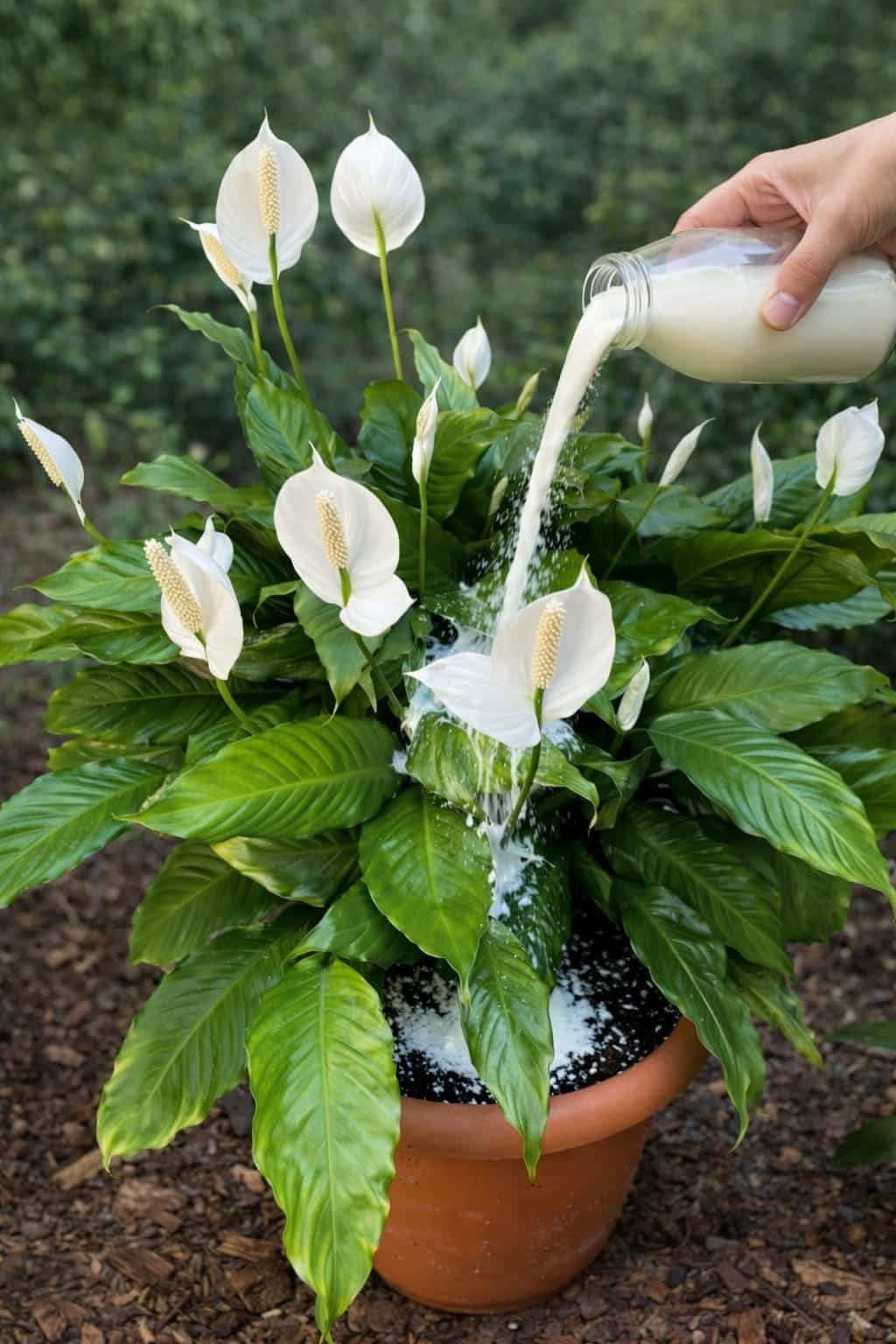
Peace lilies are loved for their glossy green leaves and elegant white blooms. When they are healthy, they can completely transform a room with their clean, fresh look. So it is no surprise that plant lovers are always searching for one simple trick to make them bloom more.
One of the most viral ideas is milk.
You have probably seen videos showing milk poured directly into the pot, with claims that it acts like a secret fertilizer and makes peace lilies bloom like crazy. It sounds easy, cheap, and almost too good to ignore.
But does it really work?
The honest answer is: milk is not a true secret fertilizer for peace lilies, and if it is used the wrong way, it can actually create more problems than benefits.
In this guide, we will break down the science behind milk as a plant treatment, explain why it usually does more harm than good indoors, and give you the real, proven methods to make your peace lily bloom more often and more beautifully.
Why People Think Milk Helps Plants
Milk contains some nutrients, including:
· Calcium – important for cell wall structure and root development
· Small amounts of protein – breaks down into nitrogen over time
· Trace minerals – magnesium, phosphorus, and potassium in very low levels
That is why some people believe it can feed plants and improve growth. In theory, it sounds helpful. If milk has nutrients, then pouring it into the soil should help the plant, right?
Not exactly.
Indoor potted plants are very different from garden soil systems. In a container, anything poured into the soil stays in a much smaller space, breaks down faster, and can affect the roots more intensely.
That means milk does not behave like a clean, balanced houseplant fertilizer. It behaves like a fresh organic material that decomposes — sometimes quickly, sometimes with unpleasant side effects.
The Problem with Using Milk in Peace Lily Pots
Peace lilies like lightly moist soil, but they also need healthy roots and good airflow in the pot. Milk can interfere with that balance.
When poured into the soil too often, milk may:
· sour and create odor – spoiled milk smells terrible and can fill your home with a rancid dairy smell
· attract pests – fungus gnats, fruit flies, and even ants are drawn to fermenting sugars and proteins
· encourage unwanted mold or bacteria – white fuzz on the soil surface is a common sign
· leave residue in the potting mix – milk solids coat bark and perlite, reducing drainage
· stress the roots instead of helping them – root rot can follow if the medium becomes too heavy
This matters even more for peace lilies because they are already sensitive to soggy, heavy, poorly aerated soil. If the roots stay stressed, the plant may actually bloom less, not more.
So while milk may look like a miracle hack in short videos, it is not a reliable bloom formula.
What Actually Makes a Peace Lily Bloom More
If you want more flowers, the real secret is not milk. It is giving the plant the right growing conditions consistently.
- Bright Indirect Light
This is one of the biggest bloom triggers. Peace lilies can survive in lower light, but they bloom much better when they get bright filtered light near a window.
· Ideal spot: East or north‑facing window, or a south/west window with a sheer curtain.
· How much: 10–12 hours of bright indirect light daily.
· Signs of too little light: Dark green leaves, no blooms, slow growth.
· Signs of too much light: Yellowing or scorched leaves.
- Proper Watering
Keep the soil lightly moist, not soaked. Let the top inch of soil dry slightly before watering again. Overwatering is one of the fastest ways to weaken the roots.
· Water when: The top inch feels dry to the touch.
· How to water: Pour slowly until water runs from the drainage holes.
· After watering: Empty the saucer immediately. Never let the pot sit in water.
- Good Drainage
A pot with drainage holes is essential. Peace lilies hate sitting in waterlogged soil.
· Best pots: Terracotta (breathable) or plastic with multiple holes.
· Soil mix: Standard potting mix with added perlite (30% perlite, 70% soil).
· Avoid: Decorative pots without holes unless you use a nursery pot inside.
- Light Feeding
A balanced houseplant fertilizer used gently during active growth is far more effective than random kitchen liquids.
· Best fertilizer: Balanced 20‑20‑20 or 10‑10‑10, diluted to half strength.
· When to feed: Every 4–6 weeks during spring and summer.
· When to stop: Fall and winter (peace lilies rest).
- Stable Conditions
Peace lilies prefer a steady environment. Too much stress from heat, cold drafts, or inconsistent care can reduce blooming.
· Temperature: 65–80°F (18–27°C). Avoid sudden drops.
· Humidity: Moderate (40–60%). Use a pebble tray if air is very dry.
· Placement: Away from heating vents, air conditioners, and drafty windows.
Why a Peace Lily May Bloom Less Even If It Looks Healthy
A lot of peace lilies stay green and leafy but do not flower much. That usually happens because:
· the light is too low – the plant has energy for leaves but not flowers
· the soil is exhausted – old potting mix loses structure and nutrients
· the roots are cramped or stressed – pot‑bound plants may stop blooming
· the plant is underfed – no nutrients means no energy for blooms
· old blooms are not removed – the plant wastes energy on spent flowers
These problems are far more important than whether milk is added to the pot.
If your peace lily has not bloomed in over a year, work through this checklist before trying any homemade hack.
If You Still Want to Try Milk (The Safe Way)
If someone insists on experimenting with milk, it should only ever be done with extreme caution.
Safer Guidelines
· Use only diluted milk – 1 part milk to 4–5 parts water.
· Use only plain, whole or 2% milk – no flavored, no sweetened, no plant milks.
· Apply very sparingly – a few tablespoons per pot, not a full watering.
· Apply rarely – once every 2–3 months at most.
· Apply to soil only – never on leaves or the crown.
· Stop immediately if you see mold, smell sourness, or notice pests.
What to Do If Milk Goes Bad in the Pot
- Stop using milk immediately.
- Scrape off any moldy or white crust from the soil surface.
- Flush the pot with plain water several times.
- If the smell persists, repot with fresh soil.
- Go back to normal care.
But honestly, for indoor peace lilies, there are safer and better options. A diluted balanced fertilizer or fresh healthy potting mix will almost always be the smarter choice.
Continue to Page 2
Continue to page 2 for more details about this article and the key points many readers miss on the first page.