Better Natural Ways to Support Blooming
If you prefer gentler methods, these make much more sense than milk.
- Fresh Potting Mix
Old soil becomes compacted and loses nutrients. Repotting every 1–2 years with fresh, high‑quality mix does more for blooming than any kitchen liquid.
- Bright Indirect Light
Move your peace lily closer to a window. This single change is responsible for more blooms than any fertilizer.
- Consistent Watering
Establish a routine. Water when the top inch is dry. Do not let the plant wilt severely between waterings.
- Light Balanced Feeding
Use a diluted houseplant fertilizer during spring and summer. A 10‑10‑10 or 20‑20‑20 works perfectly.
- Removing Spent Blooms
Cut off faded flowers at the base. This redirects energy to new growth and future blooms.
- Moderate Humidity
Peace lilies appreciate a little humidity. Group plants together or use a pebble tray.
These support the plant without risking sour soil or root stress.
Signs Your Peace Lily Is Ready to Bloom More
When a peace lily is thriving, you may notice:
· deep glossy green leaves (not pale, not yellow)
· upright strong stems (no drooping or flopping)
· fresh new leaves emerging from the center (steady growth)
· steady growth (several new leaves per year)
· more frequent bloom stalks (2–3 times per year under ideal conditions)
That is the real sign of success: a plant that looks balanced and healthy from the roots up.
Step‑by‑Step Peace Lily Bloom Routine (No Milk Required)
Here is a simple, proven routine that produces more blooms without any risky hacks.
Daily
· Enjoy your plant. No action needed.
Weekly
· Check soil moisture. Water if top inch is dry.
· Wipe leaves with a damp cloth to remove dust.
· Rotate the pot slightly for even light.
Monthly
· Inspect for pests (mealybugs, spider mites).
· Remove any yellow or brown leaves.
· Cut off spent blooms at the base.
Every 4–6 Weeks (Spring and Summer)
· Feed with diluted balanced fertilizer (half strength).
· Do not feed in fall or winter.
Annually (or as needed)
· Check if roots are circling densely or growing out of drainage holes.
· Repot in fresh potting mix with perlite, going up only one pot size.
· Refresh the top layer of soil if not repotting.
Common Myths About Milk and Peace Lilies
Myth 1: “Milk provides calcium that peace lilies need.”
Peace lilies do need calcium, but they get it from quality potting mix and tap water. Milk delivers calcium in a form that is not immediately available to roots and can cause more problems than benefits.
Myth 2: “Milk prevents fungal diseases.”
Actually, milk can encourage mold and bacteria in potting soil. While diluted milk sprays are sometimes used on garden leaves for powdery mildew, pouring milk into the soil is completely different.
Myth 3: “A little milk once a week keeps peace lilies blooming.”
No. Weekly milk applications almost always lead to sour soil, pests, or root stress within a few months.
Myth 4: “My peace lily bloomed after milk, so it worked.”
Correlation is not causation. Your peace lily may have bloomed because of better light, seasonal timing, or simply reaching maturity. The milk was likely a coincidence.
Frequently Asked Questions (Milk and Peace Lilies)
Can I use any type of milk?
If you must experiment, use plain cow’s milk (whole or 2%). Avoid skim (too watery), flavored (sugars), and plant milks (almond, oat, soy – they spoil faster and offer different nutrients).
How often should I put milk on my peace lily?
Never is the best answer. If you insist, once every 2–3 months maximum. Once a week will almost certainly cause problems.
Will milk kill my peace lily?
Not immediately, but repeated use can lead to root rot, mold, and pest infestations that eventually kill the plant. It is not worth the risk.
What are the signs that milk is hurting my plant?
· White or green mold on the soil surface
· A sour, rotten smell from the pot
· Small flying insects (fungus gnats) around the soil
· Leaves turning yellow or drooping even though the soil is wet
· A white crust on the soil or pot rim
If you see any of these, stop milk immediately and flush the pot with water.
Is there any plant that likes milk?
Some gardeners use diluted milk as a foliar spray on squash or tomato leaves to prevent powdery mildew (controversial). For houseplants, milk is almost never recommended.
What should I use instead of milk?
Use a balanced, water‑soluble houseplant fertilizer diluted to half strength. Apply every 4–6 weeks during spring and summer. That is safer, more effective, and designed for container plants.
Can I use yogurt water or buttermilk?
No. These are even more concentrated and spoil faster. Avoid all dairy products in houseplant soil.
How do I get my peace lily to bloom without any fertilizer?
Focus on light. Move it to a bright indirect light location. Water correctly. Remove old blooms. Sometimes that is all it takes.
The Science: What Milk Actually Does in Potting Soil
Let us look at what happens when you pour milk into a peace lily pot.
Day 1: Milk soaks into the soil. The plant absorbs some water, but milk solids (fats, proteins, lactose) remain.
Day 3–5: Bacteria and fungi begin breaking down the milk solids. This process consumes oxygen and releases heat. The soil pH may shift.
Day 7–10: If the pot stays moist, mold appears on the surface. A sour smell develops as lactose ferments.
Day 14+: Fungus gnats are attracted to the decomposing organic matter. Root rot becomes likely if the soil is heavy.
Compare that to a balanced fertilizer: it dissolves completely, provides immediately available nutrients, and leaves no organic residue to rot.
The choice is clear.
Final Thoughts
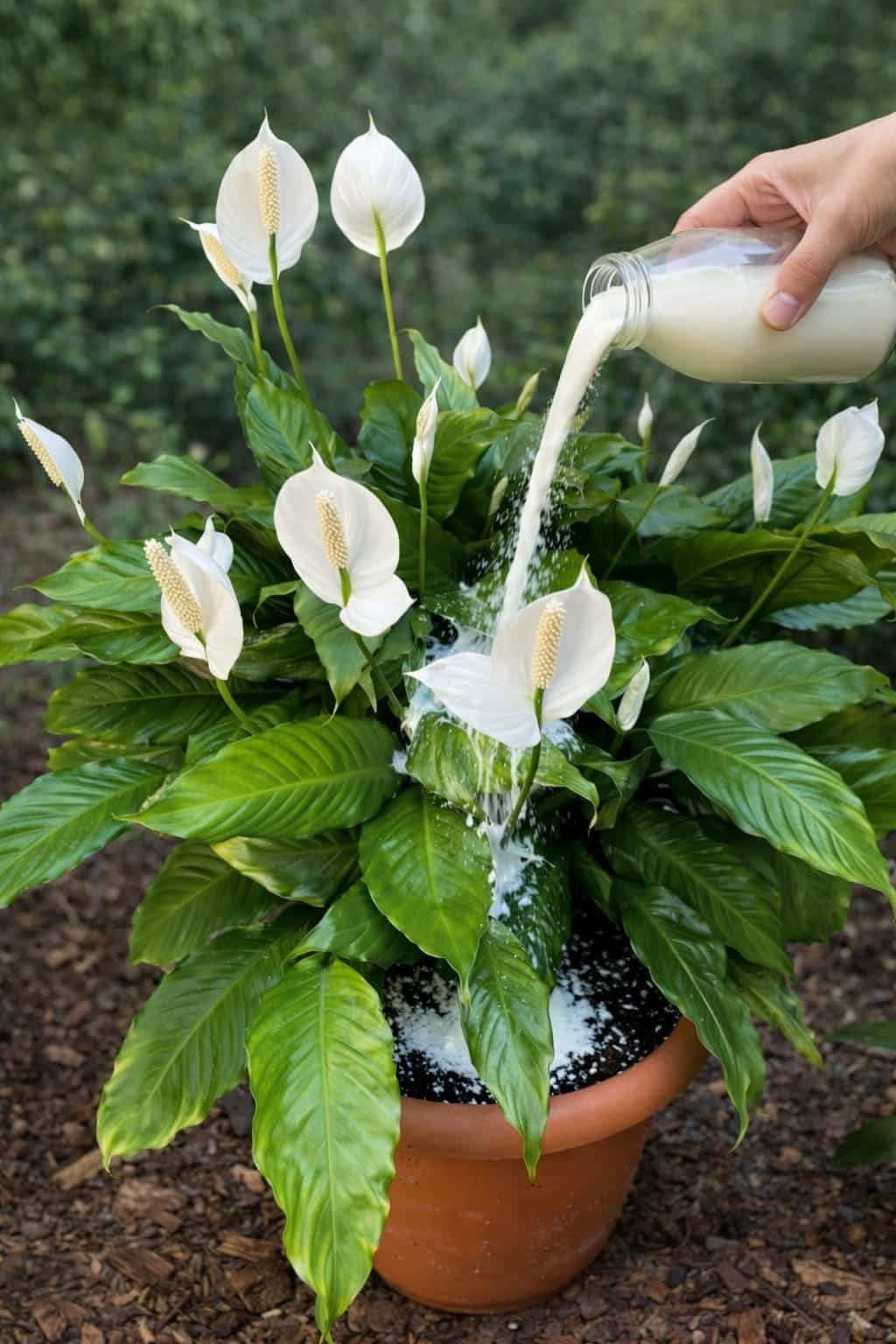
Milk is not really a secret fertilizer for peace lilies. It may contain some nutrients, but indoors it is much more likely to create messy soil conditions than to become a reliable bloom booster.
If you want your peace lily to bloom more, focus on what actually works:
· brighter indirect light
· careful watering
· proper drainage
· gentle feeding with balanced fertilizer
· healthy roots and fresh soil
That is the true secret.
Because a peace lily does not need a trendy kitchen hack to bloom beautifully. It just needs the kind of care that helps it stay strong, stable, and ready to flower again.
So save the milk for your cereal. Give your peace lily a spot near the window, a pot with drainage, and a little gentle fertilizer in spring. Then watch those elegant white blooms appear — naturally, reliably, and beautifully.
No sour smells. No moldy soil. No regret.
Have you ever tried milk on your peace lily? Share your experience in the comments below. And if you found this guide helpful, save it for later or send it to a friend who is wondering whether to pour dairy into their plant pot.