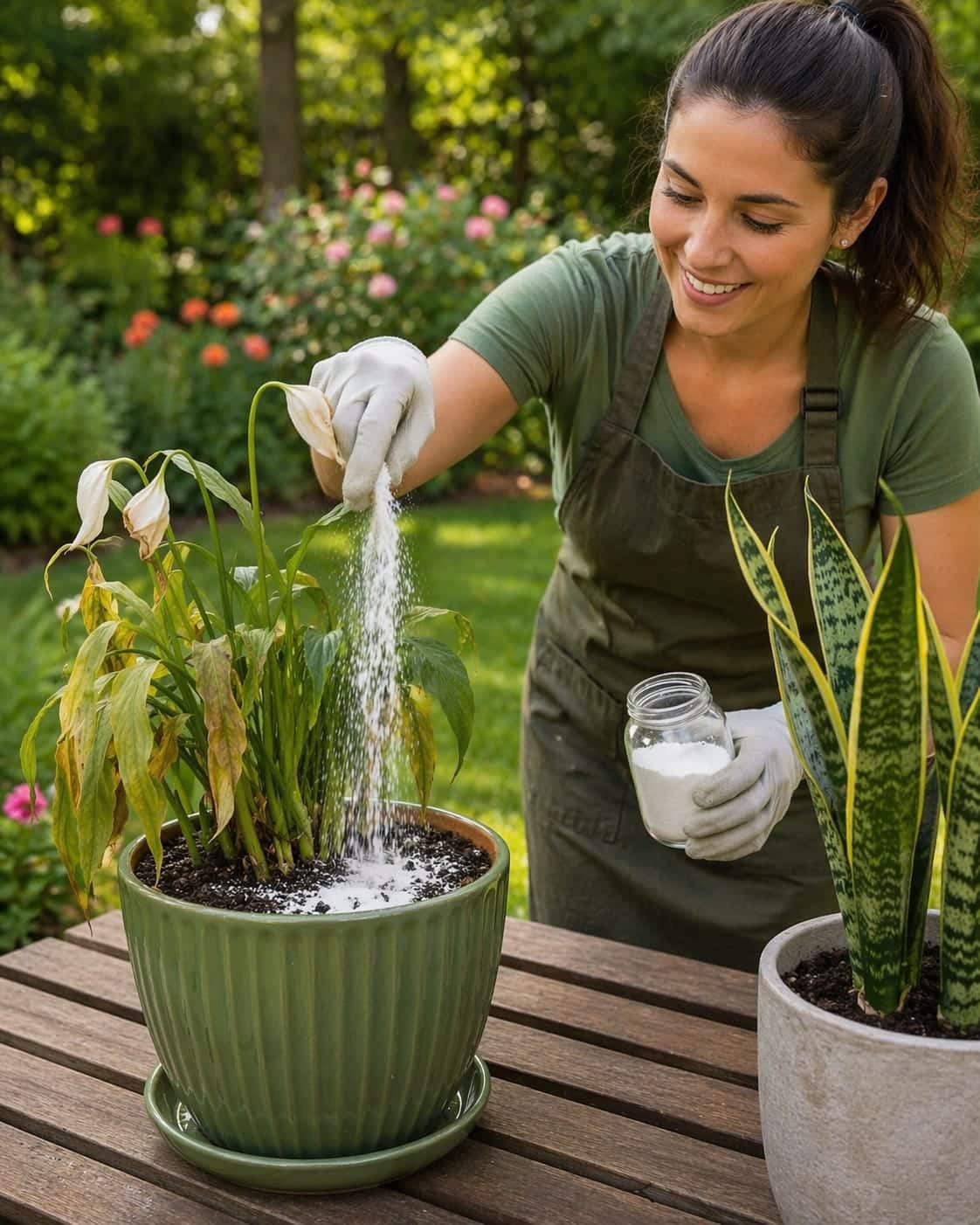
If you have been watching plant videos lately, you have probably seen it:
A tired, drooping peace lily.
A handful of mysterious white powder.
A dramatic promise that the plant will bounce back fast.
It looks simple. It looks convincing. And that is exactly why this peace lily trick is spreading so quickly.
But here is the problem: almost nobody explains what the powder actually is, why it might help, or when it can make things worse.
And that matters, because peace lilies do not recover from mystery powder alone. They recover when the real problem is fixed.
In this guide, you will learn what that white powder likely is, why peace lilies decline in the first place, how to truly revive a struggling plant, and when a powder might — or might not — help. No hype. Just honest, practical advice.
Why the Trick Gets So Much Attention
Peace lilies (Spathiphyllum) are expressive plants. When they are unhappy, they show it fast.
Leaves droop dramatically.
Tips turn brown.
Flowers fade.
The whole plant can suddenly look dramatic and weak.
That makes them perfect for viral “before and after” content. A struggling peace lily already looks extreme, so any small improvement seems like a miracle.
But in real life, peace lily recovery is usually not about one magic ingredient.
It is about:
· root health
· proper watering
· light
· drainage
· soil condition
That is the real explanation most videos skip. They show the powder, they show the “after,” but they never explain why the plant looked bad in the first place.
What the White Powder Usually Is
In these videos, the white powder is often one of these:
· Powdered fertilizer – Balanced houseplant food, slow‑release or water‑soluble.
· Epsom salt – Magnesium sulfate, sometimes overused as a “miracle” treatment.
· Baking soda – Used for pH adjustment or mildew, rarely helpful for general revival.
· Cinnamon (in lighter‑looking form) – Antifungal, not a fertilizer.
· Crushed mineral supplement – Like lime or gypsum, very specific uses.
· Random powder for attention – Flour, cornstarch, or nothing beneficial.
Each one does something different. That means copying the trick without knowing the ingredient is risky. A product that helps in one situation can be useless or even harmful in another.
For example:
· Baking soda raises soil pH. Peace lilies prefer slightly acidic to neutral. Too much baking soda can damage roots.
· Epsom salt provides magnesium. If your plant does not need magnesium, it just adds salt to the soil.
· Fertilizer powder needs to be diluted or used sparingly; sprinkling dry can burn roots.
So before you reach for that white powder, ask: what is it, and does my plant actually need it?
Why Peace Lilies Usually Decline
Before adding anything to the soil, it helps to understand what is most often wrong.
A peace lily usually struggles because of one or more of these:
· Overwatering – The #1 killer. Soggy soil suffocates roots.
· Poor drainage – Pots without holes or saucers full of water.
· Compacted old soil – Becomes dense, waterlogged, and low in oxygen.
· Low light – Peace lilies survive low light but stop thriving.
· Dry air – Brown leaf tips and edges.
· Root stress – From rot, binding, or old soil.
· Lack of gentle feeding over time – Exhausted soil leads to pale leaves and no blooms.
The biggest issue is often below the surface. If the roots are stressed, suffocating, or sitting in soggy soil, no powder will truly solve the problem. You have to fix the environment first.
When a Powder Might Actually Help
A powder can sometimes help — but only if it is the right one and used for the right purpose.
If It Is a Light Fertilizer
A balanced, slow‑release or water‑soluble fertilizer (like 10‑10‑10) may support recovery if the plant is nutrient‑depleted but otherwise healthy enough to respond. Use sparingly and follow label directions.
If It Is Epsom Salt
Epsom salt provides magnesium. It may help only if the plant shows signs of magnesium deficiency: yellowing between leaf veins on older leaves. Use 1 teaspoon per gallon of water, once a month. Too much causes salt buildup.
If It Is Cinnamon
Cinnamon is antifungal. It is sometimes used around trimmed damaged areas or on the soil surface to discourage mold. It does not feed the plant. Use a light dusting, not a heavy layer.
If It Is Baking Soda
Baking soda is rarely helpful for peace lily revival. It is sometimes used for powdery mildew on leaves, but pouring it into the soil can alter pH and harm roots. Avoid.
So yes, powder can play a role — but it is never the whole story. The real recovery comes from fixing the underlying care issues.
The Part Nobody Explains: Peace Lilies Need a Root Reset, Not a Random Hack
If your peace lily looks tired, the most effective “trick” is usually this:
Step 1 – Check the Soil
Feel the soil. Is it wet and heavy? Does it smell sour or musty? Is it compacted like a brick?
If yes, the roots are likely struggling. Do not add powder. Unpot the plant.
Step 2 – Inspect the Roots
Gently remove the peace lily from its pot. Shake off old soil.
Healthy roots are: firm, white or tan, and smell earthy.
Unhealthy roots are: brown, mushy, black, or hollow.
Trim away any rotten or dead roots with clean scissors. If more than half the roots are rotten, the plant is in critical condition but may still be saved.
Step 3 – Improve Drainage
Peace lilies want moisture, not swampy conditions. The pot needs drainage holes, and the mix should not stay muddy.
Best soil mix for peace lilies:
· 2 parts all‑purpose potting soil
· 1 part perlite
· 1 part orchid bark or coarse sand
This creates a light, airy mix that holds moisture without staying soggy.
Step 4 – Repot in a Clean Container
Choose a pot only 1–2 inches larger than the remaining root ball. Ensure it has drainage holes. Add fresh soil mix. Place the plant at the same depth it was growing before.
Step 5 – Water Correctly After Repotting
Water lightly once to settle the soil. Then wait until the top inch of soil feels dry before watering again. Never let the pot sit in standing water.
Step 6 – Give Brighter Indirect Light
Peace lilies survive in lower light, but they recover and bloom better in bright, indirect light. An east window or a south/west window with a sheer curtain is ideal. Avoid harsh direct sun, which burns leaves.
Step 7 – Remove Dead or Damaged Growth
Cut off any yellow, brown, or dead leaves at the base. Remove old flower stalks. This helps the plant redirect energy into healthy new growth.
Step 8 – Wait Before Feeding
Do not fertilize for 4–6 weeks after repotting. Let the roots settle. Then use a diluted balanced fertilizer once a month during spring and summer.
That is the real recovery method. No mystery powder required — just good, honest care.
Continue to Page 2
Continue to page 2 for more details about this article and the key points many readers miss on the first page.