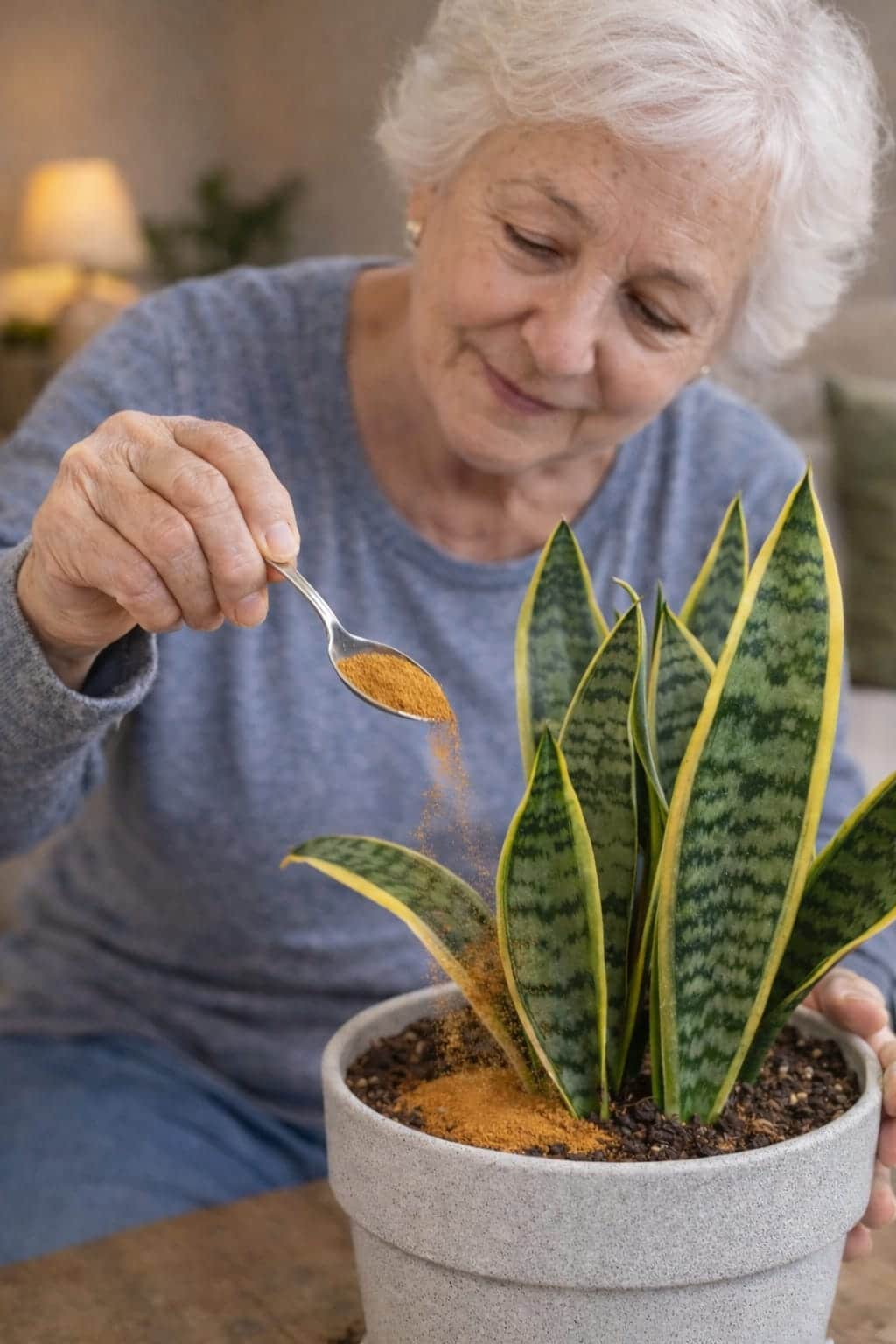
Snake plants are already some of the easiest houseplants to keep alive, which is exactly why so many people love them. They are sleek, modern, low‑maintenance, and surprisingly forgiving. But once a plant starts looking dull, stressed, or slow‑growing, people start searching for simple home tricks to bring it back.
That is where cinnamon comes in.
Lately, more and more plant lovers have been sprinkling cinnamon onto the soil around indoor plants, especially snake plants. The idea sounds perfect: natural, cheap, easy, and “safe indoors.” No harsh chemicals, no expensive products, just a kitchen spice and a quick sprinkle.
But what is this cinnamon trick actually doing? And can it really help?
The truth is that cinnamon can be useful in some situations, but not in the magical way viral videos often suggest. It is best used as a light support step, not as the main reason a snake plant recovers or thrives.
In this guide, you will learn exactly what cinnamon does for snake plants, when it helps, when it does nothing, and — most importantly — the proven care habits that keep your snake plant strong, healthy, and full of new pups.
Why Cinnamon Became Such a Popular Plant Trick
Cinnamon has a strong reputation in home gardening because many people believe it helps with:
· Surface fungal issues – Cinnamon is naturally antifungal.
· Keeping freshly cut plant areas drier – It can act as a mild drying agent.
· Discouraging some moisture‑related problems – Such as damping off in seedlings.
· Supporting a cleaner‑looking soil surface – Especially when mold appears.
That makes it especially attractive for indoor plant owners who want simple, natural methods. And because snake plants are often grown indoors in decorative pots, a “safe indoor trick” like cinnamon feels much easier and friendlier than using stronger products like chemical fungicides or synthetic fertilizers.
But there is a big difference between a helpful supplement and a miracle cure. Cinnamon is firmly in the first category.
What Cinnamon Can Actually Help With (Realistic Uses)
Cinnamon is most useful in a few specific situations. It is not a fertilizer, not a root stimulant, and not a pest killer. But it does have legitimate uses.
- After Trimming Damaged Roots or Leaves
If you cut away rot, dead roots, or damaged tissue, a tiny dusting of cinnamon on the dry cut area is sometimes used by growers because they believe it helps keep the area from staying damp too long. The antifungal properties may help prevent secondary infection while the wound calluses over.
How to use it: After trimming, let the cut area air‑dry for a few hours. Then lightly dust cinnamon powder onto the cut surface using a cotton swab or small brush. Do not pile it on.
- On the Soil Surface for Minor Mold Issues
If the top of the soil stays damp and you notice a light white or greenish mold (usually harmless but unsightly), some people use a small amount of cinnamon as a surface treatment. It can help dry the surface and discourage mold growth.
How to use it: Sprinkle a thin, even layer over the affected area. Do not apply to already dry soil or as a preventative measure without reason.
- As Part of a Cleanup Routine After Repotting
Sometimes cinnamon is not the cure — it just gets added after the real problem was already addressed, like fixing watering or improving drainage. That is why it seems like it “worked.” In reality, the plant improved because of better soil and water management, not because of the cinnamon.
The takeaway: Cinnamon can be a supporting step, but never the main event.
What Cinnamon Does NOT Do (Important Reality Check)
This is the part videos often skip. Cinnamon does not:
· Replace fertilizer – It has almost no nutrients. Your snake plant will not get greener or grow faster from cinnamon.
· Fix root rot by itself – If the roots are mushy and black, cinnamon will not save them. You must trim rot and repot.
· Make a weak snake plant suddenly grow fast – Growth depends on light, water, and soil.
· Solve poor light conditions – No amount of cinnamon will compensate for a dark corner.
· Replace proper watering habits – Overwatering is the #1 killer; cinnamon does not change that.
· Create more pups on its own – Pups come from healthy rhizomes and good light, not from a spice.
So if someone sprinkles cinnamon on a struggling snake plant and it later improves, the plant usually got better because the overall care improved too — better light, less water, fresh soil, or better drainage. The cinnamon might have helped a tiny bit with surface mold, but it was not the hero.
Why Snake Plants Really Struggle (The Real Problems)
Most snake plant problems start with the roots. Before you reach for cinnamon, understand what is actually wrong.
A snake plant usually declines because of:
· Overwatering – Soggy soil leads to root rot. This is the #1 cause of death.
· Dense soil that stays wet too long – Regular potting soil is often too heavy. Use cactus mix.
· Not enough light – Low light slows growth and weakens the plant over time.
· Poor drainage – Pots without holes or saucers full of water suffocate roots.
· Exhausted potting mix – Old soil becomes compacted, acidic, and nutrient‑poor.
· Stress around the rhizomes – Physical damage, cold, or pests.
Cinnamon cannot solve these root problems by itself. If the plant is staying soggy in heavy soil, the real fix is:
· Better drainage (pot with holes, empty saucer)
· Less frequent watering (let soil dry completely)
· A faster‑draining mix (cactus/succulent soil with perlite)
· Brighter indirect light
That is what actually restores the plant.
How to Use Cinnamon Safely on a Snake Plant (If You Want to Try)
If you want to try the cinnamon trick, the safest method is simple:
· Use only a very small amount – A light dusting, not a heavy layer.
· Apply it only to dry cut areas (after trimming roots or leaves) or lightly on the soil surface for minor mold.
· Do not coat the whole pot heavily – Too much cinnamon can dry the soil surface excessively and may create a crust that blocks water.
· Do not use it repeatedly as a substitute for proper care – Once is enough. If mold returns, address the underlying moisture issue.
Less is better. Too much cinnamon can dry certain areas more than needed, and piling random materials onto indoor soil is rarely the best long‑term solution.
What to Avoid
· Do not mix cinnamon into the entire potting mix – It is not a soil amendment.
· Do not use cinnamon on healthy, undamaged roots – It can dry them out unnecessarily.
· Do not sprinkle cinnamon on wet soil – It turns into paste and can trap moisture.
What Actually Helps a Snake Plant Thrive Indoors (No Magic Required)
If you want a healthier snake plant, focus on these basics first. These are the real secrets that experienced growers use.
- Bright Indirect Light
Snake plants tolerate low light, but they grow stronger and fuller in brighter filtered light. An east window or a south/west window with a sheer curtain is ideal.
- Dry‑Down Between Waterings
Let the soil dry completely before watering again. This is one of the most important rules. Stick your finger into the soil — if it feels dry at least 2 inches down, water. In most homes, this means every 2–4 weeks in spring/summer and once a month or less in winter.
- Fast‑Draining Soil
Use cactus or succulent potting mix, or regular potting mix amended with perlite (2 parts soil, 1 part perlite). Heavy soil holds too much moisture and leads to rot.
- Pots with Drainage Holes
Healthy roots need moisture control. A pot without holes is a death sentence for snake plants.
- Light Feeding During Active Growth
A mild balanced fertilizer (like 10‑10‑10) diluted to half strength, applied once every 6–8 weeks in spring and summer, helps support growth. This is far more effective than cinnamon.
- Stability and Patience
Snake plants are slow growers. Do not expect dramatic changes overnight. Consistent care over months yields the best results.
Continue to Page 2
Continue to page 2 for more details about this article and the key points many readers miss on the first page.