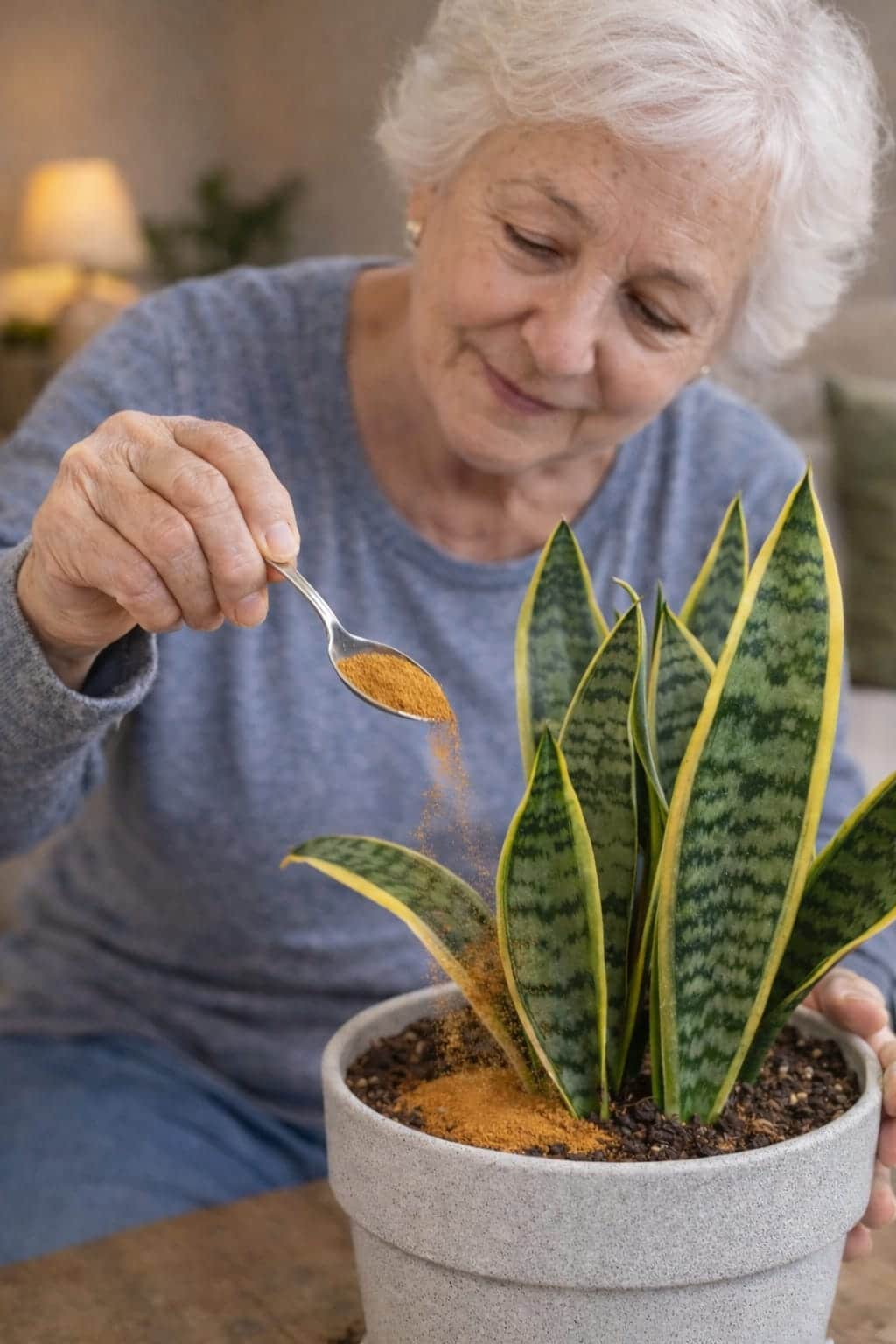
Why the Cinnamon Trick Keeps Trending
It keeps trending because it fits what people want:
· Simple
· Natural
· Inexpensive
· Easy to try at home
And sometimes it appears to work because the person using it also starts paying more attention to the plant at the same time. They water better. They move it to brighter light. They stop overwatering. They clean up damaged parts. That is usually the real reason the plant improves.
Cinnamon is not harmful when used correctly, so it becomes a harmless addition to a better care routine. But it is not the cause of the improvement.
Signs Your Snake Plant Is Actually Getting Healthier
If your care routine is working (with or without cinnamon), you may notice:
· Firmer, upright leaves – No flopping or wrinkling.
· Better color – Rich green, not pale or yellow.
· Less mushiness at the base – The plant feels solid.
· New growth in the center – Fresh leaves emerging.
· Pups emerging over time – Baby shoots around the base.
These are much better signs than whether a little cinnamon was added once.
Common Mistakes to Avoid with Snake Plants
Even experienced owners make these errors. Avoid them for a healthier plant.
Overwatering
The #1 mistake. Snake plants are drought‑tolerant. When in doubt, wait another week.
Using Regular Potting Soil Alone
Too dense. Always add perlite or use cactus mix.
Keeping the Plant in a Dark Corner
Surviving is not thriving. Move it closer to a window.
Ignoring Drainage
A pot without holes will eventually cause root rot.
Using Too Much Cinnamon or Other Powders
More is not better. Cinnamon does not feed the plant.
Expecting Fast Growth
Snake plants are slow. Patience is part of the process.
Forgetting to Dust Leaves
Dust blocks light. Wipe leaves with a damp cloth every few weeks.
A Simple Snake Plant Care Routine (No Cinnamon Required)
Here is a weekly and seasonal routine that works better than any spice.
Weekly
· Check soil moisture. Water only if completely dry.
· Wipe leaves with a damp cloth.
· Rotate the pot slightly for even light.
Monthly
· Inspect for pests (mealybugs, spider mites).
· Remove any dead or yellow leaves.
· Check that drainage holes are clear.
Spring & Summer (Active Growth)
· Bright indirect light (10–12 hours).
· Water every 2–4 weeks (when dry).
· Feed with half‑strength balanced fertilizer once every 6–8 weeks.
· Watch for new pups.
Fall & Winter (Resting Period)
· Still bright light, but days are shorter — consider a grow light.
· Water once a month or less.
· No fertilizer.
· Keep away from cold drafts.
Annually
· Refresh the top inch of soil with fresh cactus mix.
· Repot every 2–3 years if roots are crowded or soil is compacted.
Frequently Asked Questions (Cinnamon and Snake Plants)
Can I sprinkle cinnamon on my snake plant soil every week?
No. Cinnamon is not a fertilizer or a regular supplement. Use it only when needed (after cutting, or for minor surface mold). Weekly use can dry the soil surface unnecessarily.
Will cinnamon kill fungus gnats?
No. Cinnamon does not kill fungus gnat larvae. For fungus gnats, let the soil dry out completely and use yellow sticky traps. Cinnamon is not an effective treatment.
Can cinnamon help my snake plant grow pups?
No. Pups come from healthy rhizomes, good light, proper watering, and occasional feeding. Cinnamon does not stimulate pup production.
Is cinnamon safe for all snake plant varieties?
Yes, when used sparingly on cut surfaces or as a light surface dusting. Do not apply to healthy roots or pour into the crown.
What should I do if I already used too much cinnamon?
Scrape off the excess powder. If the soil surface is crusted, gently break it up. Water lightly to help the cinnamon settle, but do not oversaturate. The plant will be fine if you do not repeat it.
Can I use cinnamon on other houseplants?
Yes, in the same limited ways: on cut wounds or for minor surface mold. Do not use it as a general fertilizer or pest treatment.
What is the best natural way to prevent mold on snake plant soil?
Improve airflow, water less often, and use a well‑draining soil mix. Cinnamon can be a temporary surface treatment, but addressing the moisture is the real solution.
Does cinnamon have any nutrients for plants?
Very minimal. Cinnamon contains trace amounts of calcium, iron, and manganese, but not enough to act as a fertilizer. Do not rely on it for feeding.
Final Thoughts
Yes, the indoor cinnamon trick can be useful — but only in the right situation.
It is best thought of as a small support tool, not a miracle treatment. For snake plants, the real secret is still the same:
· Bright indirect light – Energy for growth.
· Dry periods between watering – Healthy roots need to breathe.
· Healthy, airy soil – Cactus mix with perlite.
· Good drainage – Pots with holes, no standing water.
· Calm, consistent care – No sudden changes, no over‑loving.
That is what keeps a snake plant strong indoors.
Cinnamon may help a little around the edges — on a cut root, on a spot of surface mold, or as part of a cleanup after repotting. But the roots, the soil, and the routine are what actually make the difference.
So before you reach for that spice jar, check your light. Feel your soil. Water less often. Repot into better mix. Then, if you still want to use cinnamon, do so sparingly and with clear purpose.
Your snake plant will reward you with firm, upright leaves, rich green color, and — with patience — those little pups that make the whole pot feel alive.
No magic. Just good care.
Have you tried the cinnamon trick on your snake plant? Share your experience in the comments below. And if you found this guide helpful, save it for later or send it to a friend who is wondering whether to sprinkle that spice into their plant pot.