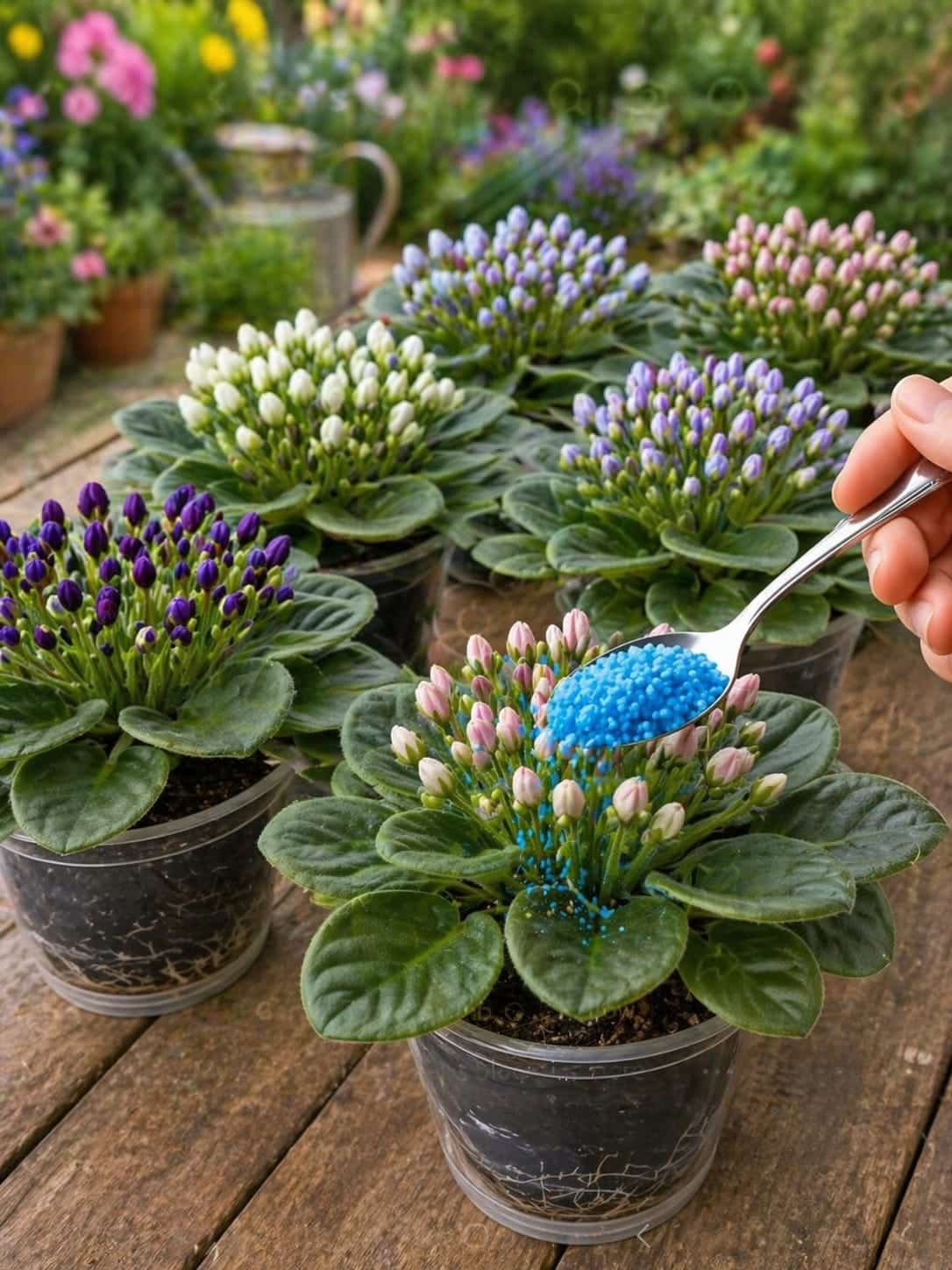
🌸💜 African violets are among the most beloved flowering houseplants. Their velvety leaves and clusters of delicate purple, pink, white, or blue blossoms can brighten any windowsill. But many people struggle to get their African violets to bloom more than once or twice a year.
The good news? These charming plants are not as fussy as they seem. With the right balance of light, water, food, and a few simple habits, your African violet can produce flowers again and again — almost nonstop through much of the year.
In this guide, you will learn the simple, proven care routine that keeps African violets blooming all year. No fancy setup, no complicated techniques. Just bright indirect light, gentle watering, light feeding, and one easy habit that makes all the difference.
Why African Violets Sometimes Refuse to Bloom
African violets (Saintpaulia) are native to the tropical rainforests of East Africa. In their natural habitat, they grow under the canopy of larger plants, receiving bright but filtered light. They also experience consistent warmth, high humidity, and regular rainfall followed by drying periods.
Indoors, we often accidentally remove the conditions they need to bloom. The most common reasons African violets stop flowering are:
· Too little light – Leaves grow lush, but buds never form.
· Overwatering or soggy soil – Roots rot, and the plant focuses on survival.
· Dry air – Buds may form but fail to open.
· Lack of nutrients – Without regular feeding, the plant lacks energy for blooms.
· Old flowers left on the plant – Energy is wasted on fading blooms.
· Pot too large – The plant fills the pot with roots instead of flowers.
The good news is that each of these problems has a simple fix. Once you adjust your care routine, your African violet can bloom for 9–10 months of the year.
The Simple Care Routine That Works
- Give Them Bright Indirect Light
African violets bloom best when they receive plenty of gentle, filtered light. A bright windowsill is ideal, as long as harsh direct sunlight does not scorch the leaves.
Best placement:
· East‑facing window (morning sun)
· North‑facing window (bright indirect light all day)
· South or west window with a sheer curtain
Signs of too little light: Dark green leaves, long leaf stems (petioles), and no flowers.
Signs of too much light: Leaves turning yellow, bleached spots, or curling under.
If your home lacks natural light, you can use a full‑spectrum LED grow light. Place it 8–12 inches above the plant for 10–12 hours daily.
- Water the Right Way (This Is the Biggest Secret)
One of the most important African violet care tips is careful watering. These plants do not like soggy soil, and they hate having water on their fuzzy leaves.
The right watering method:
· Use room‑temperature water (cold water shocks the roots).
· Water from the bottom whenever possible: place the pot in a shallow dish of water for 20–30 minutes, then let it drain.
· Alternatively, water carefully at the soil level, avoiding the leaves.
· Keep the soil lightly moist — not wet, not bone dry.
How often to water: In most homes, once every 5–7 days. Check by touching the soil; if the top inch feels dry, it is time to water.
What happens if you wet the leaves: Water droplets act like magnifying glasses, causing brown spots or ring marks. Also, moisture trapped in the crown (center) can cause deadly crown rot.
- Feed Lightly but Regularly
African violets are heavy bloomers, which means they need regular nutrition. But they are also sensitive to over‑fertilizing.
Best fertilizer: Use a balanced, water‑soluble fertilizer formulated for African violets (e.g., 14‑12‑14 or similar). Look for one that contains micronutrients.
How often to feed:
· During active growth and blooming (spring through fall): feed every 2–4 weeks at half strength.
· In winter (if growth slows): feed once a month or not at all.
Pro tip: Some growers use a “weakly, weekly” approach — fertilize with every watering at quarter strength. This provides a steady supply of nutrients without burning the roots.
Signs of over‑fertilizing: White crust on the soil surface, leaf burn, or stunted growth.
- Remove Old Flowers (The “Easy Habit” That Keeps Blooms Coming)
This is the simple trick that many people overlook. Pinch off spent blooms as soon as they fade. Do not wait for them to dry and fall off naturally.
Why it works: The plant naturally directs energy toward producing seeds from old flowers. By removing the faded blossoms, you tell the plant: “keep making flowers.” This habit alone can double or triple your bloom count.
How to deadhead: Gently pinch or snip the flower stem at its base, near the leaves. Do not pull; you might damage the crown.
- Keep Them Cozy (Temperature and Humidity)
African violets like stable indoor temperatures between 65–80°F (18–27°C) . They do not enjoy cold drafts, sudden temperature swings, or hot, dry air from heating vents.
Humidity: These plants prefer moderate to high humidity (50–70%). If your home is dry:
· Group plants together.
· Place the pot on a humidity tray (a shallow tray filled with pebbles and water).
· Use a small humidifier nearby.
Avoid misting the leaves — that can cause spotting.
- Do Not Oversize the Pot
African violets bloom best when they are slightly root‑bound. A pot that is too large encourages root growth at the expense of flowers.
The right pot size: For a standard African violet, use a pot that is about one‑third the diameter of the leaf spread. Typically, a 3–4 inch pot is perfect for a mature plant.
Pot type: Use a pot with drainage holes. Shallow, wide pots (azalea pots) work well because African violets have shallow root systems.
When to repot: Every 6–12 months, or when the plant becomes pot‑bound. Move up only one pot size. Use a light, porous potting mix designed for African violets (not regular potting soil).
Continue to Page 2
Continue to page 2 for more details about this article and the key points many readers miss on the first page.