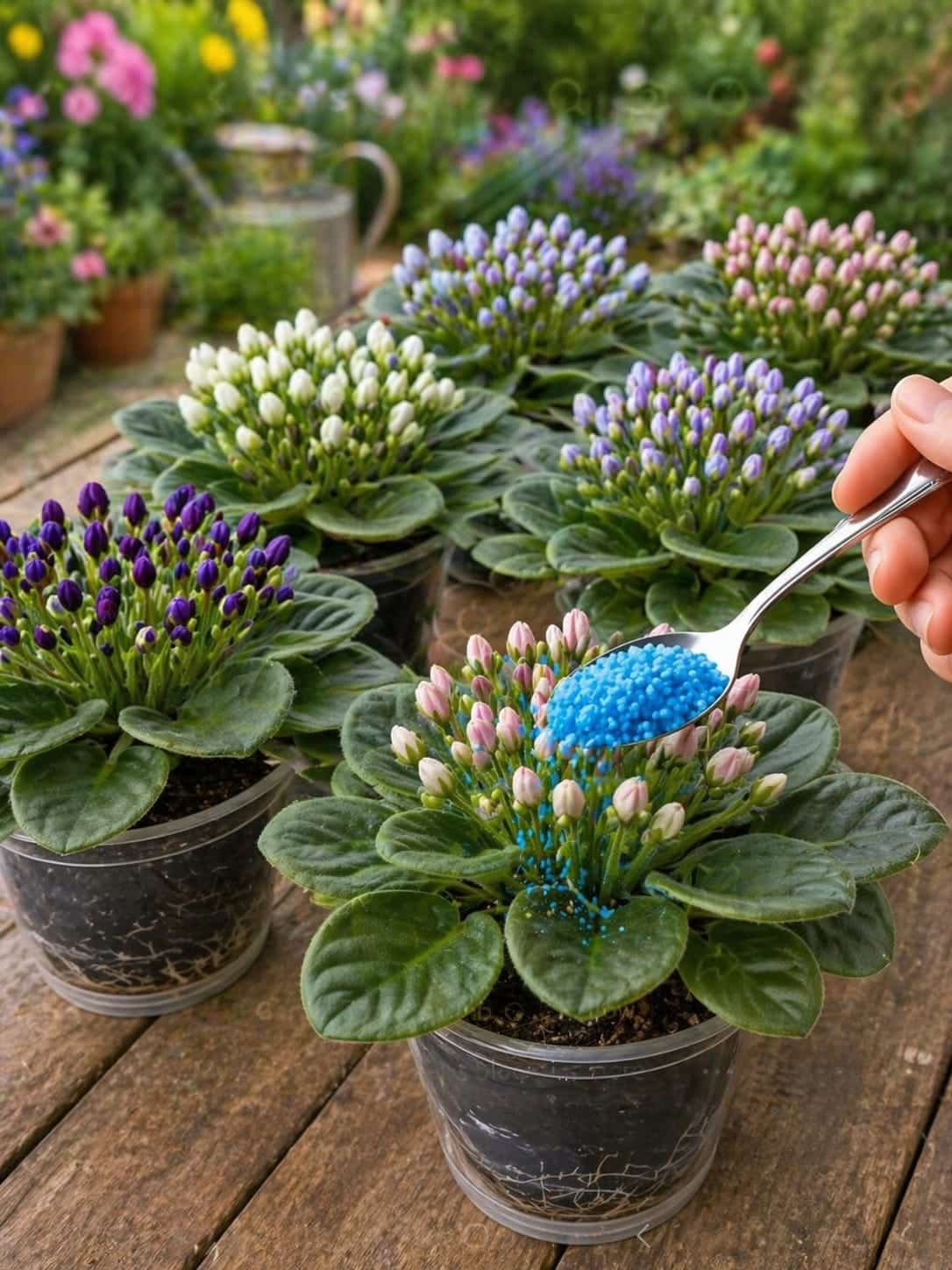
Signs Your African Violet Is Thriving
When you get the routine right, your plant will reward you with:
· Firm, bright green, velvety leaves (no yellowing or spots)
· A compact, rosette shape (leaves growing in neat circles)
· Multiple flower stalks rising above the foliage
· Blooms that last for weeks before fading
· New buds forming even as old flowers are still open
With consistent care, you can enjoy blooms for 9–10 months of the year, with only a short rest period in winter.
Common Mistakes to Avoid
· Overwatering – The #1 killer. Always let the top inch of soil dry.
· Wetting the leaves – Use bottom watering or careful soil watering.
· Too much direct sun – Scorches leaves; use sheer curtains.
· Cold drafts – Keep away from windows in winter.
· Letting the plant get pot‑bound for too long – Repot annually.
· Skipping fertilizer – Blooming uses energy; feed regularly.
· Ignoring pests – Watch for mealybugs, cyclamen mites, and aphids.
Frequently Asked Questions (African Violet Care)
How often do African violets bloom indoors?
With good care, they can bloom for 6–10 months per year. Each flower cluster lasts 2–3 weeks, and new clusters appear as old ones fade.
Can I use tap water for African violets?
It is best to use filtered or distilled water. Tap water may contain chlorine, fluoride, and minerals that can cause leaf spotting or brown edges. Let tap water sit out overnight before using.
Why are my African violet leaves curling?
Curling leaves often indicate pests (cyclamen mites), dry air, or inconsistent watering. Check under leaves for tiny insects. Increase humidity and water consistently.
Should I remove old leaves?
Yes. Remove any yellow, damaged, or outer ring of older leaves. This improves air circulation and encourages new growth. Do not remove more than 2–3 leaves at a time.
How do I propagate African violets?
Leaf propagation is easy. Cut a healthy leaf with 1–2 inches of stem. Insert the stem into moist potting mix or water. Roots form in 4–6 weeks, and baby plants appear in 2–3 months.
Can I use a self‑watering pot?
Yes, but be careful. Self‑watering pots can keep the soil too wet. Use a lightweight, porous mix and monitor moisture levels. Many experienced growers prefer standard pots with drainage.
Why are my blooms small or pale?
Insufficient light or lack of fertilizer. Move to brighter indirect light and feed with a bloom‑boosting fertilizer (higher phosphorus).
Is it normal for African violets to go dormant?
In winter, if light decreases and temperatures drop, they may produce fewer flowers. This is normal. Reduce watering and feeding, then resume in spring.
A Simple Weekly Checklist for Year‑Round Blooms
Daily:
· Enjoy your plant. No action needed.
Weekly:
· Check soil moisture. Water if top inch is dry.
· Rotate the pot a quarter turn for even light.
· Remove any faded blooms.
· Wipe leaves gently with a soft, dry brush (no water).
Monthly:
· Feed with diluted African violet fertilizer.
· Inspect for pests (under leaves, in crown).
· Remove any yellow or damaged leaves.
Seasonally:
· Repot every 6–12 months.
· Refresh the top layer of soil if not repotting.
· Move to a brighter spot in winter if needed.
Final Thoughts
African violets are not difficult plants. They simply need the right balance of bright indirect light, gentle bottom watering, light regular feeding, and consistent deadheading. When you provide these simple conditions, they reward you with almost nonstop blooms — month after month.
No fancy setup. No complicated routine. Just a few easy habits that make all the difference.
So if your African violet has been stubbornly refusing to flower, try this care routine. Move it to a brighter window. Water from the bottom. Feed it weakly with every watering. And pinch off those old blossoms.
You will be amazed at how quickly it responds. Before long, you will have a windowsill full of those charming, velvety blooms — and you will wonder why you ever struggled.
Do you have an African violet that blooms all year? Share your tips in the comments below. And if you found this guide helpful, save it for later or send it to a friend who wants to keep their African violets flowering nonstop.