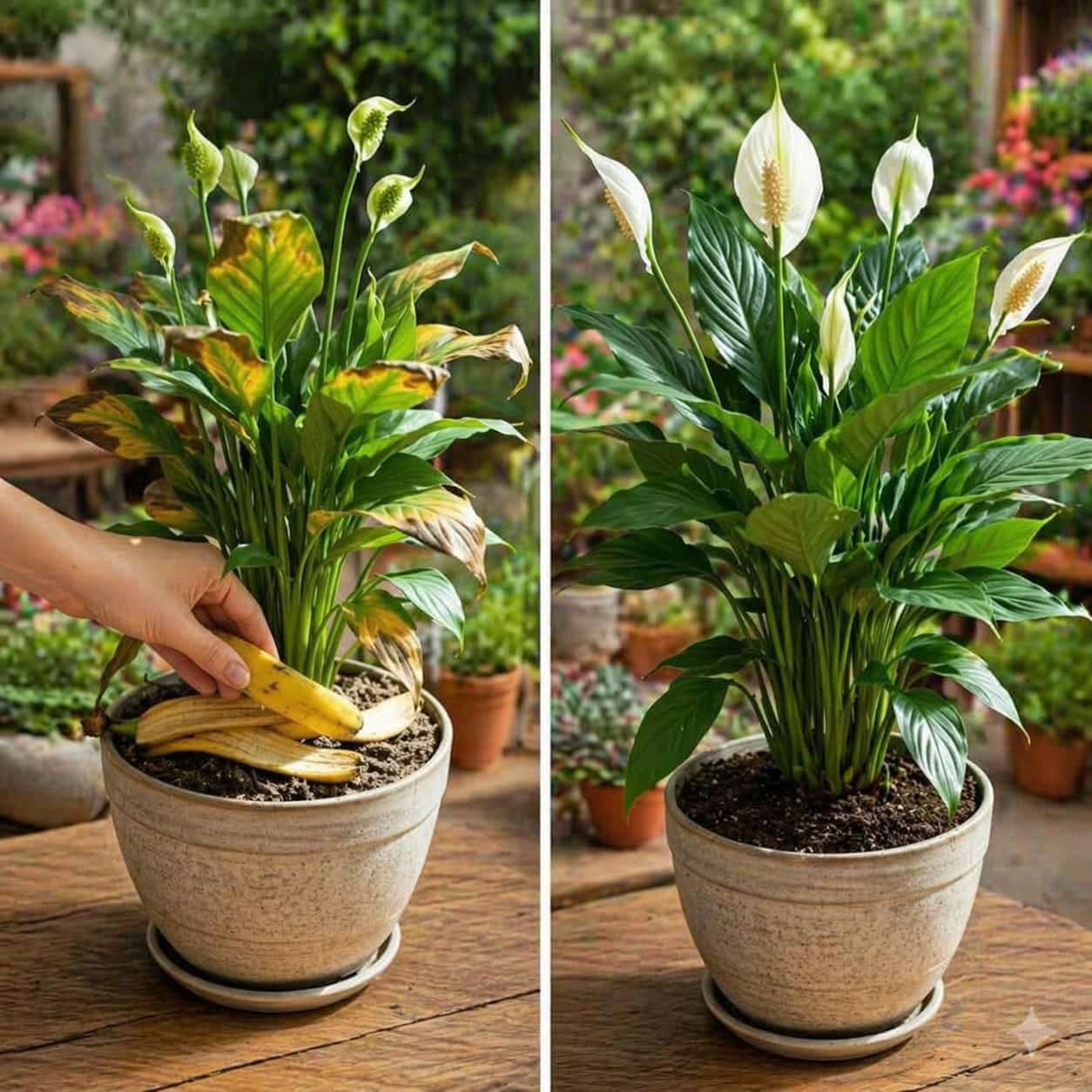
Peace lilies are loved for their deep green leaves, elegant white blooms, and ability to brighten a room with very little fuss. But when the leaves start browning, flowering slows down, or the plant begins to look tired, many people go searching for a quick homemade fix.
That is why banana peel plant hacks get so much attention.
The promise sounds almost too good to ignore: place a few banana peels in the pot, and your peace lily will suddenly grow greener, stronger, and fuller with more blooms. It is simple. It is cheap. And it feels natural.
But does it actually work? The answer is a little more complicated than most viral posts suggest.
In this guide, we will explore the real science behind banana peels as a plant amendment, why peace lilies react differently than garden plants, what actually triggers blooming, and a safer, more effective way to use banana peels if you still want to try.
Why People Use Banana Peels for Plants
Banana peels are often recommended in home gardening because they contain nutrients, especially potassium (K) , along with small amounts of phosphorus, calcium, magnesium, and other trace minerals. Potassium is linked to overall plant health, water regulation, disease resistance, and flowering. That is why many people assume banana peels are an easy, natural fertilizer.
That idea is what made this trick so popular. Social media is flooded with before‑and‑after photos of sad peace lilies supposedly transformed by a few peels tucked into the soil.
In theory, banana peels can add organic matter back into the soil over time. They are biodegradable and can contribute to a healthier soil ecosystem. But the key words are over time.
What Really Happens When You Put Banana Peels in a Peace Lily Pot
If you bury or lay banana peels directly in the soil, they do not instantly feed the plant. First, they have to break down. That decomposition process depends on moisture, warmth, microbes, and time. In an indoor pot, that can take weeks or even months.
While that is happening, a few things may occur:
· The peels slowly decompose – They release nutrients gradually, but not in a form the plant can use immediately.
· The soil may stay wetter longer – Fresh peels add moisture and can block drainage.
· Fruit flies or fungus gnats may be attracted – Decaying organic matter is a magnet for pests.
· The pot can start to smell – Especially if drainage is poor or the peels are buried deep.
· Mold may appear near the surface – White or greenish fuzz is common on decomposing peels.
So yes, banana peels are organic material. But that does not automatically make them the best direct treatment for an indoor peace lily. In many cases, the risks outweigh the benefits.
Why Peace Lilies Are Different from Garden Plants
Peace lilies (Spathiphyllum) are indoor plants that like moisture, but they do not like soggy, decaying material packed around their roots. Their roots need breathable, rich, well‑draining soil. They are not heavy feeders, and they are sensitive to salt buildup and poor aeration.
That is why stuffing fresh banana peels into the pot can sometimes create more trouble than benefit.
· In outdoor garden beds, organic scraps break down more naturally in a larger ecosystem with earthworms, beneficial bacteria, and ample airflow.
· In a small indoor container, things are more concentrated. Moisture builds up faster, decomposition is slower, pests become more noticeable, and the root zone can become anaerobic.
For a peace lily that is already stressed, adding fresh peels can push it over the edge.
Will Banana Peels Make a Peace Lily Bloom More?
Not by themselves. If a peace lily blooms better after someone uses banana peels, it is often because other conditions improved too, such as:
· Brighter indirect light
· More consistent watering
· Healthier roots (perhaps from repotting)
· Better potting mix
· Warmer indoor conditions
· Removal of old, damaged leaves
Those things have a much bigger effect on blooming than three banana peels alone. The peels get the credit, but the real hero is the overall care reset.
Peace lilies bloom in response to energy stored in their roots. That energy comes from light, water, and balanced nutrition. A fresh banana peel does not magically unlock flowers.
What Peace Lilies Actually Need to Thrive (No Peels Required)
If you want a peace lily to look lush and flower well, the basics matter far more than any viral peel trick.
- Bright Indirect Light
Peace lilies tolerate lower light, but they perform much better with bright filtered light. An east window or a south/west window with a sheer curtain is ideal. Low light = no blooms.
- Even Moisture (Not Soggy, Not Bone Dry)
They like lightly moist soil. Water when the top inch feels dry. Do not let them wilt severely, and never let the pot sit in standing water.
- Good Drainage
A pot with drainage holes is one of the biggest keys to healthy roots. Without drainage, roots rot, leaves yellow, and blooms stop.
- Occasional Feeding
A balanced houseplant fertilizer (like 10‑10‑10 or 20‑20‑20) diluted to half strength, applied once a month in spring and summer, is far more reliable than random kitchen scraps. Use a fertilizer formulated for blooming plants for even better results.
- Regular Cleanup
Remove yellow leaves and spent blooms. This helps the plant focus energy on fresh growth and new flowers.
- Humidity and Stable Temperatures
Peace lilies appreciate moderate humidity (40‑60%). Brown leaf tips are often a sign of dry air. Keep them away from cold drafts and hot vents.
When these six basics are right, your peace lily will naturally produce more blooms — no banana peels needed.
A Better Way to Use Banana Peels (If You Really Want To)
If someone really wants to use banana peels as part of a natural plant routine, it is usually safer to avoid burying fresh peels directly into an indoor pot. A gentler, more effective approach is:
Method 1: Banana Peel Compost Tea
- Cut 2–3 banana peels into small pieces.
- Place them in a jar and cover with water (about 4 cups).
- Let steep for 2–3 days, stirring occasionally.
- Strain out the peels. Dilute the liquid with an equal amount of fresh water.
- Use this diluted banana water to water your peace lily once a month.
This method extracts some of the nutrients without leaving rotting organic matter in the pot. It is still mild, so do not overdo it.
Method 2: Compost First
Add banana peels to a compost bin or vermicompost (worm bin). Let them break down completely. Then use the finished compost as a top dressing or mix it into potting soil during repotting. This eliminates pest and rot issues.
Method 3: Dry and Grind
Dry banana peels in the oven at a low temperature (200°F / 95°C) until brittle. Grind them into a fine powder. Sprinkle a teaspoon of the powder on the soil surface and water in. This provides slow‑release potassium without the mess.
These methods are safer and more controlled than stuffing whole peels into the pot.
Continue to Page 2
Continue to page 2 for more details about this article and the key points many readers miss on the first page.