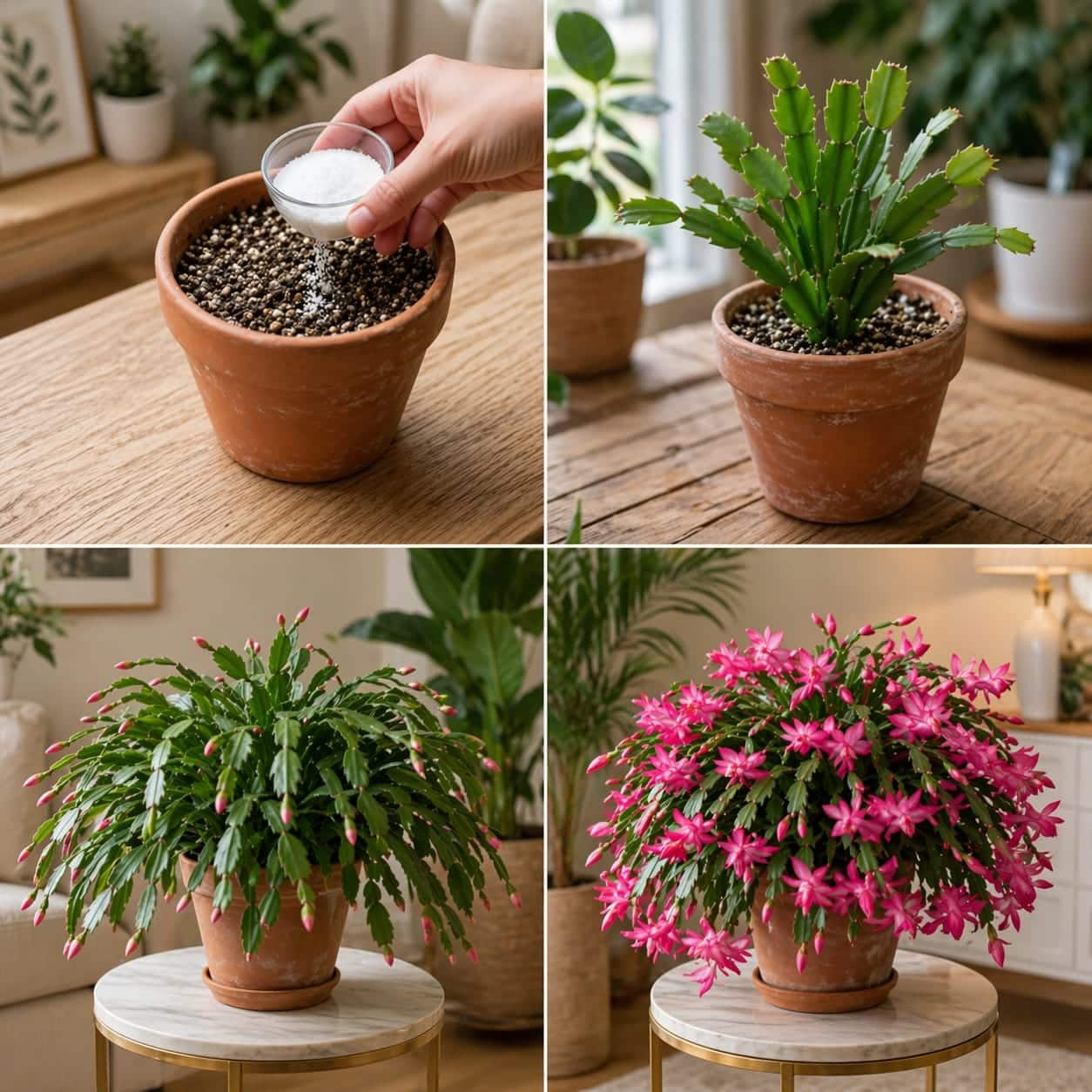
Christmas cactus is one of the most rewarding houseplants you can grow. Its arching green segments look attractive all year, but when bloom season arrives, it transforms completely. Suddenly the plant is covered in colorful buds and bright flowers that make any room feel warmer and more alive.
That is exactly why people get frustrated when the blooms are short‑lived, sparse, or fail to appear at all.
The good news is that Christmas cactus is not actually difficult. In most cases, it only needs one simple thing: the right routine at the right time. And one of the easiest ways to keep it blooming beautifully is to master the art of watering during bud and flower formation.
In this guide, you will learn the simple tip that makes all the difference, how to water correctly, the importance of light and stability, common mistakes that ruin blooms, and a complete year‑round care routine for a spectacular holiday display.
The Simple Tip: Keep the Soil Lightly Moist While Buds and Flowers Are Forming
This is where many people go wrong. They either let the plant dry out too much or they keep it too wet. During active budding and blooming, Christmas cactus likes a balanced rhythm. It does not want bone‑dry neglect, but it also does not want soggy roots.
When the soil stays lightly and evenly moist, the plant is much more likely to:
· Hold onto its buds – Prevents premature bud drop.
· Open flowers properly – Full, vibrant blooms.
· Keep blooming longer – Extended flowering period.
· Avoid stress‑related bud drop – Stable conditions = happy plant.
It is a small adjustment, but it can make a huge difference. Let us break down why this matters so much.
Why This Matters So Much (The Science Behind It)
Christmas cactus (Schlumbergera x buckleyi) is not a desert cactus. It is an epiphyte native to the tropical rainforests of Brazil, where it grows on trees in humid, shaded conditions. In nature, it receives consistent moisture and high humidity, but the roots are never waterlogged because they are exposed to air.
That means this plant likes moisture more than most succulents, but it is still sensitive to root rot. It needs moisture in moderation.
What Happens When the Soil Gets Too Dry During Budding?
· Buds shrivel and turn brown.
· Flowers drop before opening.
· Segments become limp and wrinkled.
· Blooming is delayed or sparse.
What Happens When the Soil Stays Too Wet?
· Roots become stressed or rot.
· Segments turn yellow or mushy.
· The plant declines overall.
· Buds may drop from root stress.
That is why gentle consistency works best. The goal is lightly moist soil — not soaked, not bone dry.
How to Water Your Christmas Cactus the Right Way (Step‑by‑Step)
Follow this simple watering routine for healthy buds and long‑lasting blooms.
Step 1 – Check the Soil Moisture
Stick your finger about 1 inch into the potting mix. If it feels slightly dry, it is time to water. If it still feels damp, wait another day or two.
Step 2 – Water Thoroughly
Pour room‑temperature water slowly over the soil until it runs freely from the drainage holes. This ensures the entire root ball gets moisture.
Step 3 – Let It Drain
Allow the pot to drain completely. Do not let the plant sit in standing water. Empty the saucer after 15 minutes.
Step 4 – Repeat as Needed
During budding and blooming (late fall through early winter), you may need to water every 5–7 days, depending on your home’s humidity and temperature. In winter, with indoor heating, the air can be dry, so check more often.
Pro Tip:
Use filtered or rainwater if possible. Christmas cactus can be sensitive to chlorine and fluoride in tap water, which may cause brown leaf tips.
Give It Bright Indirect Light (The #2 Bloom Booster)
Light is another big factor in bloom quality. Christmas cactus grows and flowers best in:
· Bright indirect light – An east‑facing window is ideal.
· A sunny room without harsh midday sun – A south or west window with a sheer curtain works well.
· A bright window with filtered light – North windows may be too dim.
Signs of Too Little Light:
· Few or no buds.
· Long, leggy segments.
· Pale green color.
Signs of Too Much Direct Sun:
· Reddish or scorched segments.
· Wilting even when soil is moist.
If your Christmas cactus is not blooming, move it to a brighter spot in early fall (before bud set). That alone can trigger flowering.
Keep It Stable While It Is Budding (Do Not Move It!)
One overlooked trick is avoiding too much change once buds begin to form. Christmas cactus can react badly to:
· Sudden moves – Even turning the pot can cause bud drop.
· Temperature swings – Hot vents or cold drafts.
· Rough handling – Bumping the plant.
· Big watering changes – Going from dry to soaked.
If you want blooms to stay and open well, keep the plant in a stable spot and do not keep moving it around. Find a good location with bright indirect light and consistent temperatures (65–75°F / 18–24°C during the day, slightly cooler at night).
Cooler Nights Help Trigger Blooming (Before Buds Appear)
If your goal is not just longer‑lasting blooms but more blooms in the first place, Christmas cactus often responds well to:
· Cooler nights – 50–65°F (10–18°C) for 6–8 weeks in early fall.
· Slightly reduced watering – Let the soil dry a bit more between waterings.
· Long dark periods – 12–14 hours of uninterrupted darkness each night.
This seasonal shift mimics the plant’s natural environment and helps it set buds. Start this treatment in late September or early October for blooms around Thanksgiving through Christmas.
Once buds appear, stop the darkness treatment and return to the lightly moist watering routine. Then stability becomes the priority.
Continue to Page 2
Continue to page 2 for more details about this article and the key points many readers miss on the first page.