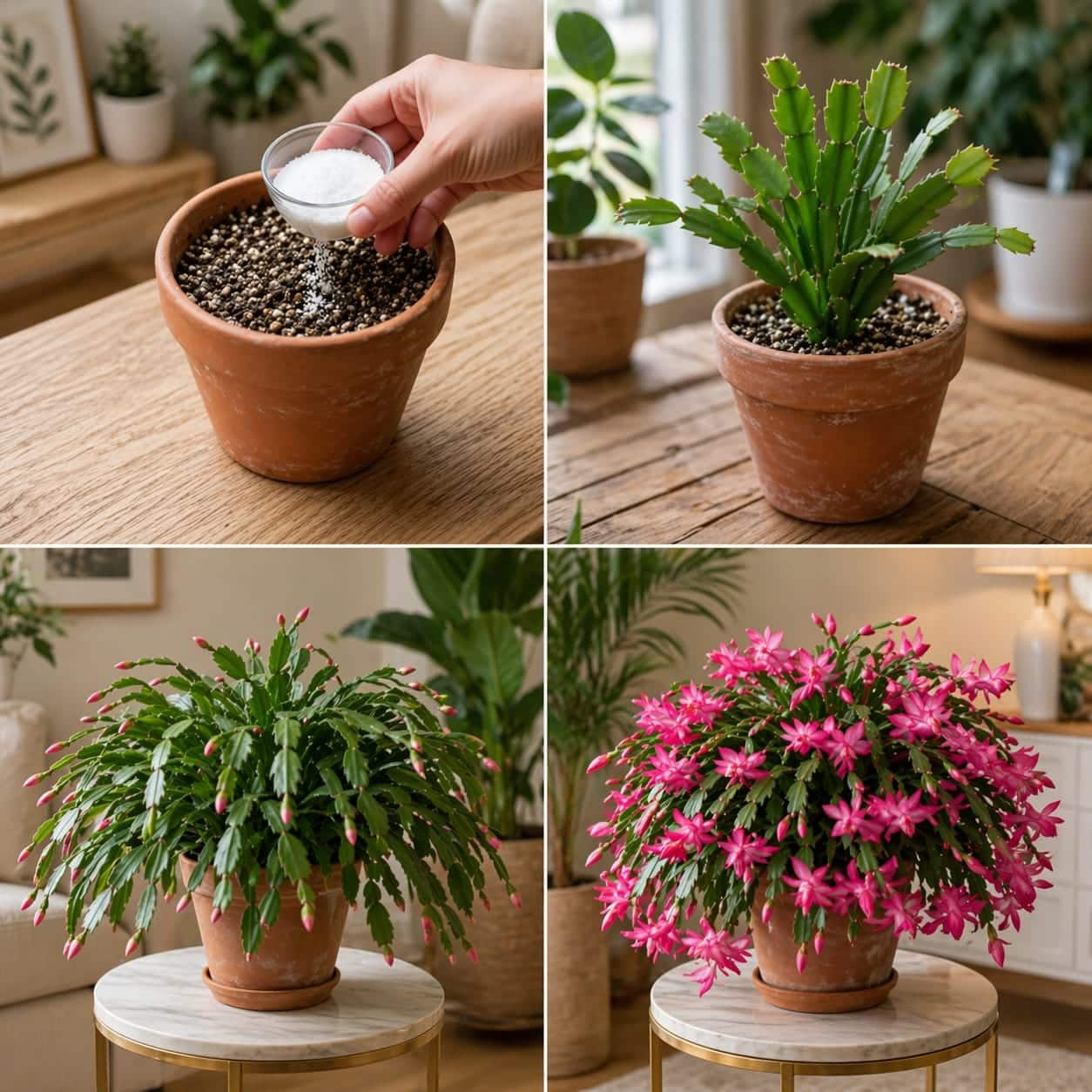
Do Not Overfeed During Flowering
A lot of people think more fertilizer means more flowers, but during blooming, heavy feeding is usually unnecessary. Too much fertilizer can create stress instead of helping.
Feeding Guidelines:
· Feed lightly during the active growing season (spring and summer) with a balanced houseplant fertilizer (20‑20‑20) diluted to half strength.
· Stop fertilizing in early fall (about 6 weeks before you expect buds).
· Do not fertilize while the plant is budding or blooming – it can cause bud drop.
· Resume light feeding after blooming ends (late winter/early spring).
Healthy roots and the right light matter much more at the bloom stage.
Remove Spent Flowers After Blooming
Once flowers fade, gently remove them so the plant can stay tidy and redirect energy. This will not create instant new flowers, but it helps the plant look better and recover well after the bloom cycle.
How to Deadhead:
· Pinch or snip off the faded flower at the base, where it meets the segment.
· Do not pull; you might damage the stem.
You can also prune back a few segments after blooming to encourage branching and a fuller plant next year.
Common Mistakes That Shorten the Bloom Season
If your Christmas cactus never seems to stay beautiful for long, one or more of these may be the reason:
· Letting it dry out too much – Buds shrivel and drop.
· Overwatering – Root rot, yellow segments, bud drop.
· Moving it after buds form – Even a slight change in light direction can cause bud drop.
· Keeping it in poor light – Few buds, pale flowers.
· Exposing it to hot or cold drafts – Heat vents or cold windows stress the plant.
· Expecting it to bloom heavily without a seasonal rest period – Christmas cactus needs cool nights and dark periods to set buds.
· Fertilizing during bloom – Causes bud drop and weak flowers.
Most of these are easy to fix once you know what the plant prefers.
A Complete Year‑Round Christmas Cactus Care Routine
Here is a simple seasonal plan to keep your plant healthy and blooming beautifully every year.
Spring (March – May)
· Light: Bright indirect light.
· Water: When top inch of soil is dry (every 7–10 days).
· Fertilizer: Begin feeding with half‑strength balanced fertilizer every 2–4 weeks.
· Other: Prune back leggy segments. Repot if needed (every 2–3 years).
Summer (June – August)
· Light: Bright indirect light. You can move outdoors to a shaded patio.
· Water: Water more frequently (1–2 times per week in hot weather) but still let soil dry between.
· Fertilizer: Continue feeding every 2–4 weeks.
· Other: Pinch back tips for fullness.
Early Fall (September – October) – Bloom Prep
· Light: Keep bright indirect light during the day.
· Darkness: 12–14 hours of complete darkness each night.
· Temperature: Cool nights (50–65°F / 10–18°C).
· Water: Reduce slightly (let soil dry a bit more).
· Fertilizer: Stop feeding completely.
· Do not repot or move the plant.
Late Fall (November – December) – Budding & Blooming
· Light: Bright indirect light (no more darkness treatment once buds are visible).
· Water: Keep soil lightly moist. Do not let it dry completely or stay soggy.
· Fertilizer: None.
· Temperature: Stable, avoid drafts and heat vents.
· Do not move the plant. Do not rotate the pot.
Winter (January – February) – Rest Period
· Light: Still bright light, but days are shorter — consider a grow light.
· Water: Reduce watering (once every 2–3 weeks).
· Fertilizer: None.
· Temperature: Normal room temperature (no need for cool nights).
· Other: Remove spent flowers. Let the plant rest for 6–8 weeks.
Late Winter/Early Spring (February – March)
· Gradually increase watering and resume fertilizer as new growth appears.
· Move back to brighter light if it was moved.
· Prepare for the next growth cycle.
Frequently Asked Questions (Christmas Cactus Blooms)
How often should I water my Christmas cactus when it is blooming?
Water when the top inch of soil feels slightly dry. In most homes, this is every 5–7 days. Always check the soil first; do not water on a schedule.
Why are my Christmas cactus buds falling off?
Bud drop is usually caused by:
· Underwatering (soil too dry)
· Overwatering (soggy roots)
· Moving the plant
· Temperature fluctuations (drafts or heat vents)
· Low humidity
· Too much fertilizer
Can I use Epsom salt to help my Christmas cactus bloom?
Epsom salt provides magnesium. If your plant shows signs of magnesium deficiency (yellowing between leaf veins), a diluted solution (1 teaspoon per gallon) once a month during growth may help. It is not a direct bloom trigger.
How do I get my Christmas cactus to bloom for the holidays?
Start the cool night/darkness treatment in late September. Give it 12–14 hours of complete darkness each night and cooler nights (50–65°F) for 6–8 weeks. Then move to bright indirect light and keep soil lightly moist.
Why are my Christmas cactus flowers pale or small?
Usually too little light or inconsistent watering. Move to a brighter spot and keep soil evenly moist during budding.
Should I mist my Christmas cactus while it is blooming?
No. Misting can cause fungal spots on flowers and segments. Instead, increase humidity with a pebble tray or humidifier.
How long do Christmas cactus blooms last?
Individual flowers last 5–7 days, but the overall blooming period (from first bud to last flower) can last 4–6 weeks with good care.
Can I save buds that have already dropped?
No. Dropped buds will not reattach. Focus on correcting the cause for future blooms.
The Emotional Reward of a Beautiful Blooming Christmas Cactus
There is a special joy in watching a Christmas cactus come to life during the darkest days of the year. When the first tiny pink or red bud appears at the tip of a green segment, it feels like a promise. Then, day by day, the bud swells. Finally, it opens into a stunning, delicate flower that seems to glow.
That is the reward of good care — not complicated tricks, but simple, consistent habits.
So this year, try the simple tip: keep the soil lightly moist while buds and flowers are forming. Pair it with bright indirect light, stable conditions, and a calm environment. Then watch as your Christmas cactus rewards you with weeks of color and joy.
Final Thoughts
If you want your Christmas cactus to keep blooming beautifully, start with the simplest tip first: keep the soil lightly moist while buds and flowers are developing.
That one habit helps the plant stay stable, reduces bud drop, and supports a longer, prettier bloom display.
Pair that with bright indirect light, good drainage, and a calm, consistent environment, and your Christmas cactus has a much better chance of becoming the stunning seasonal showpiece it is meant to be.
Because with this plant, beautiful blooming is usually not about a miracle formula. It is about gentle consistency at exactly the right moment.
So check your soil. Water when it is slightly dry. Do not move the plant. Give it good light. And then step back and enjoy the show.
Your Christmas cactus will thank you — with blooms that last and last.
Have you tried these tips on your Christmas cactus? Share your experience in the comments below. And if you found this guide helpful, save it for later or send it to a friend who wants a stunning holiday bloom display.
This article is for informational purposes only. Growing conditions vary. Always observe your plant and adjust care as needed. When in doubt, less water and stable conditions are the answer.