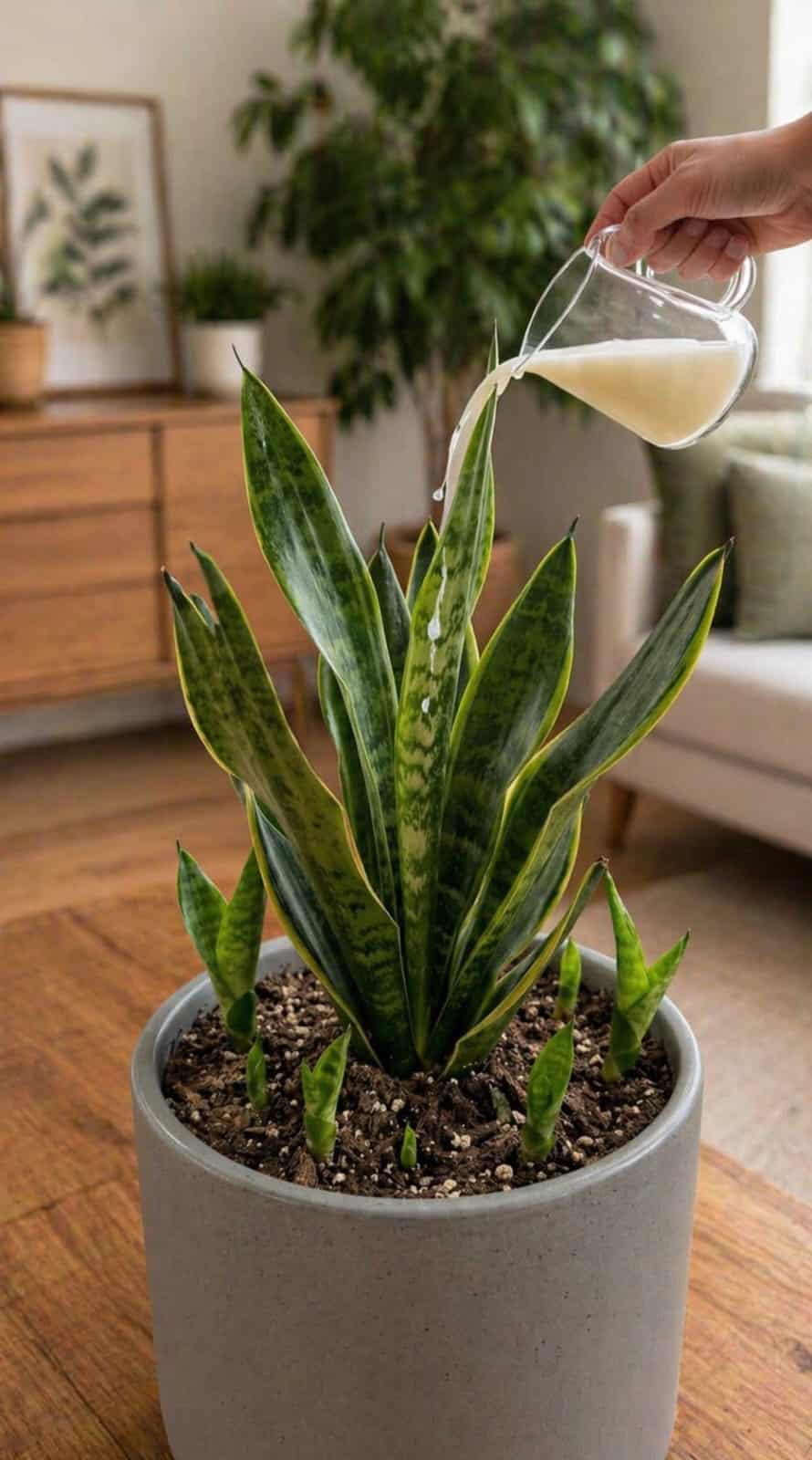
Snake plants are famous for being nearly indestructible. They handle missed waterings, dry indoor air, and low‑maintenance routines better than most houseplants. But because they grow slowly, many people start looking for simple tricks to make them grow faster, look healthier, and produce more pups around the base.
That is why the “milk on snake plants” hack gets so much attention. A splash of white liquid. A few new baby shoots. A dramatic before‑and‑after promise. It looks convincing.
But before pouring milk into the pot, it helps to understand what is really happening. In this guide, we will explore why people use milk on plants, what snake plants actually need to thrive and produce pups, the risks of using milk indoors, and the proven methods that will give you a fuller, healthier snake plant.
Why People Use Milk on Plants
Milk is often mentioned in plant care because it contains:
· Calcium – Important for cell wall structure and root development.
· Small amounts of protein – Break down into nitrogen over time.
· Sugars – Can feed soil microbes (but also pests).
· Trace minerals – Magnesium, potassium, and others.
This makes people assume it works like a natural fertilizer. In some specific garden situations, diluted milk has been used in limited ways, especially outdoors for treating powdery mildew on leaves. But that does not mean it is automatically a good everyday soil treatment for indoor snake plants.
That is where many people go wrong. Milk is not a balanced fertilizer, and it behaves very differently in a small indoor pot than in a large outdoor garden bed.
What Snake Plants Actually Need Most
Before considering any “trick,” remember what snake plants truly need to grow strong and produce pups. These are the non‑negotiable basics.
- Bright Indirect Light or Strong Filtered Light
Snake plants tolerate low light, but they grow faster and produce more pups in brighter conditions. An east window or a south/west window with a sheer curtain is ideal.
- Fast‑Draining Soil
Use a cactus or succulent potting mix. Heavy, moisture‑retentive soil leads to root rot. Add perlite or coarse sand for extra drainage.
- A Pot with Drainage Holes
This is non‑negotiable. Without drainage, water pools at the bottom, roots rot, and the plant declines.
- Soil That Dries Between Waterings
Water only when the soil is completely dry. In most homes, this means every 2–4 weeks in spring/summer and once a month or less in winter.
- Light Feeding Only When Needed
A balanced, half‑strength succulent or houseplant fertilizer once in spring and once in summer is plenty. Overfeeding causes weak growth.
That is the real formula behind stronger growth and more pups. If those conditions are already good, the plant may naturally start producing babies around the base. If those conditions are poor, milk will not fix the real issue.
The Problem with Pouring Milk into the Soil
Milk breaks down quickly. In an indoor pot, especially one that stays moist, that can cause several problems:
· Sour smell – Spoiled milk has a rancid odor that can fill a room.
· Mold growth – White or green fuzz appears on the soil surface.
· Fungal issues – Excess moisture and organic matter invite fungi.
· Attraction of gnats or pests – Fruit flies and fungus gnats love fermenting sugars.
· Residue building up in the soil – Milk solids coat the potting mix, reducing drainage.
· Stress around the roots – The root zone becomes anaerobic and unhealthy.
Snake plants hate soggy, stale root conditions. Their roots need air. Their soil needs to dry out. Anything that adds organic heaviness to the pot can work against them. So while milk sounds natural, it is not always plant‑friendly in a container environment.
Will Milk Make Snake Plants Produce More Pups?
Not directly. Pups (baby snake plants) usually appear when the plant has:
· Healthy rhizomes underground – Firm, plump storage organs.
· Enough light – Energy for reproduction.
· A stable watering routine – Not too wet, not too dry.
· Room to spread in the pot – A slightly snug pot encourages pups.
· Enough stored energy – From proper light and occasional feeding.
A plant that suddenly makes babies after a “milk trick” may actually be responding to other changes that happened at the same time:
· Better placement near a window (more light)
· Warmer season (natural growth cycle)
· Improved watering (owner started paying attention)
· A mature root system (it was ready anyway)
· Simple natural growth timing
The milk often gets the credit, but it is usually not the real cause. In controlled conditions, milk alone has not been shown to stimulate pup production in snake plants.
Continue to Page 2
Continue to page 2 for more details about this article and the key points many readers miss on the first page.