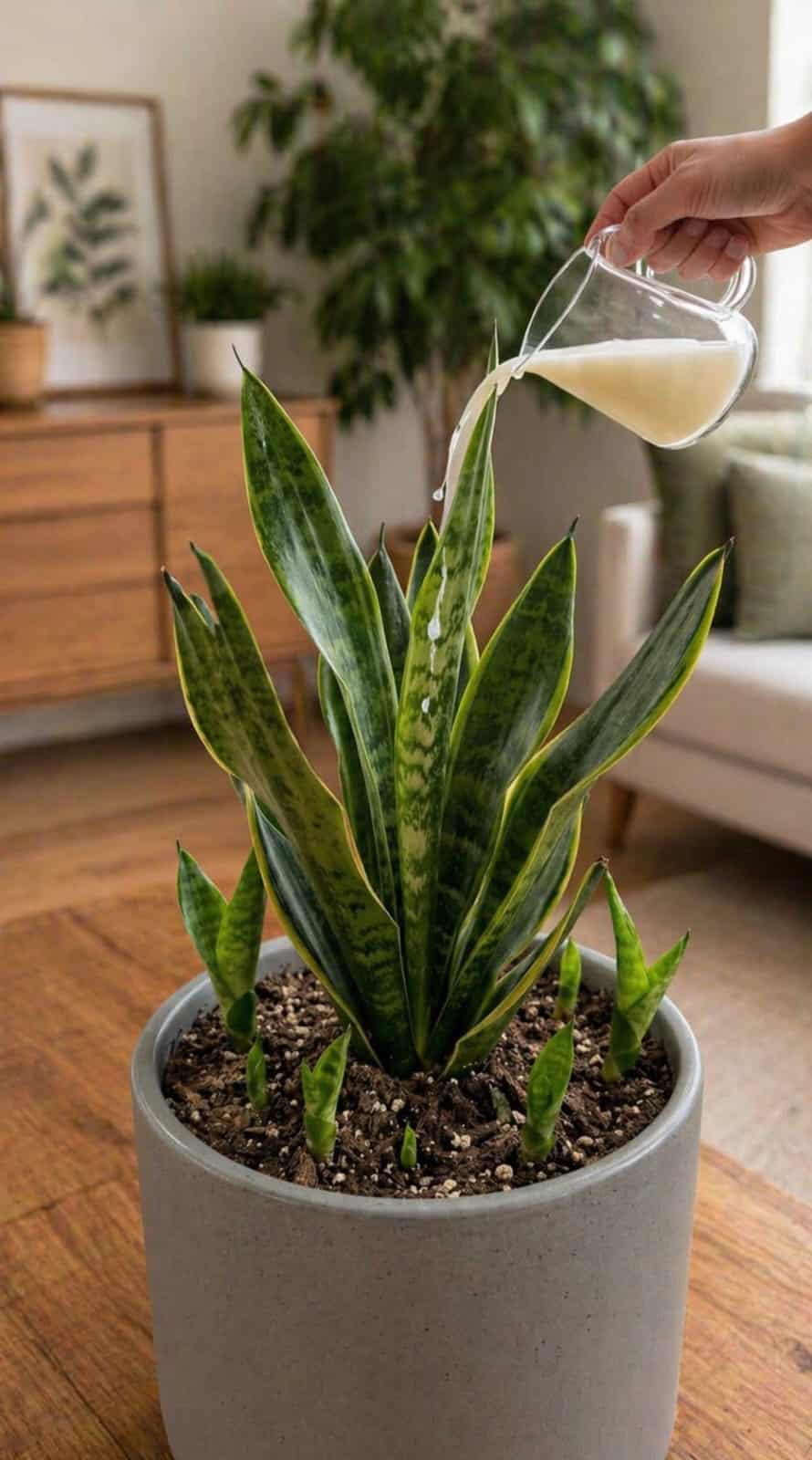
What to Do Instead If You Want More Pups
If your goal is a fuller snake plant with baby shoots, focus on these proven methods instead of pouring milk into the pot.
- Give It Brighter Light
Snake plants tolerate low light, but they multiply better in brighter conditions. Move yours to an east window or a south/west window with a sheer curtain. If your home is dark, use a full‑spectrum grow light for 10–12 hours daily.
- Let the Soil Dry Well
Overwatering slows root health and can stop pup production. Water only when the soil is completely dry. When in doubt, wait another week.
- Use a Snug Pot
Snake plants often pup better when the roots feel settled and slightly crowded. A pot that is too large encourages root sprawl instead of pups. Choose a pot only 1–2 inches larger than the root ball.
- Feed Lightly in Active Growth
A mild succulent or houseplant fertilizer (half strength) once in spring and once in summer is much more reliable than random kitchen hacks. Do not fertilize in fall and winter.
- Be Patient
Snake plants multiply slowly, but healthy plants do it naturally. You may see new pups every 6–12 months. Do not rush the process.
Signs Your Snake Plant Is Actually Thriving (Without Milk)
A strong snake plant usually shows:
· Firm, upright leaves – No flopping, wrinkling, or soft spots.
· Deep green color – Rich, vibrant, with clear variegation.
· Steady new leaf growth – Fresh leaves emerging from the center.
· Pups emerging around the base – Baby shoots appear over time.
· Dry, healthy soil cycles – The pot dries out between waterings.
· No mushy stems or foul smell – Roots are healthy.
These are the signs to trust. If you see pups, your care routine is working. Do not change it.
When Milk Is Most Likely to Backfire
Milk is especially risky for snake plants if:
· The pot has poor drainage – Water and milk sit at the bottom, causing rot.
· The soil already stays wet too long – Adding milk adds more moisture and organic matter.
· The plant is indoors in warm conditions – Warmth accelerates spoilage and mold.
· Fungus gnats are already a problem – Milk attracts them.
· The snake plant is stressed or weak – A struggling plant cannot handle additional root stress.
In these situations, milk may make the root zone worse instead of better. You could end up with a foul‑smelling, moldy pot and a snake plant that declines further.
What About Diluted Milk? Is It Safer?
Some gardeners recommend diluting milk with water (1 part milk to 4–5 parts water) before applying. While this reduces the concentration, it does not eliminate the risks. The sugars and proteins are still present. The mixture will still spoil, attract pests, and leave residue.
If you absolutely want to experiment, use a very weak dilution (1:10) and apply only once, then observe for 4–6 weeks. But honestly, for snake plants, there are far safer and more effective ways to encourage growth and pups.
A Better “Trick”: Proper Care for More Pups
Here is a simple, proven routine that will give you a fuller snake plant without any kitchen experiments.
Weekly
· Check soil moisture. Water only if completely dry.
· Wipe leaves with a damp cloth to remove dust.
· Rotate the pot for even light.
Monthly
· Inspect for pests (mealybugs, spider mites).
· Remove any dead or yellow leaves.
· Flush the soil with plain water to prevent salt buildup.
Spring & Summer (Active Growth)
· Bright indirect light (10–12 hours).
· Water every 2–4 weeks (when dry).
· Feed with half‑strength succulent fertilizer once at the beginning of spring and once in midsummer.
· Watch for new pups.
Fall & Winter (Resting Period)
· Still bright light, but days are shorter — consider a grow light.
· Water once a month or less.
· No fertilizer.
· Keep away from cold drafts (below 50°F / 10°C).
Annually
· Refresh the top inch of soil with fresh cactus mix.
· Repot every 2–3 years if roots are crowded or soil is compacted.
· When repotting, check rhizomes for rot. Trim any soft, dark areas.
This routine has been proven to produce healthy, pup‑filled snake plants for decades — no milk required.
Frequently Asked Questions (Milk and Snake Plants)
Can I use any type of milk?
If you insist on trying, use plain, whole or 2% milk. Avoid skim (too watery), flavored (sugars), and plant milks (they spoil faster and offer different nutrients).
How often should I put milk on my snake plant?
Never is the best answer. If you must experiment, once every 2–3 months maximum. Once a week will almost certainly cause problems.
Will milk kill my snake plant?
Not immediately, but repeated use can lead to root rot, mold, and pest infestations that eventually kill the plant. It is not worth the risk.
What are the signs that milk is hurting my plant?
· White or green mold on the soil surface
· A sour, rotten smell from the pot
· Small flying insects (fungus gnats) around the soil
· Leaves turning yellow or drooping even though the soil is dry
· A white crust on the soil or pot rim
If you see any of these, stop milk immediately. Flush the pot with plain water. If the problem persists, repot with fresh cactus mix.
Is there any plant that likes milk?
Some gardeners use diluted milk as a foliar spray to prevent powdery mildew on squash, cucumbers, and roses. This is applied to leaves, not soil. For indoor houseplants, milk is almost never recommended.
What should I use instead of milk for snake plants?
Use a balanced, water‑soluble succulent fertilizer (like 10‑10‑10 or 2‑7‑7) diluted to half strength, applied once in spring and once in summer. That is safer, more effective, and designed for container plants.
Can I use yogurt water or buttermilk?
No. These are even more concentrated and spoil faster. Avoid all dairy products in houseplant soil.
How do I get my snake plant to produce more pups without any special products?
Focus on light, soil, and watering. Move it to a brighter spot. Use fast‑draining cactus mix. Water only when completely dry. Be patient. Healthy snake plants produce pups naturally.
The Bottom Line: Skip the Milk, Stick to the Basics
The milk trick sounds easy, but it is not the safest or smartest way to grow a healthier snake plant. In most indoor pots, milk is more likely to create residue and root‑zone problems than to produce magical results.
If you want stronger growth and more pups, stick with what actually works:
· Bright indirect light – Energy for growth.
· Fast‑draining soil – Cactus mix with perlite.
· Deep but infrequent watering – Let soil dry completely.
· A snug pot – Not too large, not too small.
· Light feeding during active growth – Once or twice a year.
That is the real secret.
Because the best‑looking snake plants are usually not built by viral shortcuts. They are built by healthy roots, patient care, and the right growing conditions day after day.
So save the milk for your cereal. Give your snake plant what it really needs — light, dry soil, and time. Then watch as those little pups begin to appear, one by one, filling the pot with life.
Have you tried the milk trick on your snake plant? Share your experience in the comments below. And if you found this guide helpful, save it for later or send it to a friend who wants a fuller, healthier snake plant.
This article is for informational purposes only. Growing conditions vary. Always observe your plant and adjust care as needed. When in doubt, focus on light, soil, and water before any home remedy.