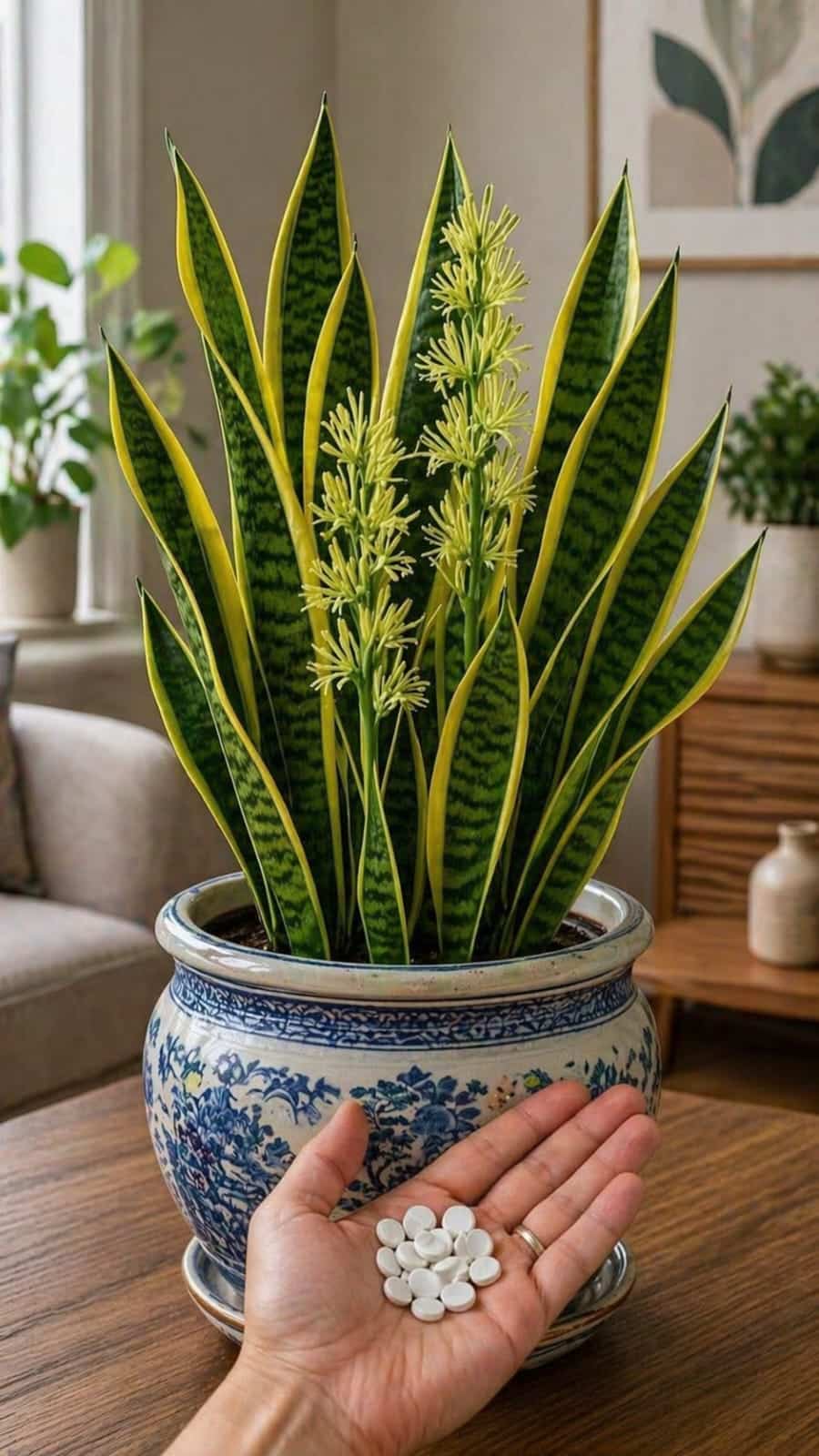
Sansevieria, better known as snake plant, is one of the easiest houseplants to keep alive. It tolerates dry air, missed waterings, and lower light better than most plants, which is exactly why so many people love it. But when growth slows down or the leaves stop looking as bold and healthy as before, many owners start searching for a simple feeding trick.
That is where “simple pills” or tablets come in.
You may have seen people dropping white tablets into the pot and claiming that their sansevieria suddenly grew faster, looked greener, or produced more pups. It sounds convenient, and if the plant in the photo looks amazing, it is easy to believe that the pills are the whole secret.
But the truth is a little different.
In this guide, I will share how I feed my snake plant with simple pills, what kind of tablets are actually safe, how to use them without harming your plant, and — most importantly — the proven care habits that make Sansevieria thrive, with or without fertilizer.
What These “Simple Pills” Usually Are
When people say they feed their sansevieria with pills, they may mean one of several things:
· Slow‑release fertilizer tablets – Designed for houseplants, these release nutrients gradually over weeks or months.
· Plant nutrient pellets – Similar to slow‑release but often more concentrated.
· Calcium tablets – Human supplements (like antacids or calcium carbonate).
· Vitamin tablets – Human vitamins such as B‑complex or C.
· Crushed supplements – Any number of unverified products.
· Unknown tablets – Used for attention, with no real plant benefit.
This matters because not all tablets are safe for plants. A proper slow‑release fertilizer made for houseplants can be useful in some cases. But random tablets that are not designed for plant care can:
· Burn roots – Concentrated chemicals damage delicate root hairs.
· Create salt buildup – A white crust on the soil surface blocks water and air.
· Upset soil balance – Sudden pH shifts or nutrient overload stress the plant.
· Slow growth instead of helping it – A stressed snake plant will not produce new leaves or pups.
So the first rule is simple: Only use tablets that are actually made for plants.
Does Sansevieria Even Need Feeding? (Honest Answer)
Yes, but not much. Snake plants are slow growers. They do not need heavy feeding or constant fertilizing. In fact, too much fertilizer is one of the easiest ways to cause trouble.
What Sansevieria Really Needs to Thrive:
· Bright indirect light – Survives in low light, but grows better in brighter conditions.
· Fast‑draining soil – Cactus or succulent mix with perlite.
· Watering only after the soil dries completely – Overwatering is the #1 killer.
· A pot with drainage holes – Non‑negotiable for root health.
· Light feeding during active growth – A gentle nutrient boost in spring and summer.
That means feeding can help, but only when it is done gently. A snake plant that is overwatered, underlit, or sitting in compacted soil will not benefit from any pill.
The Safest Way to Use Fertilizer Tablets on Sansevieria
If you are using real plant fertilizer tablets or slow‑release pellets, the best approach is moderation. Here is how I feed my snake plant safely.
Step 1 – Choose the Right Product
Look for a slow‑release fertilizer tablet specifically labeled for houseplants, succulents, or cacti. A balanced formula (like 10‑10‑10 or 14‑14‑14) is fine. Avoid high‑nitrogen fertilizers (like 30‑10‑10) unless you want leaf growth at the expense of roots.
Recommended: Jobe’s Organics Fertilizer Spikes for Succulents, Osmocote Plus slow‑release pellets, or similar.
Step 2 – Apply at the Right Time
Apply fertilizer tablets only during the active growing season – spring and summer. Do not fertilize in fall and winter when the plant rests.
Step 3 – Use a Small Amount
Follow the label directions for pot size. For a 6‑inch pot, one small tablet or a quarter of the recommended amount is often plenty. Do not pile multiple tablets into one small pot.
Step 4 – Insert into the Soil
Push the tablet into the soil near the edge of the pot, away from the main root ball. Do not place it directly against the roots.
Step 5 – Water Normally
Water the plant as usual (when the soil is dry). The moisture will release the nutrients slowly.
Step 6 – Do Not Repeat Too Soon
One application in spring is often enough for the entire year. If you see pale leaves or very slow growth, you can apply once more in midsummer. Never fertilize more than twice a year.
Step 7 – Observe
Watch for signs of overfeeding: yellow leaf tips, white crust on the soil, or slowed growth. If you see these, flush the soil with plain water and stop fertilizing.
Why People Think the Pills Caused the Improvement (And What Really Happened)
Sometimes a sansevieria does look much better after people start using tablets. But in many cases, the improvement is not coming from the pills alone. Usually something else improved too:
· The plant was moved to better light – More energy for growth.
· Watering became less frequent – Healthy roots, not rot.
· The soil was refreshed – Fresh nutrients and better drainage.
· The roots were healthier – Repotting removed dead material.
· The growing season naturally started – Spring warmth triggers growth.
The tablet gets the credit because it is dramatic and easy to show in a photo. But the real results usually come from the overall care routine. A pill cannot fix low light, overwatering, or compacted soil.
Continue to Page 2
Continue to page 2 for more details about this article and the key points many readers miss on the first page.