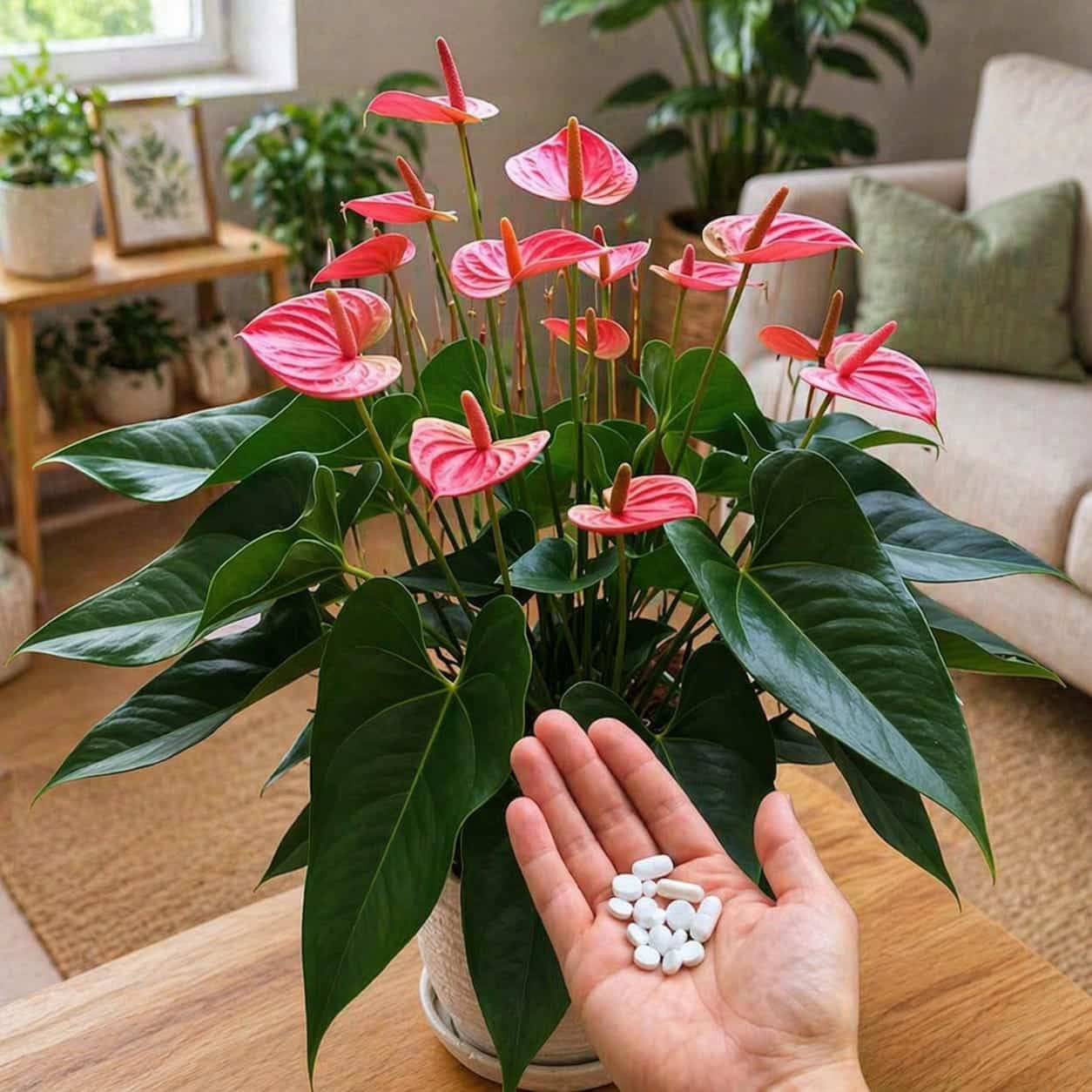
Anthuriums are some of the most striking plants you can grow. Their glossy leaves, bold heart‑shaped blooms, and tropical look make them feel far more exotic than most ordinary houseplants. So when flowering slows down, it is easy to get tempted by dramatic plant hacks that promise a fast fix.
A handful of white tablets. One mystery ingredient. And suddenly your anthurium is supposed to explode with blooms.
It sounds exciting, but it is also where many plant owners go wrong. Because anthuriums do not bloom heavily from random pills or unknown additives. They bloom when the plant is healthy enough, established enough, and growing in the right conditions.
In this guide, you will learn why these “one ingredient” bloom tricks go viral, the risks of using mystery tablets, what actually makes anthuriums produce more flowers, and a safe, proven routine to encourage stunning, long‑lasting blooms.
Why These “One Ingredient” Bloom Tricks Go Viral
They are simple, visual, and easy to copy. People love them because they promise:
· Faster blooms – Overnight transformation.
· Bigger flowers – More impressive than ever.
· Greener leaves – A healthier overall plant.
· Less effort – Just drop and forget.
And with anthuriums, that promise is especially appealing. These plants already look luxurious, so the idea of making them bloom even more feels irresistible.
But a dramatic before‑and‑after photo does not prove the tablet or ingredient caused the result. Often, other changes happened at the same time: better light, improved watering, or simply the plant’s natural growth cycle. The mystery ingredient gets the credit, but the real work was done elsewhere.
Why Mystery Tablets Are Risky (What They Really Are)
In videos and photos, the white “ingredient” is often unclear. It could be:
· Fertilizer tablets – Slow‑release or instant plant food.
· Calcium tablets – Antacid or calcium supplements.
· Vitamin supplements – Human vitamins like B‑complex or C.
· Aspirin – Salicylic acid, sometimes used for plant immunity.
· Crushed medication – Anything from the medicine cabinet.
· Something used for attention – No real plant benefit.
That is the problem. If you do not know exactly what it is, how it affects soil chemistry, or whether it is safe for aroids (the plant family anthuriums belong to), dropping it into the pot can easily do more harm than good.
Unknown tablets can:
· Burn roots – Concentrated chemicals damage delicate root hairs.
· Cause salt buildup – A white crust on the soil surface blocks water and air.
· Disrupt soil pH – Sudden shifts stress the plant.
· Create nutrient imbalance – Too much of one nutrient locks out others.
· Stress the plant instead of helping it – Instead of more blooms, you get yellow leaves or slowed growth.
A healthy anthurium does not need random pills. It needs consistent, appropriate care.
What Actually Makes Anthuriums Bloom More (The Real Secrets)
If you want more flowers, focus on what truly drives blooming. These are the proven factors that turn a healthy anthurium into a prolific bloomer.
- Bright Indirect Light
Anthuriums bloom best with strong filtered light. An east window or a south/west window with a sheer curtain is ideal. Too little light often means lots of leaves and very few flowers. If your anthurium has never bloomed for you, move it closer to a window. You may see buds within 4–6 weeks.
- Warm Temperatures
These are tropical plants. They like warmth and steady indoor conditions. Daytime temperatures of 70–85°F (21–29°C) are ideal. Avoid cold drafts (below 60°F / 15°C) and sudden temperature swings.
- Even Moisture (Not Soggy, Not Bone Dry)
Anthuriums do not want bone‑dry soil, but they also do not want to stay soggy. Healthy roots need moisture plus airflow. Water when the top inch of soil feels dry. Use a pot with drainage holes and a chunky, well‑draining mix.
- Airy Soil Mix
Anthuriums do best in chunky, breathable mixes that let roots breathe. A good mix includes orchid bark, perlite, coco coir, and charcoal. Never use regular potting soil alone — it is too dense and retains too much water.
- Light Feeding (Not Heavy Fertilizing)
A mild balanced fertilizer during active growth (spring and summer) is much safer and more effective than random mystery ingredients. Use a water‑soluble fertilizer like 20‑20‑20 diluted to quarter strength. Feed every 2–4 weeks. Do not fertilize in fall and winter.
- Humidity
Good humidity supports stronger growth and cleaner leaves, which helps the whole plant perform better. Aim for 60–80% humidity. Use a humidifier, pebble tray, or group plants together. Brown leaf tips are a sign of low humidity.
- Remove Spent Blooms
Once a flower fades, cut it off at the base. This redirects the plant’s energy into producing new blooms instead of maintaining old ones. It also keeps the plant looking tidy.
The Biggest Bloom Secret: Grow a Stronger Plant First
More flowers usually come from a healthier plant, not from a sudden bloom trick. A strong blooming anthurium usually has:
· Healthy roots – Firm, white or tan, not mushy or brown.
· Glossy, firm leaves – No yellowing, curling, or spots.
· Steady new growth – New leaves emerging regularly.
· Enough light – Bright indirect light for 10–12 hours daily.
· Consistent watering – Not too wet, not too dry.
· Time to mature – Young anthuriums may not bloom for 1–2 years.
When those things are in place, flowering becomes much more likely. No pill can replace good culture.
Better Ways to Encourage More Blooms Safely (No Mystery Pills)
If you want a real bloom boost, try this proven approach instead.
Step 1 – Move to Brighter Indirect Light
Place your anthurium within 2–3 feet of an east window, or a south/west window with a sheer curtain. If your home is dark, use a full‑spectrum LED grow light for 10–12 hours daily.
Step 2 – Use a Chunky Aroid Mix
Repot into a mix of 2 parts orchid bark, 1 part perlite, 1 part coco coir, and a handful of charcoal. This provides the air circulation anthurium roots need.
Step 3 – Water When the Top Inch Starts to Dry
Stick your finger into the soil. If the top inch feels dry, water thoroughly until it runs from the drainage holes. Empty the saucer. Do not water again until the top inch dries again.
Step 4 – Feed Lightly Every Few Weeks in Active Growth
Use a balanced, water‑soluble fertilizer (20‑20‑20) diluted to quarter strength. Apply every 2–4 weeks from March through August. Do not fertilize in fall and winter.
Step 5 – Wipe Leaves Clean
Dusty leaves cannot photosynthesize efficiently. Use a soft, damp cloth to wipe the leaves every few weeks. This also helps prevent pests.
Step 6 – Remove Spent Blooms
Cut off faded flowers at the base. This encourages the plant to produce new blooms.
Step 7 – Be Patient
Anthuriums bloom in cycles. After a flush of flowers, the plant may rest for 2–3 months before blooming again. Do not panic. Continue good care, and the blooms will return.
Continue to Page 2
Continue to page 2 for more details about this article and the key points many readers miss on the first page.