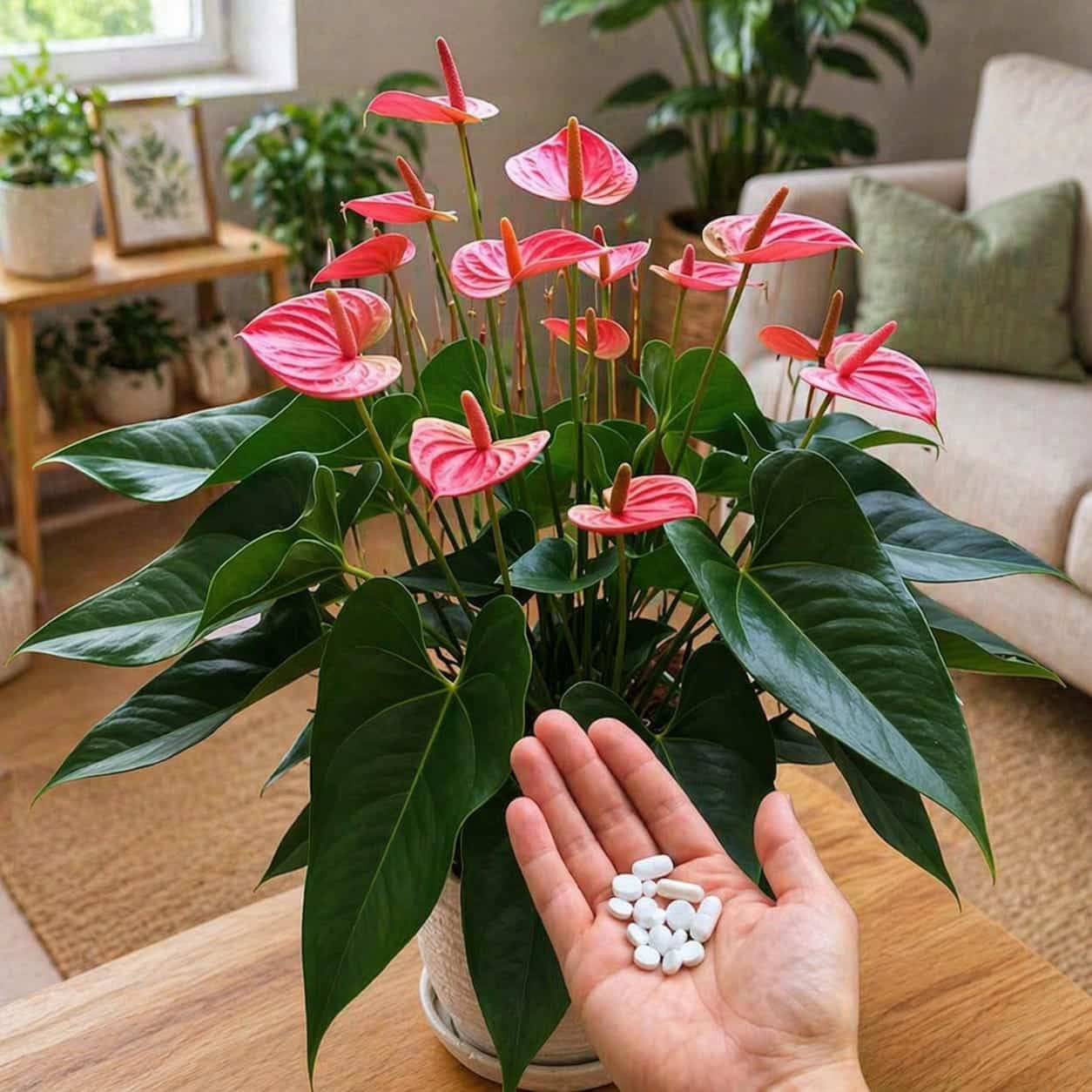
Signs Your Anthurium Is Ready to Flower More (Without Any Pills)
A plant that is moving in the right direction will usually show:
· Healthy new leaves – Bright green, glossy, and firm.
· Upright stems – No drooping or leaning.
· Rich leaf color – Deep green, not pale or yellow.
· Strong roots – Visible through clear pots or when repotting.
· Steady overall vigor – The plant looks robust and active.
Flowers follow that strength. If you see these signs, you are on the right track. Continue your care routine, and blooms will come.
Common Mistakes That Reduce Blooming (And How to Fix Them)
If your anthurium is not blooming, one or more of these may be the issue.
Too Little Light
Fix: Move to a brighter spot. Add a grow light.
Overwatering or Poor Drainage
Fix: Repot into a chunky aroid mix. Water only when the top inch is dry.
Low Humidity
Fix: Use a humidifier, pebble tray, or group plants. Aim for 60–80%.
No Fertilizer or Wrong Fertilizer
Fix: Use a balanced fertilizer (20‑20‑20) diluted to quarter strength every 2–4 weeks in spring/summer.
Plant Is Still Young
Fix: Be patient. Anthuriums need 1–2 years to mature before regular blooming.
Old, Compacted Soil
Fix: Repot every 1–2 years with fresh aroid mix. Old soil loses structure and nutrients.
What About the “One Ingredient” in Viral Videos? A Realistic Look
Let us be clear: no single pill or powder will make an anthurium “explode with blooms” if the plant is otherwise unhealthy. The viral videos are often misleading.
However, if the “ingredient” is a slow‑release fertilizer tablet designed for houseplants, it may provide nutrients over time. But that is not magic — it is just basic feeding. And even then, light, water, and soil matter far more.
If the ingredient is a human supplement (like vitamin C or aspirin), there is no reliable evidence that it boosts anthurium blooms. In fact, it may harm the plant.
The Safe Approach:
· Use plant‑specific fertilizer tablets (like Jobe’s or Osmocote) according to label directions.
· Never use human medications or unknown pills.
· Always prioritize light, water, and soil over any additive.
A Simple Anthurium Care Routine for Year‑Round Blooms
Here is a weekly and seasonal plan that will keep your anthurium healthy and blooming repeatedly.
Weekly
· Check soil moisture. Water if top inch is dry.
· Wipe leaves with a damp cloth.
· Remove any spent blooms or yellow leaves.
Monthly
· Flush the soil with plain water to prevent salt buildup.
· Inspect for pests (mealybugs, spider mites, aphids).
· Rotate the pot for even light.
Spring & Summer (Active Growth)
· Bright indirect light (10–12 hours).
· Water every 5–7 days (when top inch dries).
· Feed with quarter‑strength balanced fertilizer every 2–4 weeks.
· Maintain high humidity (pebble tray or humidifier).
· Watch for new flower buds.
Fall & Winter (Resting Period)
· Still bright light, but days are shorter — consider a grow light.
· Water less often (every 7–10 days).
· Stop fertilizing.
· Keep away from cold drafts (below 60°F / 15°C).
Annually
· Repot every 1–2 years with fresh aroid mix.
· Divide if the plant is overcrowded.
· Trim any dead or brown roots.
Frequently Asked Questions (Anthurium Blooms)
How often do anthuriums bloom indoors?
With good care, anthuriums can bloom 2–4 times per year. Each flower lasts 6–8 weeks. Between bloom cycles, the plant rests for 2–3 months.
Why are my anthurium flowers turning green?
As flowers age, they naturally turn green. Also, too much fertilizer (especially high nitrogen) can cause green blooms. Cut off old green flowers to encourage new ones.
Can I use Epsom salt to make my anthurium bloom?
Epsom salt provides magnesium. If your plant has a magnesium deficiency (yellowing between leaf veins), a diluted solution (1 teaspoon per gallon) once a month may help overall health. It is not a direct bloom trigger.
What is the best fertilizer for anthurium blooms?
A balanced, water‑soluble fertilizer (20‑20‑20) diluted to quarter strength, applied every 2–4 weeks in spring and summer. For a bloom boost, switch to a formula with higher phosphorus (middle number) like 10‑20‑10.
Why are my anthurium leaves yellow?
Common causes: overwatering, poor drainage, low light, or nutrient deficiency. Check the soil moisture first. If it is wet, let it dry out. If the plant is in a dark spot, move it to brighter light.
Can I use coffee grounds on my anthurium?
In small amounts, coffee grounds add organic matter. But they can compact the soil and acidify it. A thin sprinkle mixed into the topsoil once every few months is safe. Balanced fertilizer is more reliable.
How do I get my anthurium to produce more flowers at once?
More light is the #1 factor. Also, a slightly root‑bound plant often blooms more than one in an oversized pot. Feed regularly during spring and summer. Remove spent blooms promptly.
Should I cut off the brown tips of anthurium leaves?
You can trim them for appearance, but it will not fix the underlying cause (usually low humidity or fluoride). Cut at an angle following the natural leaf shape. Use clean scissors.
The Emotional Reward of a Blooming Anthurium
Anthurium blooms are not just beautiful — they are a sign that you have mastered the plant’s needs. When a new flower spike appears, it feels like a personal victory. The glossy, heart‑shaped spathe in red, pink, white, or purple is a reward for weeks of consistent care.
That is the real magic. Not a mystery pill, but the quiet satisfaction of giving your plant what it needs and watching it respond.
Final Thoughts
If someone tells you to drop one mystery ingredient on your anthurium and watch it explode with blooms, be careful. The safest and smartest way to get more flowers is not chasing random pills. It is building the kind of healthy plant that can bloom naturally and repeatedly.
Because with anthuriums, the real magic is not in the tablet. It is in the roots, the light, and the routine that keep the whole plant thriving.
So move your anthurium closer to the window. Repot it into chunky, airy soil. Water when the top inch is dry. Feed it lightly in spring and summer. Wipe its leaves. Remove spent blooms. And then wait.
Those bright, waxy flowers will come — not because of a pill, but because you gave the plant what it truly needed.
Have you tried a “one ingredient” trick on your anthurium? Share your experience in the comments below. And if you found this guide helpful, save it for later or send it to a friend who wants more blooms without the risk.
This article is for informational purposes only. Always use plant‑specific products as directed. When in doubt, focus on light, water, and soil before any supplement.