ZZ plants (Zamioculcas zamiifolia) are beloved for their glossy, deep green leaves and strong, upright stems. They are practically indestructible, surviving low light, neglect, and dry air better than almost any other houseplant. But sometimes, even a ZZ plant can start to look less than its best. Instead of that compact, bushy, architectural shape, the stems become long, stretched, and uneven. The leaves seem to grow farther apart, and the plant takes on a sparse, “leggy” appearance.
If your ZZ plant looks leggy, do not worry — it is a common issue, and the good news is that you can fix it. In this guide, you will learn what causes a ZZ plant to become leggy, how to correct the problem, and step‑by‑step instructions to restore your plant to a full, lush, decorative state. No magic potions or risky hacks. Just proven plant care.
What Does a Leggy ZZ Plant Mean?
A leggy ZZ plant is one that has lost its compact, upright form. Instead of dense, closely spaced leaves, the stems have elongated, with visible gaps between each leaf. The plant may also lean or droop, looking unbalanced and thin.
Signs of a Leggy ZZ Plant:
· Long, stretched stems – Stems that seem to reach toward a light source.
· Wide gaps between leaves – More than an inch of bare stem between leaves.
· Uneven or drooping growth – Stems that flop over or grow at odd angles.
· A sparse or unbalanced look – The plant looks thin instead of full.
· Pale or smaller leaves – Due to low light conditions.
Instead of that full, bushy, architectural appearance, the plant starts to look thin and less decorative. A healthy ZZ plant should have thick, sturdy stems with leaves clustered closely together, creating a lush, sculptural silhouette.
The Main Cause: Not Enough Light (The #1 Culprit)
The number one reason a ZZ plant becomes leggy is low light. ZZ plants are famous for tolerating dim conditions, but tolerance is not the same as thriving. In their native East African habitat, they receive bright, filtered light. Indoors, when placed in a dark corner or far from a window, the plant responds by stretching its stems toward any available light source.
Why Low Light Causes Leggy Growth:
· Etiolation – The plant’s natural response to insufficient light. It elongates its stems to reach for brighter conditions.
· Reduced energy – Without enough light, photosynthesis slows, and the plant cannot produce the energy needed for compact, dense growth.
· Survival mode – The plant focuses on reaching light rather than maintaining a full shape.
👉 Simply put: less light = stretched growth. While a ZZ plant can survive in low light, it will not look its best. To restore a full, bushy shape, you must address the light first.
Step 1: Move It to Better Light (The Most Important Fix)
This is the single most effective change you can make. Light is the engine of plant growth. Without adequate light, no amount of fertilizer or pruning will give you a compact, lush ZZ plant.
Ideal Light for a Compact ZZ Plant:
· Bright indirect light – Place your ZZ plant within 3–5 feet of an east or north window.
· South or west window with a sheer curtain – Diffuses harsh afternoon rays while providing high light levels.
· Avoid deep shade – Corners far from windows or rooms with only artificial light.
· Rotate the plant weekly – For even growth on all sides.
What If Your Home Is Dark?
If you do not have a bright window, invest in a full‑spectrum LED grow light. Place it 12–18 inches above the plant and run it for 10–12 hours daily. ZZ plants respond very well to grow lights, and within weeks, new growth will be much healthier and more compact.
What to Expect After Improving Light:
· Within 2–4 weeks – New stems emerging from the soil will be thicker and have leaves spaced closer together.
· Within 2–3 months – The overall shape will become fuller as new growth fills in.
· Old leggy stems – Will not become compact again, but new growth will hide them over time.
Step 2: Prune Long, Weak Stems (Reshape Your Plant)
Once you have improved the light, it is time to prune the stretched, leggy stems. Pruning encourages the plant to redirect energy into new, stronger growth and helps you shape the plant.
How to Prune a Leggy ZZ Plant:
- Identify the longest, weakest stems – Look for stems with large gaps between leaves or those that lean or droop.
- Use clean, sharp scissors or pruning shears – Sterilize with rubbing alcohol to prevent disease.
- Cut at the base – Trim the stem as close to the soil line as possible, just above a node (the small bump where leaves attach). Do not leave stubs.
- Remove no more than 20–25% of the plant at once to avoid shocking it. You can prune more over several weeks.
What to Do with Pruned Cuttings (Propagation)
Do not throw away those healthy stem cuttings! ZZ plants are easy to propagate from stem and leaf cuttings.
· Stem cuttings: Cut the stem into 3‑4 inch sections, each with a few leaves. Let them callus for a day, then place the cut end in water or moist soil. Roots appear in 4‑8 weeks.
· Leaf cuttings: Remove individual leaves with a small piece of stem. Place in moist soil or water. Roots and a tiny rhizome form in 2‑3 months.
Propagate several cuttings and plant them back into the same pot to create an instantly fuller look.
Step 3: Check Your Watering Routine (Healthy Roots = Fuller Growth)
Overwatering can weaken the plant and contribute to poor growth, including legginess. A stressed plant cannot produce dense, strong stems.
Watering Rules for a Compact ZZ Plant:
· Let soil dry completely between watering – Stick your finger into the soil. If it is dry at least 2 inches down, water.
· Water deeply but infrequently – In most homes, every 2–4 weeks in spring/summer, once a month or less in winter.
· Avoid soggy soil – Always use a pot with drainage holes and empty the saucer.
· Signs of overwatering – Yellowing lower leaves, soft stems, a sour smell.
Healthy roots = stronger, fuller stems. When the roots are happy, the plant can put energy into producing new, compact growth.
Step 4: Use Proper Soil and Pot (The Foundation of Health)
A ZZ plant needs well‑draining soil to stay strong. Dense, moisture‑retentive soil suffocates roots and leads to weak, stretched growth.
Best Soil for ZZ Plants:
· Cactus or succulent potting mix – Readily available and perfectly formulated.
· DIY mix: 2 parts all‑purpose potting soil + 1 part perlite + 1 part coarse sand.
· Avoid heavy, moisture‑retentive soil – Garden soil or regular potting soil alone is too dense.
Pot Size and Material:
· Choose a pot only 1–2 inches larger than the root ball. Oversized pots hold too much moisture and encourage root growth over stem growth.
· Use a pot with drainage holes – Terracotta is excellent because it wicks away moisture.
· Repot every 2–3 years – Only when roots are circling densely or cracking the pot.
Good soil helps roots stay active and supports compact growth.
Step 5: Be Careful with “Liquid Boosters” (What to Avoid)
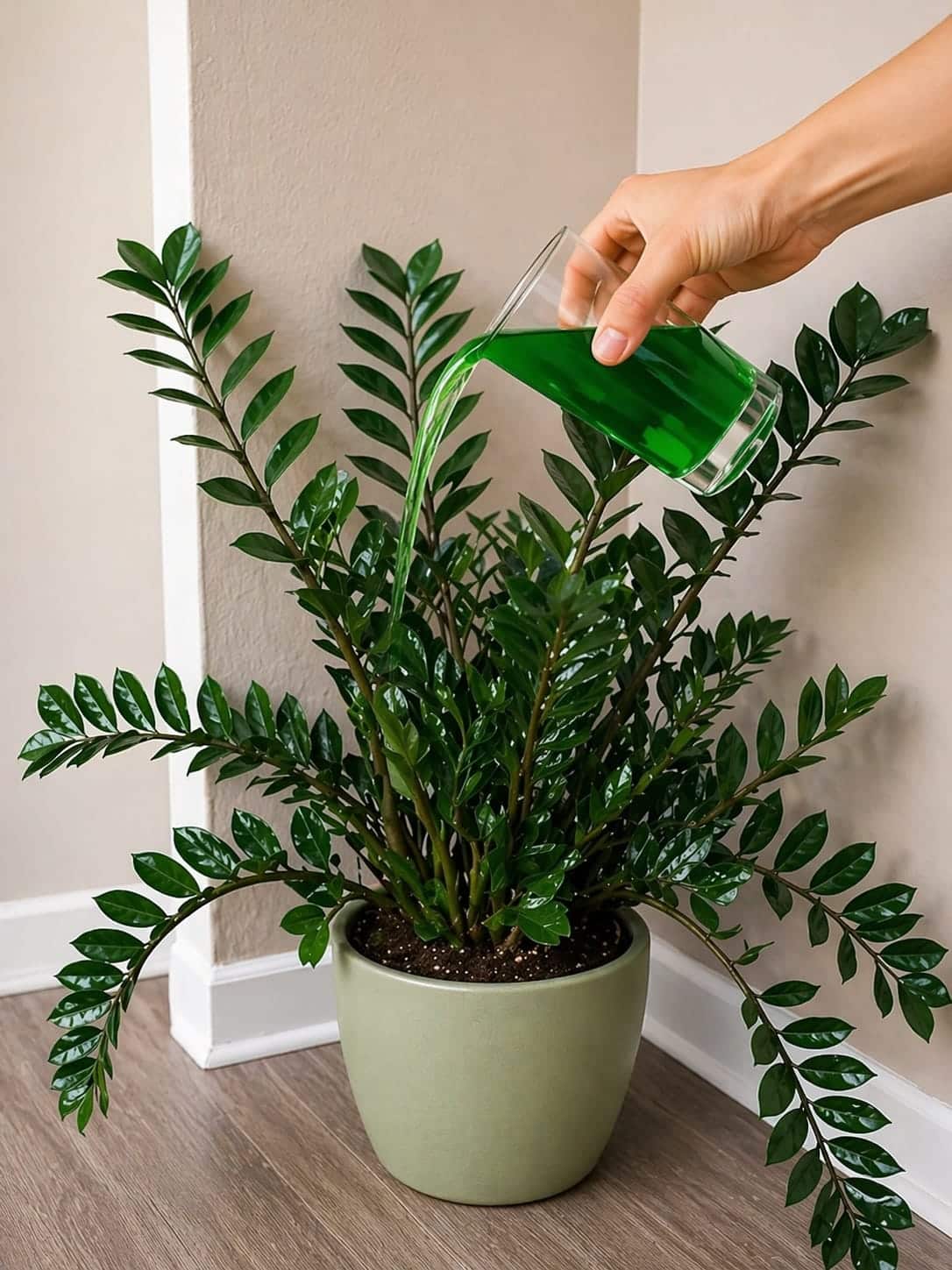
You may see videos showing green or colorful liquids being poured over ZZ plants, often with claims of “instant fullness” or “rapid growth.” While they look effective, these are often:
· Diluted fertilizers – Beneficial if used correctly, but not magic.
· Visual tricks for content – The liquid may be purely for show.
· Unnecessary if your care is already good – A healthy plant does not need constant boosting.
When a Liquid Booster Can Help:
· If your ZZ plant has not been repotted in years and the soil is depleted.
· If you use a diluted, balanced liquid fertilizer (like 20‑20‑20) at half strength, once a month in spring and summer.
· If you use a mild organic tonic like weak compost tea or seaweed extract (quarter strength).
What to Avoid:
· Heavy, concentrated fertilizers – Burn roots and cause salt buildup.
· Milks, sugar water, or kitchen concoctions – Attract pests and create mold.
· Feeding in fall and winter – The plant is resting; fertilizer can stress it.
ZZ plants do not need heavy feeding. If you choose to feed, use a light, diluted fertilizer occasionally. Too much can actually harm the plant.
Step 6: Be Patient with New Growth (Consistency Is Key)
Once you fix the conditions (light, water, soil, pot), the plant will respond, but it takes time.
· Old leggy stems – Will not become compact again. You can leave them or prune them.
· New growth – Will come in stronger, thicker, and with leaves spaced closer together.
· Over time, the plant regains its shape as new stems fill in.
Consistency is key. Do not change your routine every week. Stick with the improved conditions, and your ZZ plant will reward you with beautiful, glossy, upright growth.
How to Make Your ZZ Plant Look Fuller Faster (Pro Tips)
If you want a bushier, more decorative look immediately, try these extra strategies.
- Plant Multiple Cuttings in the Same Pot
Propagate stem or leaf cuttings from your leggy stems. Once they have roots (4‑8 weeks), plant them back into the same pot as the mother plant. This instantly adds volume and fills empty spaces.
- Rotate Regularly for Even Growth
If your ZZ plant is near a window, rotate the pot 90 degrees every week. This prevents stems from leaning toward the light and encourages a balanced, full shape.
- Keep It in Good Light (Non‑Negotiable)
Even after the plant recovers, do not move it back to a dark corner. The new growth will become leggy again. Once you have a full, compact plant, maintain bright indirect light.
- Prune Strategically
Prune the tallest, leggiest stems first. Then, a few weeks later, prune a few more. This staggered approach encourages multiple new shoots rather than one flush of growth.
- Use a Support Stake (Temporary)
For very tall, drooping stems, you can insert a small bamboo stake and gently tie the stem upright. Once new, stronger growth appears, you can remove the stake.
Continue to Page 2
Continue to page 2 for more details about this article and the key points many readers miss on the first page.