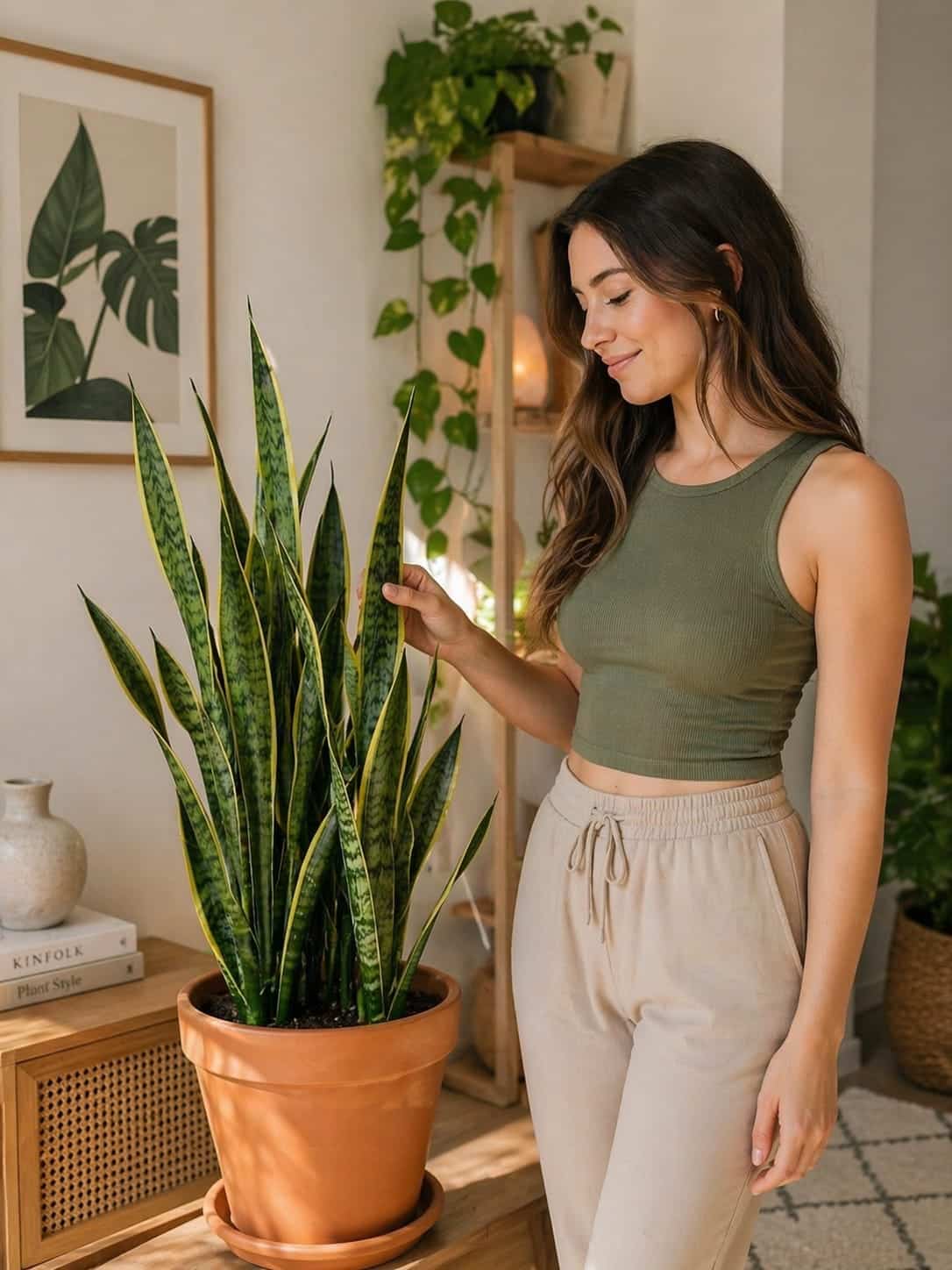
Snake plants (Dracaena trifasciata, formerly Sansevieria) are famous for being tough, low‑maintenance, and nearly impossible to kill. They survive low light, dry air, and missed waterings better than almost any other houseplant. But there is one mistake that quietly destroys more snake plants than people realize…
👉 Choosing the wrong pot size.
It may seem like a small detail, but the size of your pot can directly affect your plant’s health, growth, and even survival. You can water correctly, use the right soil, and place it in a bright window, yet still watch your snake plant decline. The culprit is often hidden in plain sight: a pot that is too large.
In this guide, you will learn why pot size matters more than you think, the dangers of oversized pots, the perfect pot size for your snake plant, how to choose the right material, and when to repot. By the end, you will be able to spot pot‑size problems before they kill your plant.
Why Pot Size Matters More Than You Think
Most people assume a bigger pot is always better. More space, more soil, more growth… right? Not exactly. Snake plants are succulents. They store water in their thick leaves and underground rhizomes. They are adapted to dry conditions and do not like sitting in wet soil.
A pot that is too large can hold too much moisture, leading to:
· Soggy soil – The extra soil acts like a sponge, retaining water for weeks.
· Slow root drying – Roots need oxygen; constantly wet soil suffocates them.
· Root rot – Fungal pathogens thrive in wet, airless conditions.
· Yellowing or mushy leaves – The first visible signs of root stress.
· Eventual plant death – If root rot spreads to the rhizomes, the plant cannot recover.
So the issue is not just space — it is water control. A snake plant in a correctly sized pot dries out at a healthy rate. A snake plant in an oversized pot stays wet too long, and rot begins.
The Biggest Mistake: Oversized Pots
When you move a snake plant into a pot that is much larger than its root system, the soil stays wet for too long. Here is why:
· Roots cannot absorb all the moisture – A small root ball cannot drink from a large volume of soil.
· Extra soil holds water like a sponge – Even with good drainage, the sheer amount of soil retains water.
· Airflow around roots is reduced – The center of the pot becomes anaerobic (without oxygen).
This creates the perfect conditions for root rot — even if you are not watering too often. You might water once every two weeks, but the soil may stay wet for three weeks. Over time, the roots begin to suffocate and decay.
A Common Scenario:
You buy a small snake plant and think, “I’ll give it room to grow.” You put it in a large decorative pot. Weeks later, the leaves turn yellow and soft. You think you overwatered, so you water even less. But the problem is not how much water you give; it is how long the soil stays wet. The pot is too big.
Signs Your Pot Is Too Big
If your snake plant is struggling, your pot might be the problem. Look for these warning signs:
· Leaves turning soft or yellow – Especially lower leaves. This is often the first indicator.
· Slow or no growth – The plant is putting energy into surviving, not growing.
· Soil staying wet for many days – If the soil feels damp more than a week after watering, the pot is likely too large.
· A “heavy” or soggy feeling pot – Lift the pot; it should feel light when dry. If it always feels heavy, water is not evaporating.
· A foul, rotten smell – This indicates root rot. Unpot immediately.
· Mushy base or leaves that pull away easily – Rot has spread to the crown.
If you notice these signs, the plant may need to be moved to a smaller pot immediately. Do not wait.
What Is the Perfect Pot Size for a Snake Plant?
Snake plants actually prefer to be a little tight in their pots. A slightly root‑bound plant is a happy snake plant.
👉 The ideal pot should be:
· Only 2–5 cm (1–2 inches) larger than the root ball – Measure the diameter of the root ball and add 1–2 inches.
· Snug but not cramped – You should be able to fit a finger between the root ball and the pot wall.
· Deep enough for roots, but not oversized – Snake plant roots grow downward but are relatively shallow. Depth of 5–6 inches (12–15 cm) is usually sufficient for small to medium plants.
How to Check if Your Pot Is the Right Size:
- Unpot the plant and gently remove excess soil.
- Look at the root ball. It should fill about 70–80% of the pot’s interior.
- If you see large empty spaces of soil with few roots, the pot is too large.
- If roots are circling tightly and the pot is cracking, it is time to repot (but only one size up).
A slightly root‑bound snake plant often grows stronger and healthier. It is less prone to rot and more likely to produce pups.
Why Smaller Pots Work Better for Snake Plants
A well‑sized pot helps:
· Soil dry at the right speed – The roots absorb moisture efficiently, and the remaining water evaporates within a week.
· Roots stay healthy – Oxygen reaches all parts of the root zone.
· Prevent overwatering problems – Even if you accidentally water a little too much, the pot size limits the damage.
· Encourage stronger growth – The plant focuses its energy on leaves and pups, not on filling empty soil space.
Think of it this way: a snake plant in a snug pot is like a person in a comfortable pair of shoes. A snake plant in an oversized pot is like a person wearing shoes three sizes too big — awkward, inefficient, and prone to tripping (rotting).
Don’t Forget Drainage (Non‑Negotiable)
Even the perfect pot size will not help if there is no drainage. Water must have an escape route.
Always choose a pot with:
· Drainage holes at the bottom – At least one hole; more is better.
· Well‑draining soil – Cactus or succulent potting mix is ideal. Regular potting soil holds too much moisture.
· Optional: a layer of gravel or perlite at the bottom – This can help prevent soil from blocking drainage holes.
Avoid: Decorative pots without drainage holes. If you love a pot without holes, plant your snake plant in a plastic nursery pot that fits inside, and remove it for watering. Never let water pool at the bottom of the decorative pot.
Pot Material Matters Too (Bonus Tip)
Different materials affect moisture levels. Choose based on your watering habits and home environment.
Pot Material Moisture Retention Best For
Terracotta (clay) Dries very fast Overwaterers, humid climates, beginners
Unglazed ceramic Dries fast Similar to terracotta, more decorative
Glazed ceramic Holds moisture longer Underwaterers, dry climates
Plastic Holds moisture longest Very dry homes, careful waterers
Fiberglass / resin Medium retention, lightweight Large plants, decorative use
If you tend to overwater, terracotta is your best friend. It wicks moisture away from the soil and allows evaporation through the walls. If you tend to underwater, a glazed ceramic or plastic pot may be more forgiving.
When Should You Repot Your Snake Plant?
You do not need to repot your snake plant often. In fact, repotting too frequently can stress the plant and delay blooming. Only repot when:
· Roots are pushing out of the drainage holes – This is the most obvious sign.
· The plant becomes unstable – The pot tips over easily because the plant is too top‑heavy.
· Growth slows due to crowding – If you have not seen a new leaf in over a year, check the roots.
· The pot is cracking – Snake plants can actually crack plastic or terracotta pots when severely root‑bound.
· Soil has broken down – If the soil stays wet for too long or has a sour smell, repot with fresh mix.
How to Repot Correctly (Only One Size Up)
- Choose a new pot that is only 1–2 inches larger than the current one. Do not skip sizes.
- Gently remove the plant from its old pot. Loosen the root ball with your fingers.
- Trim any dead or rotten roots with clean scissors.
- Add fresh cactus soil to the bottom of the new pot.
- Place the plant at the same depth it was growing.
- Fill around the roots with more soil, pressing lightly.
- Do not water immediately – Wait 3–5 days to allow any damaged roots to heal.
- Place in bright indirect light and resume normal watering (dry between).
Repotting in spring or early summer is best, when the plant is actively growing.
Continue to Page 2
Continue to page 2 for more details about this article and the key points many readers miss on the first page.