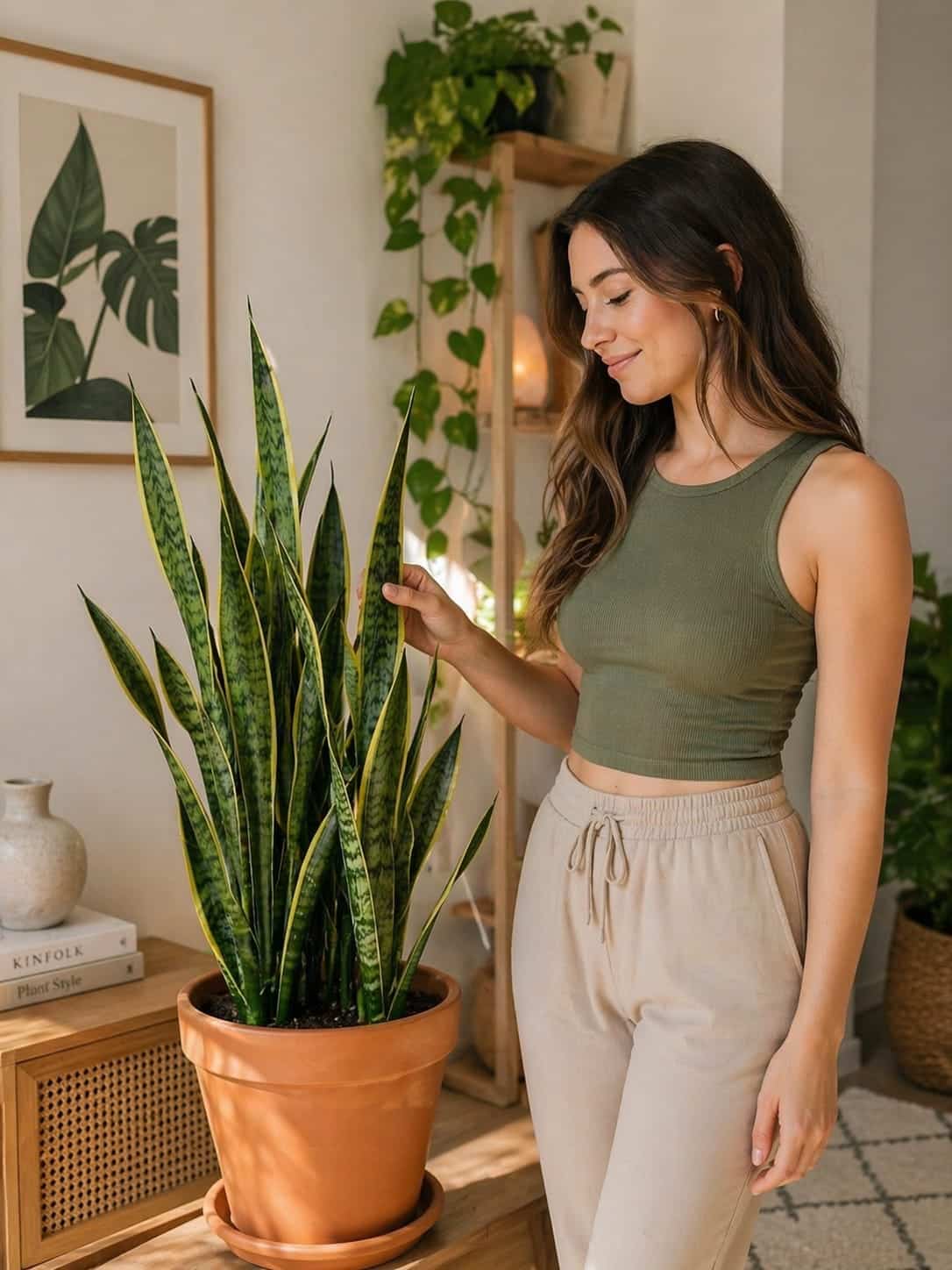
Common Pot‑Size Mistakes (Even Experienced Owners Make)
Mistake #1: “I’ll put it in a big pot so I don’t have to repot for years.”
The fix: Your snake plant will rot long before it grows into that pot. Start with a snug pot, then repot only when needed.
Mistake #2: “The pot looks too small for the leaves.”
The fix: Snake plants have relatively small root systems. A pot that looks small above ground may be perfectly sized below. Judge by the root ball, not the leaves.
Mistake #3: “I used a decorative pot without drilling holes.”
The fix: Drill drainage holes or use a nursery pot insert. Snake plants cannot survive in pots without drainage.
Mistake #4: “I water less often, so a big pot is fine.”
The fix: Even with infrequent watering, the soil volume holds moisture. Root rot happens slowly over months. Switch to a correctly sized pot.
How to Save a Snake Plant from Pot‑Size Root Rot
If you have already over‑potted and your snake plant is showing signs of rot, act quickly.
- Unpot the plant immediately.
- Remove all soil from the roots.
- Cut away any mushy, black, or hollow roots with sterilized scissors.
- If the rot has spread to the rhizome (the thick part at the base), cut away the damaged area. Dust the cut with cinnamon (antifungal).
- Let the plant dry on a paper towel for 24–48 hours.
- Repot in a correctly sized pot with fresh, dry cactus soil.
- Do not water for 5–7 days. Then water lightly.
- Place in bright indirect light and wait. New roots may take several weeks to form.
If more than half the roots are gone, the plant may still survive but will need months of careful care. If the entire rhizome is mushy, the plant may be beyond saving. In that case, propagate healthy leaf cuttings.
A Simple Snake Plant Pot‑Size Checklist
Use this checklist when choosing or changing a pot for your snake plant.
· The pot is only 1–2 inches larger than the root ball.
· The pot has at least one drainage hole.
· You are using cactus or succulent potting mix.
· The pot material matches your watering habits (terracotta for overwaterers, etc.).
· You can fit a finger between the root ball and the pot wall (snug but not tight).
· The pot is not too deep (6–8 inches is enough for most snake plants).
· You have not repotted in the last year unless necessary.
If you can check all these boxes, your snake plant is in the right pot.
Frequently Asked Questions (Snake Plant Pot Size)
Can a snake plant live in a small pot forever?
No. Eventually, the roots will become so crowded that the plant cannot absorb water efficiently. Growth will slow, and the plant may become unstable. Repot every 2–3 years.
What is the best pot for a snake plant beginner?
Terracotta with drainage holes. It is forgiving, inexpensive, and helps prevent overwatering.
Can I put two snake plants in one pot?
Yes, as long as the pot is appropriately sized for the combined root balls. Use a pot that is 2–3 inches larger than the combined root mass.
How do I know if my pot is too small?
Signs include roots pushing out of drainage holes, the pot cracking, and the plant falling over easily. Growth will also slow dramatically.
Is it okay to use a self‑watering pot for a snake plant?
No. Self‑watering pots keep the soil constantly moist, which snake plants hate. Avoid them.
My snake plant is in a large pot but looks healthy. Should I repot?
If it is thriving and the soil dries within a week, leave it alone. But watch closely. If you see any yellowing or softness, downsize.
What size pot for a snake plant pup?
Use a 3–4 inch pot for a small pup. As it grows, move up to a 5–6 inch pot. Do not put a pup directly into a large pot.
Can I use a pot without drainage if I put gravel at the bottom?
No. Gravel at the bottom creates a perched water table, making the situation worse. Always use a pot with drainage holes.
The Bottom Line: Size Matters for Snake Plant Health
Snake plants are easy — but they are not careless plants. The wrong pot size can slowly damage the roots without you even realizing it. You might think you are doing everything right, yet your plant declines because of a hidden issue: too much soil, too much moisture, too little oxygen.
If you want a healthy, strong, and beautiful snake plant:
· Keep the pot slightly snug – 1–2 inches larger than the root ball.
· Avoid oversized containers – They lead to root rot.
· Ensure good drainage – Holes are non‑negotiable.
· Choose the right material – Terracotta for overwaterers, glazed for underwaterers.
· Water wisely – Let the soil dry completely between waterings.
Sometimes, saving your plant is not about doing more — it is about choosing better. A correctly sized pot is one of the simplest yet most powerful changes you can make for your snake plant’s long‑term health.
So check your pot today. Is it too big? Too small? Just right? Your snake plant will tell you. And if it is struggling, do not hesitate to downsize. A smaller pot can be the difference between a plant that merely survives and one that truly thrives.
Have you ever lost a snake plant to root rot from an oversized pot? Share your experience in the comments below. And if you found this guide helpful, save it for later or send it to a friend who needs to repot their snake plant the right way.
This article is for informational purposes only. Growing conditions vary. Always observe your plant and adjust care as needed. When in doubt, choose a smaller pot rather than a larger one.