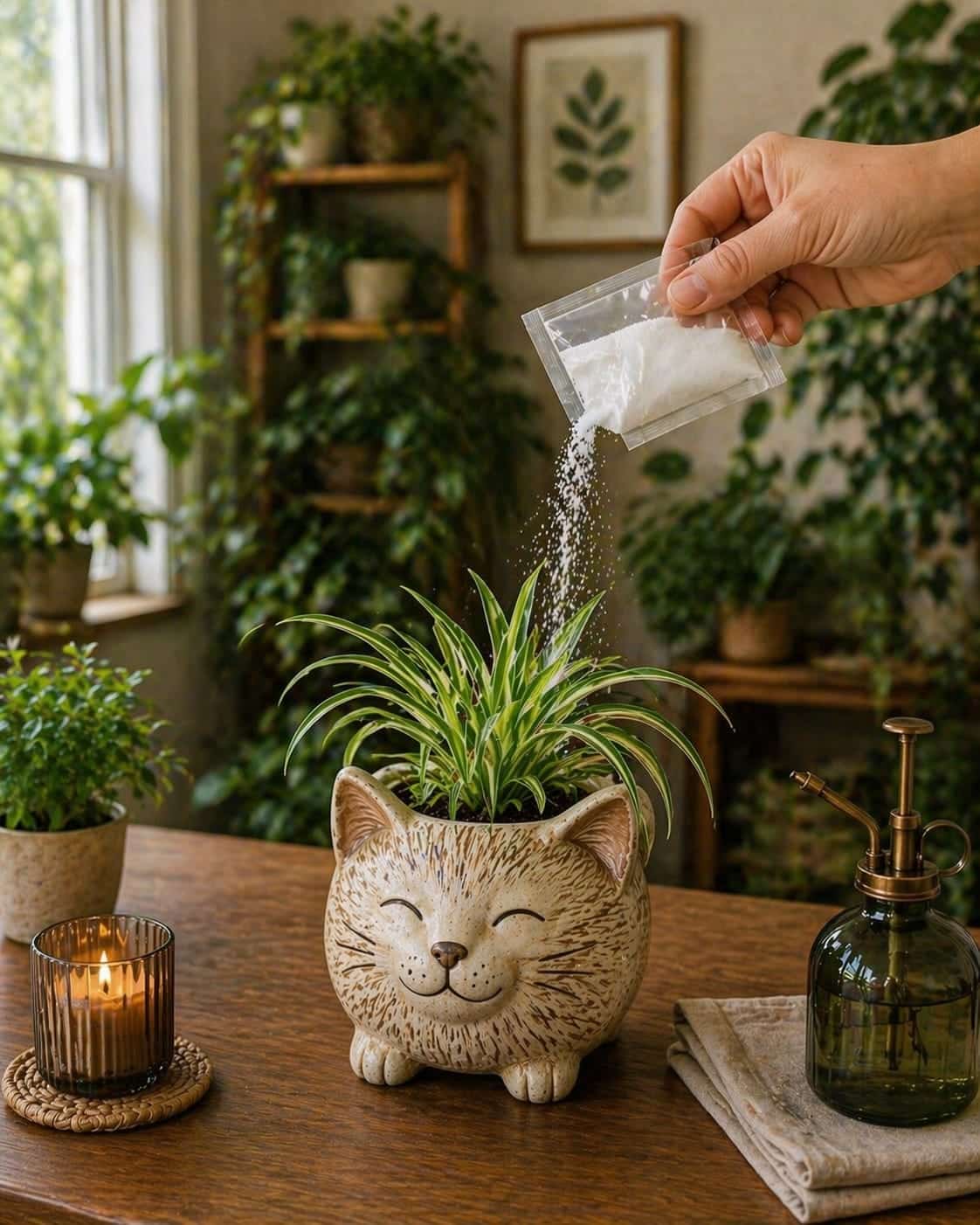
Spider plants (Chlorophytum comosum) are already one of the most rewarding houseplants you can grow. Their long, flowing leaves bring softness to any room, but what truly makes them special are their baby plantlets — those small offshoots that dangle from long stems, creating a full, abundant, almost cascading look. A spider plant full of babies is a statement piece. It feels lush, lively, and premium.
So when you see a simple “just sprinkle this powder” trick promising fast baby growth, it instantly grabs attention. It looks easy. It looks powerful. But does it really work? Or is it just another viral plant hack that skips the real science?
In this guide, you will learn why everyone wants more spider plant babies, what the “sprinkle powder” trend actually represents, what really triggers baby production, and — most importantly — how to get your spider plant to produce an abundance of healthy offshoots without risky shortcuts.
Why Everyone Wants More Spider Plant Babies
Spider plant babies aren’t just for propagation — they are part of the plant’s beauty. A mature spider plant in a hanging basket or on a shelf sends out long runners with clusters of tiny plantlets at the tips. These babies make the plant look:
· More lush – A full cascade of greenery.
· More decorative – Perfect for boho, modern, or cottage decor.
· More “alive” – The dangling offshoots add movement.
· More premium in home styling – A healthy, baby‑filled spider plant looks curated and expensive.
That is why homeowners are always searching for ways to increase baby production quickly. Social media is flooded with “miracle” powders, liquids, and tablets that promise instant results. But before you reach for any mystery substance, let us look at what actually works.
The “Just Sprinkle Powder” Trend – What You’re Really Seeing
You may have seen videos where a white or off‑white powder is sprinkled onto the soil, followed by rapid growth of baby plants. In many cases, this powder represents:
· A mild fertilizer – Balanced houseplant food in granular form.
· A mineral supplement – Like Epsom salt (magnesium sulfate) or crushed eggshells.
· A simple growth‑support additive – Such as worm castings or bone meal.
· Sometimes, just visual content – The powder is a prop for engagement, not real plant care.
But here is the key: It is not the powder alone that creates results. No powder can transform a weak, stressed, or immature spider plant into a baby‑producing machine overnight. The powder can only support a plant that is already healthy, properly lit, correctly watered, and mature enough to reproduce.
What Actually Makes Spider Plants Produce Babies
Spider plants produce babies (also called plantlets, offshoots, or pups) when they are healthy, mature, and slightly stressed in the right way. They do not produce babies just because you sprinkled something on the soil. Here is what really matters.
- Bright, Indirect Light (The #1 Trigger)
Light gives the plant energy to grow and reproduce. Without enough light, your spider plant may survive but will rarely produce babies.
· Place near a window – East or north windows are ideal. South or west with a sheer curtain also works.
· Avoid deep shade – Dark corners keep the plant alive but not thriving.
· More light = more growth – If your plant has never produced babies, move it closer to light and wait 4–6 weeks.
- Strong Root System
Babies grow from energy stored in the roots and the mother plant’s central crown. A healthy root system is essential.
· Healthy roots = more pups – Firm, white or tan roots that fill the pot.
· Poor roots = no babies – Rotting, brown, or mushy roots cannot support reproduction.
· Repot when needed – If the plant is severely root‑bound (cracking the pot), repot into fresh soil.
- Slightly Root‑Bound Condition
Spider plants often produce more babies when they feel “tight” in their pot. A slightly crowded root system triggers a survival response to reproduce.
· Avoid oversized pots – A pot that is too large encourages root growth instead of babies.
· Let the plant settle before repotting – Do not repot every year; every 2–3 years is enough.
· Signs of a good pot size – Roots visible at the drainage holes, but not densely packed.
- Balanced Watering
Too much or too little water slows growth and prevents baby production.
· Keep soil slightly moist – Water when the top inch of soil feels dry.
· Let the top layer dry between watering – Avoid constant sogginess.
· In winter, reduce watering to every 10–14 days.
A plant that is stressed by inconsistent watering will focus on survival, not reproduction.
- Mild Feeding (Where Powders Could Help)
This is where powders or fertilizers can play a supporting role — if used correctly and sparingly.
· Use a light, balanced fertilizer – 10‑10‑10 or 20‑20‑20 diluted to half strength.
· Apply occasionally, not heavily – Once a month during spring and summer is plenty.
· Avoid buildup in the soil – Flush the pot with plain water every few months.
A well‑fed plant has the energy to produce runners and babies. An overfed plant will grow weak, spindly leaves and may not produce babies at all.
When Powder Can Actually Help
A light sprinkle of a plant‑safe nutrient powder can support growth if:
· Your plant is already healthy – Firm leaves, good color, consistent growth.
· The soil drains well – No sogginess, no compaction.
· You don’t overuse it – A pinch is enough; a tablespoon is too much.
· It is designed for plants – Use a reputable brand of slow‑release fertilizer, worm castings, or a balanced granular feed.
The powder can act as a support, not a miracle. Think of it as a vitamin supplement for a healthy person — it helps, but it does not cure illness.
What to Avoid (The Risky Side of Viral Hacks)
Not all powders are safe. Some viral “hacks” can do more harm than good. Avoid:
· Unknown or chemical‑heavy powders – Anything not labeled for houseplants.
· Overusing fertilizer – More is not better; it leads to salt buildup.
· Piling powder on wet soil – Creates a crust that blocks water and air.
· Anything that changes soil balance too much – Baking soda, aspirin, or random kitchen spices can harm roots.
Too much of any powder can lead to:
· Root burn – Concentrated salts damage delicate roots.
· Salt buildup – A white crust on the soil surface.
· Weak growth – The plant becomes leggy or discolored.
· Fewer babies (ironically) – Stressed plants stop reproducing.
The Real Secret to Fast Baby Growth (Step‑by‑Step)
If you want your spider plant to explode with babies, focus on this formula. It works every time, no mystery powder required.
Step 1 – Provide Bright, Indirect Light
Move your spider plant within 2–3 feet of an east or north window. If you only have south or west windows, use a sheer curtain. In dark homes, add a full‑spectrum LED grow light for 10–12 hours daily.
Step 2 – Check the Roots and Pot Size
Gently remove the plant from its pot. If the roots are circling tightly, the plant is root‑bound — which is good for babies. If the pot is much larger than the root ball, downsize to a snugger container. Use a pot that is only 1–2 inches larger than the root ball.
Step 3 – Water Correctly
Water when the top inch of soil feels dry. Do not let the plant wilt severely. Use room‑temperature water. In winter, water less often.
Step 4 – Feed Gently (Optional but Helpful)
Once a month in spring and summer, use a half‑strength balanced liquid fertilizer. Or sprinkle a small amount of slow‑release granular fertilizer on the soil surface and water in. Do not feed in fall and winter.
Step 5 – Be Patient
Babies do not appear overnight. After improving care, you may see runners and plantlets within 4–8 weeks. Mature plants produce more babies than young ones.
Step 6 – Remove Old Leaves and Spent Runners
Trim any yellow or dead leaves. After babies are removed or have rooted, you can cut off the old runner stems. This keeps the plant tidy and directs energy to new growth.
Signs Your Spider Plant Is Ready to Produce Babies
Look for these indicators that your plant is primed for reproduction:
· Long, arching runners – Thin stems that grow outward and downward.
· Small white flowers – Spider plants produce tiny white flowers at the nodes; these are followed by babies.
· Healthy, green leaves – No brown tips, no yellowing.
· Roots visible at drainage holes – The plant is slightly root‑bound.
· Consistent new leaves – The center of the plant is actively growing.
If you see runners with no baby plantlets yet, give them time. The plantlets form at the ends or along the nodes.
Continue to Page 2
Continue to page 2 for more details about this article and the key points many readers miss on the first page.