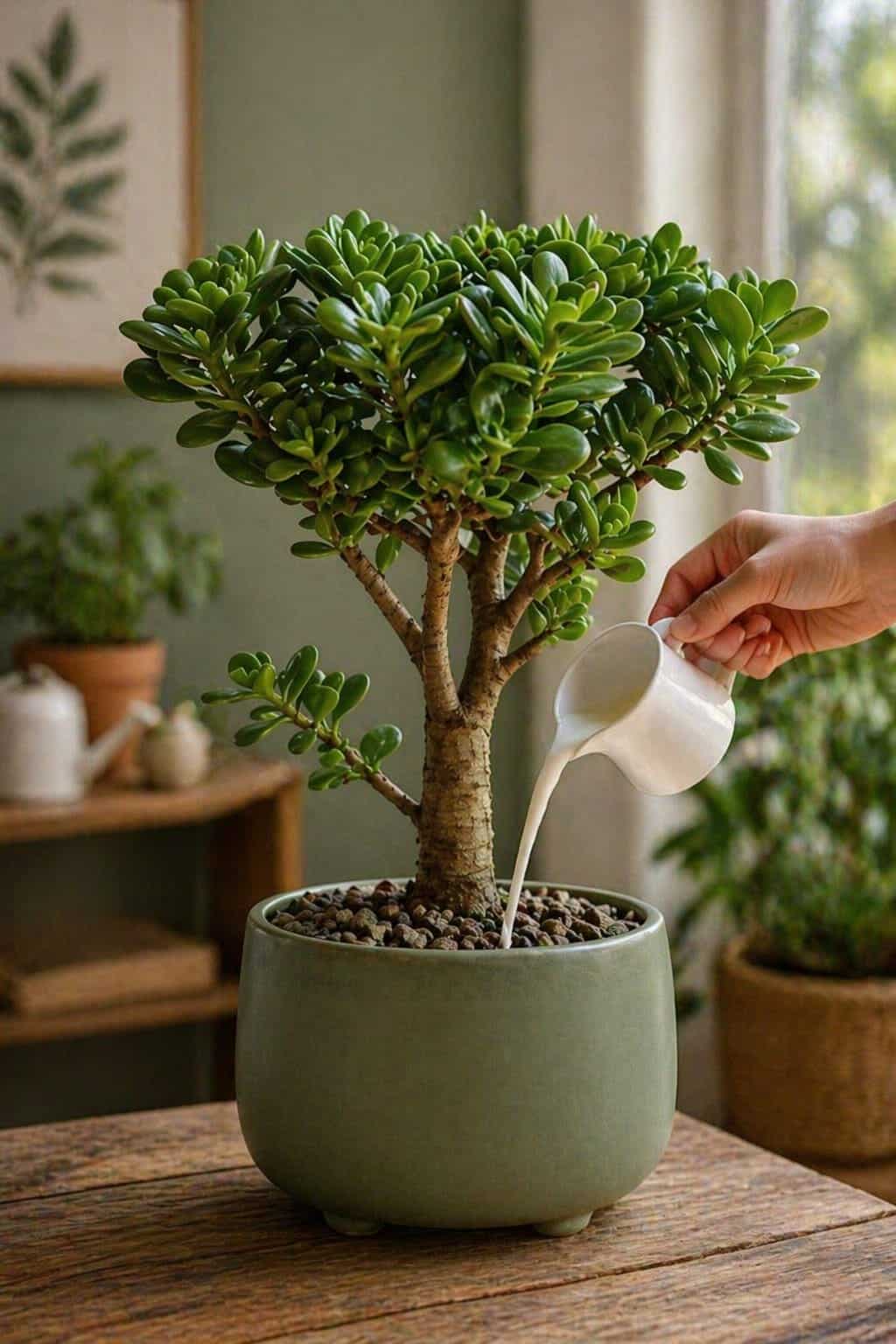
Jade plants (Crassula ovata) are beloved for their thick, glossy leaves and tree‑like shape. When they are healthy, they look like miniature indoor trees — clean, structured, and elegant. Their sculptural form, vibrant green leaves, and occasional reddish edges make them a favorite for modern homes, offices, and windowsills.
So when people see a white liquid being poured into a jade plant, the idea feels instantly appealing. It looks nourishing. It looks rich. It looks like a secret trick that only experienced growers know. Social media is flooded with videos of creamy, milk‑like liquids being poured at the base of jade plants, often with captions promising “instant growth,” “shinier leaves,” or “better branching.”
But is it actually helping your plant — or hurting it? In this guide, we will uncover the truth about the white liquid trend, explain why jade plants do not need milk or dairy, and give you the real, proven care routine that will keep your jade plant thriving for decades.
Why the “White Liquid” Trend Looks So Convincing
There is a reason this trend spreads quickly across platforms like Instagram, TikTok, and YouTube. The visual is powerful:
· White liquid looks like milk – Milk is universally associated with nourishment and health. Pouring it onto a plant subconsciously suggests you are feeding it something valuable.
· Smooth pouring – The slow, deliberate action suggests care and attention, as if the plant is receiving a special treatment.
· Healthy plant in the image – The “after” plant is always lush and vibrant, creating trust and a desire to replicate the result.
The combination tells a simple story: “This is why the plant looks so good.” But the reality is far more complex. In most cases, the white liquid is either:
· Diluted milk – A common home remedy, often used outdoors for powdery mildew on leaves, but rarely recommended for succulents.
· A very light nutrient mix – Such as diluted rice water or a calcium solution, which may have some benefits if used correctly.
· Simply staged for visual effect – The liquid may be water with a drop of white paint or food coloring; the “results” come from better light or a different plant entirely.
While milk does contain nutrients like calcium, protein, and trace minerals, it is not designed for potted plants — especially succulents like jade plants that thrive in dry, lean conditions.
Can Milk Help a Jade Plant? (The Short Answer)
In very small, diluted amounts, milk might provide trace minerals and slightly affect soil microbes. Some gardeners use a diluted milk spray (1 part milk to 9 parts water) on outdoor leaves to combat powdery mildew. However, for a potted jade plant indoors, the risks almost always outweigh the benefits.
Potential benefits (if used extremely sparingly):
· Trace calcium – Jade plants need calcium for cell wall strength, but they usually get enough from tap water and potting mix.
· Mild microbial activity – The sugars and proteins in milk can feed beneficial soil bacteria, but this is unpredictable and can easily go wrong.
⚠️ But the risks are significant. For a succulent that prefers dry, fast‑draining soil, adding milk can be problematic.
Why Using Milk Can Be Problematic for Jade Plants
Jade plants are succulents. They evolved in arid environments with rocky, low‑organic soils. They store water in their thick leaves and stems, and they are highly sensitive to excess moisture, organic buildup, and root rot.
Adding milk regularly can lead to:
· Sour smell in soil – Milk spoils quickly, especially in warm indoor conditions. The sour odor is unpleasant and can attract pests.
· Bacterial or fungal growth – The sugars in milk feed bacteria and fungi, leading to mold on the soil surface and potential root pathogens.
· Mold formation – White, green, or black mold can develop on the soil, blocking water and air.
· Root stress or rot – Excess organic matter in the soil decomposes, creating heat and anaerobic conditions that suffocate roots.
· Attraction of pests – Fruit flies, fungus gnats, ants, and even rodents are drawn to the smell of fermenting milk.
· Salt buildup – As milk breaks down, it leaves behind salts that can accumulate and burn roots.
👉 Jade plants do not need rich organic liquids — they need balance: bright light, infrequent watering, well‑draining soil, and minimal feeding.
What Jade Plants Actually Need to Thrive (No Milk Required)
If you want your jade plant to look like the one in the image — full, compact, and vibrant — focus on these essentials. These are the proven factors that turn a surviving jade plant into a thriving, long‑lived specimen.
- Bright Light (The #1 Factor)
Jade plants are sun‑lovers. They need bright light to grow compactly and maintain their thick, glossy leaves.
· Place near a sunny window – A south‑ or west‑facing window is ideal. An east window with morning sun also works.
· Direct sun is beneficial – Jade plants can handle several hours of direct sun. In very hot climates, afternoon shade prevents scorching.
· More light = tighter, fuller growth – Low light causes leggy, stretched stems with large gaps between leaves.
If your jade plant looks sparse or has leaves turning pale, move it closer to a window. Within weeks, new growth will be stronger and more compact.
- Proper Watering (Less Is More)
Overwatering is the #1 killer of jade plants. They are drought‑tolerant and prefer to be completely dry before receiving more water.
· Water only when the soil is completely dry – Stick your finger into the soil. If it is dry at least 2 inches down, water.
· Water deeply but infrequently – When you water, pour until it runs from the drainage holes. Empty the saucer.
· Reduce watering in winter – Once a month or even less. In very cool conditions, stop watering entirely for a few weeks.
· Signs of overwatering – Yellow, mushy leaves; leaf drop; soft, wrinkled stems; black spots.
- Well‑Draining Soil (The Foundation of Health)
Jade plants need soil that mimics their native rocky environment. Heavy, moisture‑retentive soil leads to root rot.
· Use cactus or succulent potting mix – Readily available and perfectly formulated.
· DIY mix: 2 parts all‑purpose potting soil + 1 part perlite + 1 part coarse sand.
· Ensure the pot has drainage holes – Terracotta pots are ideal because they wick away excess moisture.
· Avoid oversized pots – A pot that is too large holds excess moisture. Choose a pot only 1–2 inches larger than the root ball.
- Minimal Feeding (Light and Occasional)
Jade plants are light feeders. Over‑fertilizing causes weak, stretched growth and can even prevent blooming.
· Use a balanced succulent fertilizer (like 10‑10‑10 or 2‑7‑7) diluted to half strength.
· Feed once a month – Only during spring and summer.
· Do not fertilize in fall and winter – The plant rests.
· If you use any liquid supplement (even a safe one), apply it sparingly and always to moist soil (never dry).
- Stable Environment (Consistency Is Key)
Jade plants prefer steady conditions. Sudden changes in temperature, light, or watering can stress them.
· Keep temperatures between 55–80°F (13–27°C). They can tolerate brief cooler periods but not frost.
· Avoid moving the plant constantly – Find a bright spot and leave it there.
· Rotate the pot occasionally – For even light exposure, rotate 90 degrees every few weeks.
Continue to Page 2
Continue to page 2 for more details about this article and the key points many readers miss on the first page.