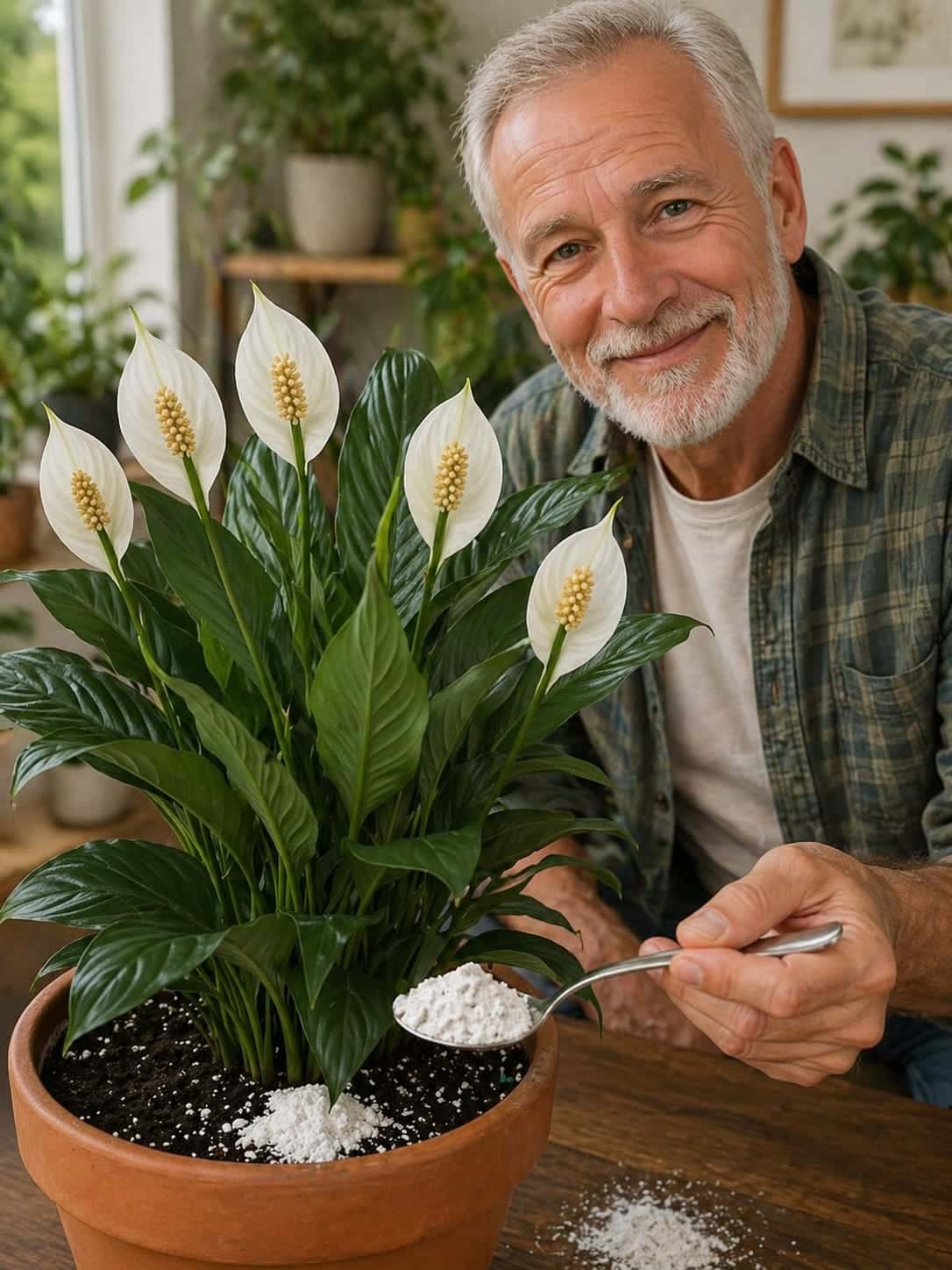
Peace Lilies are one of the most loved indoor plants for modern homes, apartments, offices, and calm interior spaces. Their deep green leaves, elegant white blooms, and clean tropical look make them a favorite for anyone who wants a natural touch without turning their home into a complicated indoor jungle.
But even though Peace Lilies look graceful, they can be surprisingly dramatic when something is wrong.
One week the plant looks fresh and glossy. The next week, the leaves start drooping, yellow edges appear, and the whole plant suddenly looks tired. Many plant owners immediately think the solution is more water, more fertilizer, or a complete repot. But in many cases, the real problem is hidden below the surface.
Recently, a simple trick has become popular among indoor gardeners: adding a white powder-like material to Peace Lily soil. Videos show people sprinkling this white material around the base of the plant, followed by claims of stronger leaves, better growth, and a shocking comeback.
So what is this white powder? Is it really a secret plant booster, or is it just another viral gardening trend?
The truth is simple: in most useful cases, the white material is perlite — a lightweight, white mineral used to improve soil structure, drainage, and airflow around plant roots.
It is not magic. It is not a miracle fertilizer. But when used correctly, it can make a real difference.
The Real Reason Peace Lily Leaves Start Declining
Before understanding why gardeners use this white material, it is important to understand why Peace Lilies begin to struggle in the first place.
Peace Lilies usually decline because their roots are stressed. The leaves are only showing what is happening underground.
Common signs of stress include:
- Drooping leaves
- Yellowing leaves
- Brown leaf tips
- Weak new growth
- Soil that stays wet for too long
- A dull, tired-looking plant
Many people think drooping means the plant needs more water. Sometimes that is true. But very often, drooping happens because the roots are sitting in soil that is too wet, too dense, or poorly aerated.
Roots need oxygen. When soil becomes compacted, air pockets disappear. Water sits around the roots for too long, and the plant slowly begins to struggle. Peace Lilies like moisture, but they do not like being trapped in heavy, soggy soil.
This is where perlite becomes useful.
What Is the White Powder Gardeners Are Using?
The white material shown in many plant care videos is usually perlite.
Perlite is a natural volcanic glass that is heated until it expands into lightweight white particles. It is commonly added to potting mixes because it helps soil stay loose and airy.
Although people sometimes call it a “white powder,” perlite is usually not a fine powder. It looks more like small white flakes or tiny lightweight stones. When crushed, it can look powdery, but the best gardening perlite usually has a slightly chunky texture.
Perlite does not feed the plant directly. It does not contain major nutrients like nitrogen, phosphorus, or potassium. Instead, it improves the growing environment.
That is the real secret.
Healthy roots need the right balance of air and moisture. Perlite helps create that balance.
Why Perlite Helps Peace Lilies
Peace Lilies grow best in soil that holds some moisture but still allows extra water to drain away. They do not like dry cactus soil, but they also do not like thick, muddy soil.
Perlite helps by improving three key things: airflow, drainage, and soil texture.
1. It Improves Airflow Around the Roots
When soil becomes too compact, roots cannot breathe properly. Perlite creates small air spaces in the soil. These air pockets allow oxygen to reach the root zone.
Better oxygen means healthier roots. Healthier roots can absorb water and nutrients more efficiently. When the roots improve, the leaves usually become stronger and greener over time.
2. It Helps Prevent Overwatering Problems
Overwatering is one of the biggest reasons Peace Lilies decline indoors. The problem is not always the amount of water you pour. Sometimes the problem is that the soil does not dry evenly.
Heavy soil holds too much moisture around the roots. This can lead to root rot, yellow leaves, and constant drooping.
Perlite helps excess water move through the potting mix more easily. This lowers the risk of waterlogged soil.
3. It Keeps the Soil Light and Loose
Indoor potting soil can become dense after months of watering. Each watering can slowly press soil particles together. Over time, the top layer becomes crusty and the deeper soil becomes heavy.
Adding perlite helps loosen the mix. This makes the root environment more stable and comfortable.
4. It Supports Stronger Leaf Growth
Perlite does not directly make leaves green. But by improving root health, it allows the plant to recover naturally.
When roots are healthier, the plant can send more energy to new leaves and existing foliage. This is why many people notice their Peace Lily looking fresher after improving the soil.
Is This Trick Really a Fertilizer?
No. Perlite is not a fertilizer.
This is one of the biggest misunderstandings about the “white powder” trend.
Fertilizer feeds the plant. Perlite improves the soil structure.
Think of it this way: fertilizer is like food, but perlite is like better breathing space. If the roots are suffocating in compacted soil, adding more fertilizer will not solve the main problem. In fact, fertilizing a stressed plant can sometimes make things worse.
Before feeding a weak Peace Lily, it is better to check the soil, drainage, light, and watering routine.
Important Warning: Not Every White Powder Is Safe
This part is very important.
Do not use random white powders from your kitchen or bathroom on Peace Lilies.
Some viral videos make plant care look simple, but not all white substances are safe for plants. Materials like baking soda, powdered cleaners, flour, or unknown powders can damage soil chemistry, harm roots, or attract pests.
For Peace Lilies, the safest and most useful white material for soil improvement is usually horticultural perlite.
Avoid using:
- Baking soda
- White flour
- Powdered sugar
- Cleaning powders
- Random mineral powders
- Unknown substances from viral videos
If you are not sure what the material is, do not add it to your plant.
How to Use Perlite for Peace Lilies Correctly
There are two main ways to use perlite: the best method and the quick method.
Best Method: Mix Perlite Into the Soil
The most effective way to use perlite is to mix it directly into the potting mix.
A good Peace Lily soil blend can include:
- 70% quality indoor potting soil
- 20% to 30% perlite
This creates a soil mix that holds moisture but does not stay soggy.
To do this:
- Gently remove the Peace Lily from its pot.
- Shake away some of the old compacted soil.
- Prepare a fresh mix with potting soil and perlite.
- Place the plant back into the pot.
- Water lightly after repotting.
- Keep the plant in bright indirect light while it adjusts.
This method is best if your Peace Lily has been sitting in the same soil for a long time or if the soil feels heavy and muddy.
Quick Method: Lightly Add Perlite to the Surface
If you do not want to repot immediately, you can use a lighter method.
Sprinkle a small amount of perlite on the soil surface and gently work it into the top layer with your fingers or a small tool.
Then water lightly.
This is not as powerful as mixing perlite throughout the soil, but it can help improve the top layer and reduce surface compaction.
Do not create a thick white layer on top of the soil. Too much can look messy and may not help much if it only sits on the surface.
How Much Perlite Should You Use?
For a full soil mix, use about 20% to 30% perlite.
For example:
- Small pot: a few handfuls mixed into the soil
- Medium pot: about 1 part perlite to 3 or 4 parts soil
- Large pot: enough to visibly lighten the texture of the mix
For a surface application, use only a light sprinkle.
The goal is not to bury the plant in white material. The goal is to improve soil structure.
Signs Your Peace Lily Needs Better Soil
Your Peace Lily may benefit from better aeration if you notice:
- Soil stays wet for more than a week
- Leaves droop even when the soil is moist
- Yellow leaves keep appearing
- The pot feels heavy long after watering
- The soil surface looks crusty or compacted
- Water sits on top before soaking in
- There is a musty smell from the pot
These are all signs that the root zone may not be getting enough air.
The Role of Watering
Perlite helps with drainage, but it does not mean you can water carelessly.
Peace Lilies like evenly moist soil, but they hate sitting in water.
A good watering routine is:
- Touch the top inch of soil.
- If it feels slightly dry, water.
- If it still feels wet, wait.
- Always let extra water drain out.
- Never leave the pot sitting in standing water.
If your Peace Lily is in a decorative outer pot, remove the inner pot after watering and empty any collected water.
This one habit can prevent many root problems.
The Role of Light
Even with perfect soil, Peace Lilies still need proper light.
They prefer bright, indirect light. This means they should receive plenty of brightness without direct harsh sun burning the leaves.
Good locations include:
- Near an east-facing window
- A few feet away from a bright window
- On a shelf with filtered natural light
- Near a balcony door with soft light
Avoid placing Peace Lilies in deep dark corners. They may survive, but they will not thrive.
Also avoid strong direct afternoon sun, which can scorch the leaves.
Continue to Page 2
Continue to page 2 for more details about this article and the key points many readers miss on the first page.