The Role of Humidity
Peace Lilies are tropical plants. They enjoy moderate to high humidity.
Dry indoor air can cause brown leaf tips, especially in homes with air conditioning or heating.
To improve humidity:
- Group plants together
- Use a pebble tray
- Keep the plant away from heating vents
- Use a humidifier if the air is very dry
- Wipe leaves occasionally to remove dust
Humidity alone will not fix compacted soil, but it helps support overall leaf health.
Why This Trick Looks So Dramatic Online
The reason this trend gets attention is simple: people love visible plant transformations.
When a Peace Lily has poor soil, it can look weak and tired. Once the soil structure improves, the plant may recover, especially if watering and light are also corrected.
The result can look dramatic.
But the “comeback” does not happen because perlite is a magic powder. It happens because the root environment becomes healthier.
Better roots create better leaves.
That is the real formula.
Common Mistakes to Avoid
Mistake 1: Using Baking Soda Instead of Perlite
Baking soda is not the same thing as perlite. It can affect soil pH and may harm your plant if used incorrectly.
Do not use baking soda as a Peace Lily soil treatment.
Mistake 2: Adding Too Much
More is not always better. Too much perlite can make the soil dry too quickly. Peace Lilies still need moisture.
Keep the balance around 20% to 30%.
Mistake 3: Only Sprinkling It on Top
Surface application can help a little, but mixing it into the soil is much more effective.
If your soil is badly compacted, repotting with a better mix is the stronger solution.
Mistake 4: Overwatering After Adding It
Some people add perlite and then water heavily. This defeats the purpose.
Water moderately and allow drainage.
Mistake 5: Ignoring the Pot
A pot without drainage holes can ruin everything. Even the best soil mix can become dangerous if water has nowhere to go.
Always use a pot with drainage.
Best Soil Mix for Peace Lilies
A strong Peace Lily soil mix should be light, moisture-retentive, and airy.
A simple recipe:
- 2 parts indoor potting soil
- 1 part perlite
- Optional: a small amount of orchid bark for extra structure
This mix helps create a balance between moisture and oxygen.
If your home is very dry, use slightly less perlite. If your home is humid or your soil stays wet too long, use slightly more perlite.
Can Perlite Help Yellow Leaves Turn Green Again?
This is a common question.
Yellow leaves usually do not turn green again. Once a leaf has turned yellow, it is often already damaged. But improving soil conditions can prevent more leaves from yellowing and help new growth come in healthier.
You can remove fully yellow leaves with clean scissors. This helps the plant focus energy on healthy growth.
Can Perlite Fix Root Rot?
Perlite can help prevent root rot by improving drainage and airflow, but it cannot magically cure severe root rot.
If your Peace Lily has root rot, you may need to:
- Remove the plant from the pot.
- Cut away black, mushy roots.
- Repot into fresh airy soil.
- Use a pot with drainage.
- Water carefully afterward.
Perlite is part of the solution, but severe root damage needs extra care.
Peace Lily Care Table
| Care Factor | Best Condition | Why It Matters |
|---|---|---|
| Soil | Light and airy | Helps roots breathe |
| Perlite | 20% to 30% of mix | Improves drainage and airflow |
| Water | Slightly moist, not soggy | Prevents root stress |
| Light | Bright indirect light | Supports healthy leaves |
| Pot | Drainage holes required | Prevents standing water |
| Humidity | Moderate to high | Reduces brown tips |
| Temperature | Stable indoor warmth | Prevents shock |
Frequently Asked Questions
1. What is the white powder used on Peace Lilies?
In most useful plant care cases, it is perlite. Perlite is a lightweight white mineral used to improve soil aeration and drainage.
2. Is perlite a fertilizer?
No. Perlite does not feed the plant. It improves the soil structure so roots can breathe better.
3. Can I sprinkle perlite on top of the soil?
Yes, but it works better when mixed into the potting soil. A light surface sprinkle can help a little, but it is not the best long-term method.
4. How often should I add perlite?
You do not need to add it often. Mix it into the soil when repotting. If the surface becomes compacted, you can gently refresh the top layer.
5. Can I use baking soda instead?
No. Baking soda is not recommended for Peace Lilies. It can disturb soil balance and may harm the roots.
6. Why are my Peace Lily leaves drooping?
Drooping can happen from underwatering, overwatering, compacted soil, root stress, or sudden temperature changes. Check the soil moisture before watering again.
7. Why are my Peace Lily leaves turning yellow?
Yellow leaves are often caused by overwatering, poor drainage, compacted soil, old leaves naturally dying, or low light.
8. Does perlite help with overwatering?
It helps reduce the risk by improving drainage, but you still need to water correctly.
9. Should I repot my Peace Lily?
If the soil is heavy, compacted, smelly, or staying wet too long, repotting into a fresh airy mix is a good idea.
10. Can this trick make my Peace Lily bloom?
Perlite can improve root health, but blooming also depends on light, maturity, and overall care. Bright indirect light is very important for flowers.
Final Thoughts
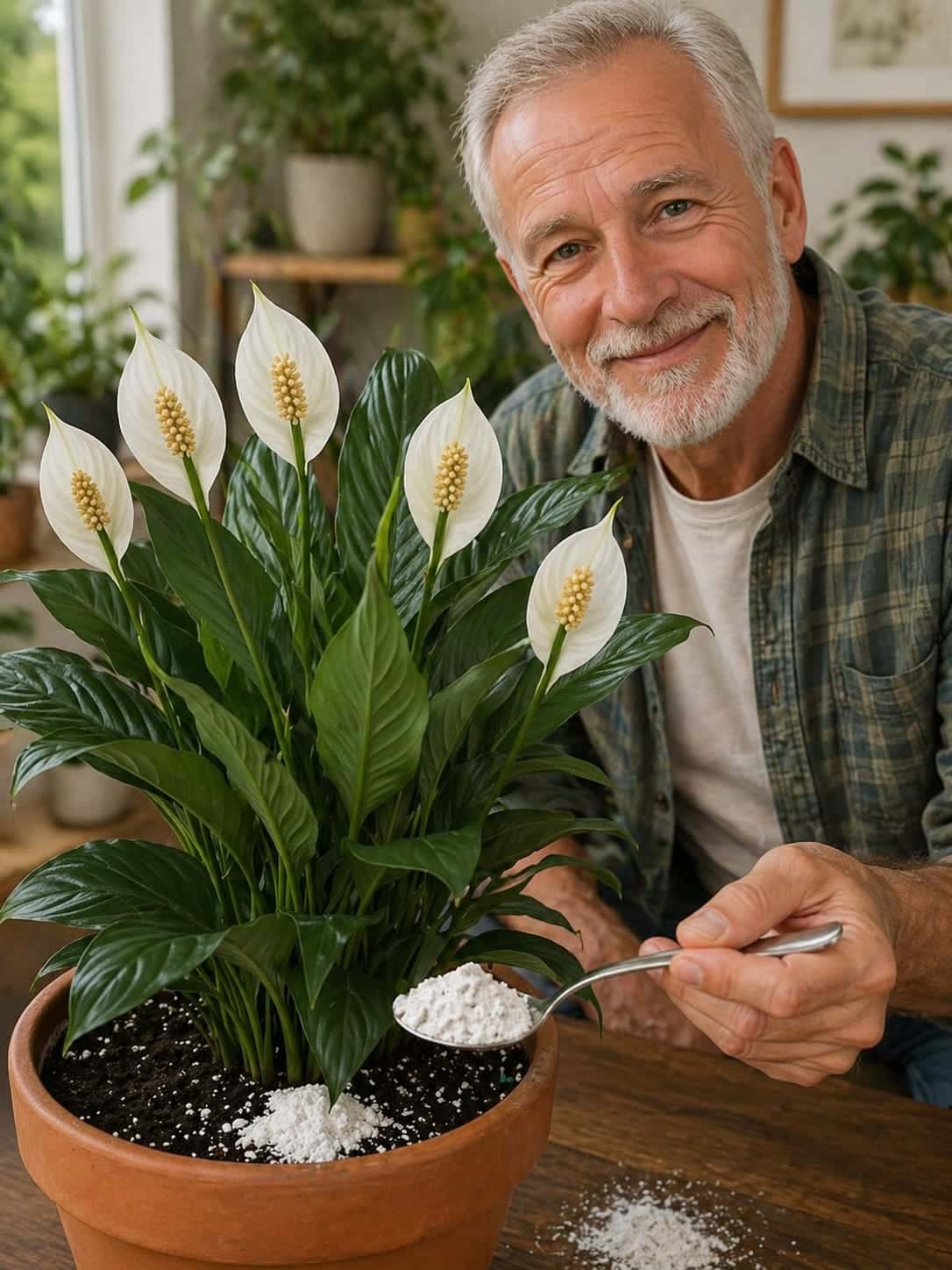
The viral white powder trick for Peace Lilies is not as mysterious as it looks. In most cases, the material is perlite, and its real benefit is improving the soil environment.
Peace Lilies do not need complicated care, but they do need balance. Their roots need moisture, but they also need oxygen. When soil becomes too compact or wet, the plant begins to suffer. Leaves droop, yellowing appears, and growth slows down.
Adding perlite helps solve one of the biggest hidden problems: poor soil structure.
It creates air pockets, improves drainage, and gives roots a healthier place to grow. When roots recover, the plant can produce stronger, greener leaves.
So yes, gardeners are adding this white material for a reason. But the real secret is not the powder itself.
The real secret is healthier roots.
And once the roots are healthy, the leaves usually follow.