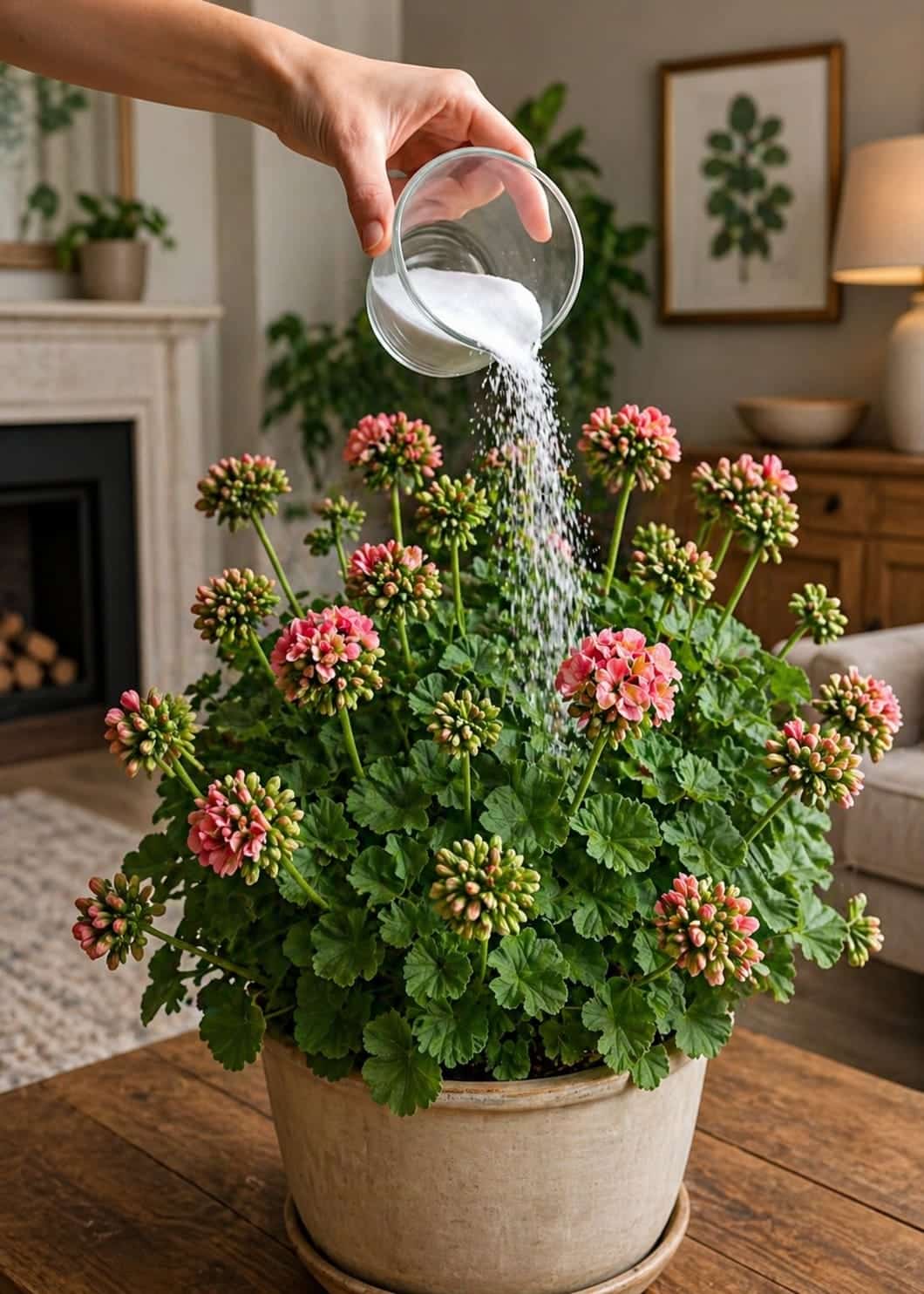
Geraniums are one of the most rewarding flowering plants to grow at home. Their round clusters of pink, red, white, coral, lavender, or salmon-colored blooms can make any balcony, patio, windowsill, or indoor corner feel cheerful and alive. With their scalloped green leaves and long-lasting flowers, geraniums are often seen as easy plants, but anyone who has grown them knows they can suddenly slow down, stop blooming, develop yellow leaves, or show signs of powdery mildew when conditions are not quite right.
This is where simple home gardening tricks become popular. One of the most talked-about geranium care hacks is using baking soda as part of a natural plant-care routine. Baking soda is inexpensive, easy to find, and already sitting in many kitchens. Gardeners often use it in diluted sprays to help create an environment that is less friendly to powdery mildew on leaves. Some also believe it gives flowering plants a cleaner, fresher growing environment, allowing them to focus more energy on producing blooms.
But there is one important detail: baking soda should not be poured onto geraniums as a dry powder or used heavily in the soil. The safest way to use it is as a very diluted leaf spray, applied carefully and occasionally. When used correctly, it can become a helpful part of your geranium care routine. When used incorrectly, it may damage leaves, disturb soil balance, or stress the plant.
In this complete guide, you will learn exactly what this baking soda geranium hack is, how it works, how to use it safely, how to encourage more blooms naturally, and how to prevent mildew before it becomes a serious problem. You will also learn the full care routine that geraniums need, because no single trick can replace good light, proper watering, airflow, pruning, and feeding.
What Is the Baking Soda Geranium Care Hack?
The baking soda geranium care hack is a simple homemade method where a small amount of baking soda is mixed with water and used as a gentle spray on geranium leaves. The goal is not to “feed” the plant like fertilizer. Instead, the idea is to help make the leaf surface less inviting to powdery mildew, a common fungal problem that appears as white or gray powdery patches on leaves and stems.
Powdery mildew often appears when there is poor air circulation, high humidity, crowded growth, or leaves that stay damp for too long. Geraniums can be especially vulnerable when they are grown indoors, packed tightly on balconies, or kept in shady, humid spots. Once mildew appears, it can spread quickly and make a beautiful plant look tired and unhealthy.
A diluted baking soda spray may help reduce mildew pressure by changing the surface environment on the leaves. It is not a magic cure, and it should not be used as a replacement for good care. However, it can be part of a natural prevention routine when combined with better airflow, proper spacing, careful watering, and regular pruning.
The “boost blooms” part of this hack comes from the overall improvement in plant health. A geranium that is not struggling with mildew, wet leaves, compact growth, or poor care has more energy available for flowering. Baking soda itself is not a bloom fertilizer, but using it carefully as part of a clean plant-care routine may help your geranium stay strong enough to bloom more consistently.
Why Geraniums Stop Blooming
Before using any gardening hack, it helps to understand why geraniums stop blooming in the first place. Many people assume that a plant with fewer flowers simply needs more fertilizer, but the reason is often more basic.
Geraniums need bright light to bloom well. If they are grown indoors in a dim room, they may produce leaves but very few flowers. Outdoor geraniums usually bloom best with several hours of sunlight each day. Indoors, they need the brightest window you can provide, usually a sunny south- or west-facing window, or strong grow lights if natural light is limited.
Watering also affects blooms. Geraniums dislike soggy soil. If the roots stay wet for too long, the plant becomes stressed, leaves may yellow, and flowers may reduce. On the other hand, if the plant dries out too severely again and again, buds can fail to open or drop early.
Another common reason for fewer blooms is lack of deadheading. Geraniums produce flower clusters that eventually fade. If old blooms stay on the plant, the plant may spend energy forming seed instead of producing new flowers. Removing faded flowers encourages the plant to keep blooming.
Too much nitrogen can also reduce flowering. Nitrogen encourages leafy growth, but too much can create a big green geranium with very few blooms. For flowering geraniums, balanced feeding is best, and overfeeding should be avoided.
Why Geraniums Get Powdery Mildew
Powdery mildew is one of the most frustrating problems for geranium growers. It often starts as small white powdery spots on the leaves. At first, it may look like dust or flour. Over time, it can spread across the leaf surface, distort new growth, weaken the plant, and reduce its beauty.
Unlike some fungal problems that require wet leaves, powdery mildew can appear even when leaves are not soaked. It often thrives when days are warm, nights are cooler, humidity is high, and air circulation is poor. Indoor geraniums can develop mildew when they are placed in still air, too close to other plants, or near windows where temperature shifts happen daily.
Outdoor potted geraniums may develop mildew during humid weather, especially if they are crowded or shaded. Plants with dense foliage are more likely to trap moisture and reduce airflow. This creates the perfect place for mildew to spread.
The best way to fight mildew is prevention. Once a plant is heavily covered, it is harder to manage. That is why many gardeners use simple sprays like diluted baking soda before mildew becomes severe.
How Baking Soda Helps with Mildew Prevention
Baking soda, also known as sodium bicarbonate, is alkaline. When diluted in water and sprayed on leaves, it may make the leaf surface less favorable for powdery mildew. Many gardeners use it as a traditional home remedy for mildew-prone plants.
However, it must be used carefully. Baking soda contains sodium, and too much sodium is not good for plants or soil. Strong mixtures can burn leaves, especially in hot sun. Frequent use can also lead to residue buildup. This is why the spray should be weak, used only when needed, and kept mostly on leaves rather than poured into the soil.
The safest way to think of baking soda is as a leaf-surface helper, not a plant food. It is not the same as fertilizer. It does not provide the full nutrients geraniums need for blooming. Its value is mainly in helping reduce conditions that allow mildew to spread.
The Safe Baking Soda Spray Recipe for Geraniums
If you want to try this geranium hack, use a gentle recipe. Stronger is not better. A mild spray is safer for leaves and still gives you the benefit of the trick.
Ingredients
- 1 quart of water
- 1/2 teaspoon baking soda
- 2 to 3 drops mild liquid soap
- Optional: 1 teaspoon horticultural oil or neem oil
- A clean spray bottle
Instructions
- Fill a clean spray bottle with 1 quart of room-temperature water.
- Add 1/2 teaspoon of baking soda.
- Add 2 to 3 drops of mild liquid soap to help the spray spread on the leaves.
- If using oil, add 1 teaspoon and shake very well.
- Shake the bottle until everything is fully mixed.
- Test the spray on one or two leaves first.
- Wait 24 hours to make sure there is no leaf damage.
- If the test leaves look fine, spray the rest of the plant lightly.
The spray should lightly coat the leaves, not soak the plant until it drips heavily into the soil. Focus especially on areas where mildew usually appears, such as the upper and lower leaf surfaces and crowded inner growth. Do not spray open flowers heavily, because delicate petals can spot or age faster when wet.
When to Apply Baking Soda Spray
The best time to apply baking soda spray is early morning or late afternoon, when the plant is not sitting in strong direct sun. Never spray geranium leaves in hot midday sun. Wet leaves plus strong sun can lead to burning or spotting.
If your geranium is indoors, apply the spray in a well-ventilated area and allow the leaves to dry naturally. Avoid spraying right before night if the plant will remain damp in cool, still air. Good drying is important.
For prevention, use the spray once every 10 to 14 days during mildew-prone weather. If you already see early mildew, you may use it once a week for a short period, but do not overuse it. If mildew is severe, remove the worst affected leaves and improve the growing conditions immediately.
What Not to Do with Baking Soda on Geraniums
Do not pour dry baking soda directly onto geranium leaves, flowers, or soil. The dramatic image of white powder falling over a plant may look interesting, but it is not the safest method. Dry powder can sit on leaves unevenly, draw moisture, create residue, and irritate tender growth. If it falls into the soil repeatedly, it can affect the potting mix.
Do not use a strong baking soda mixture. More baking soda does not mean more protection. Strong solutions can burn leaves and cause damage that looks worse than mildew.
Do not spray a stressed plant in hot sun. If the geranium is wilted, dehydrated, newly transplanted, or sunburned, wait until it is stable before applying any homemade spray.
Do not use baking soda every day. Overuse can create residue and stress the plant. Occasional use is enough.
How to Use This Hack to Support More Blooms
The baking soda spray helps most when it is part of a complete bloom-boosting routine. A clean, mildew-free plant can photosynthesize better, grow more strongly, and focus more energy on flowers. But to truly boost blooms, you need to give geraniums the right conditions.
Start with light. Geraniums are sun-loving plants. Indoors, place them near your brightest window. Outdoors, give them several hours of direct morning sun or bright light. If your plant is lush but not flowering, it probably needs more light.
Next, water correctly. Allow the top inch of soil to dry before watering again. Geraniums prefer a slight dry-down between waterings. Constantly wet soil can weaken the roots and reduce flowering.
Then, deadhead regularly. Remove faded flower heads by snapping or cutting the flower stem back to where it meets the main stem. This encourages the plant to keep producing new buds.
Finally, feed lightly. Use a balanced or bloom-supporting fertilizer at a diluted strength during the growing season. Too much fertilizer, especially high-nitrogen fertilizer, can lead to more leaves and fewer flowers.
Best Light for Blooming Geraniums
Light is the number one bloom factor for geraniums. These plants are not meant for dark corners. They may survive in lower light, but they will not bloom heavily. If you want clusters of flowers again and again, give your geranium bright light.
Outdoor geraniums usually enjoy morning sun and some afternoon protection in very hot climates. In cooler areas, they can often handle more sun. Indoor geraniums should be placed close to a sunny window. If stems become long, weak, and stretched, the plant is reaching for light.
Rotate indoor plants every week so all sides receive light. This keeps growth balanced and helps prevent the plant from leaning. If natural light is weak, use a grow light for several hours daily. A geranium under good light will be stronger, more compact, and more likely to bloom.
Best Watering Routine for Geraniums
Geraniums like to dry slightly between waterings. This is different from plants that want constantly moist soil. Before watering, check the top inch of soil. If it feels dry, water deeply until water drains from the bottom of the pot. Then empty the saucer.
Do not let geraniums sit in standing water. Wet feet can lead to root rot, yellow leaves, and weak growth. A pot with drainage holes is essential. If your geranium is in a decorative pot without drainage, move it to a proper container or use the decorative pot only as an outer cover.
In hot weather, geraniums may need water more often. Indoors or in cooler seasons, they need less. Always check the soil rather than following a strict calendar.
Best Soil for Geraniums
Geraniums need well-draining soil. A standard potting mix can work, but it is helpful to improve drainage with perlite, coarse sand, or fine bark. The soil should hold some moisture but not stay soggy.
If your geranium’s soil looks compacted, crusty, or slow to dry, it may be time to refresh it. Old potting soil can hold too much water or become depleted over time. Repotting into fresh mix can make a big difference in plant health and blooming.
For container geraniums, choose a potting mix rather than heavy garden soil. Garden soil can compact in pots and suffocate roots. Healthy roots are essential for healthy flowers.
How to Feed Geraniums for More Flowers
Geraniums bloom best when they receive steady but not excessive nutrition. During the growing season, feed every two to four weeks with a diluted fertilizer. Choose a balanced fertilizer or one designed for flowering plants.
Avoid too much nitrogen. High-nitrogen feeding can create large leafy plants with fewer blooms. If your geranium has beautiful leaves but almost no flowers, check both light and fertilizer. Too little light and too much nitrogen are a common combination behind bloom failure.
Always follow fertilizer directions and consider using half strength. Container plants can build up salts from fertilizer over time, so flush the pot occasionally with plain water and let it drain well.
Natural Bloom-Boosting Routine for Geraniums
For a simple natural bloom routine, combine good care with occasional homemade support. Here is a practical weekly rhythm:
- Check soil moisture twice a week.
- Water only when the top inch of soil is dry.
- Place the plant in bright light.
- Deadhead faded blooms as soon as they age.
- Remove yellow or damaged leaves.
- Improve airflow around the plant.
- Use diluted fertilizer during active growth.
- Apply baking soda spray occasionally if mildew is a concern.
This routine works because it addresses the real needs of the plant. Baking soda helps with mildew pressure, but the blooms come from a healthy, well-lit, well-maintained geranium.
How to Deadhead Geraniums Correctly
Deadheading is one of the easiest ways to keep geraniums blooming. When a flower cluster fades, do not just pull off the petals. Remove the whole flower stem. Follow the stem down to where it connects with the main plant and snap or cut it off cleanly.
This prevents the plant from wasting energy on old flowers and seed formation. It also keeps the plant looking tidy. Regular deadheading can encourage fresh buds and extend the blooming period.
Use clean scissors or your fingers if the stem snaps easily. If any stems are mushy or diseased, remove them immediately and discard them away from the plant.
Continue to Page 2
Continue to page 2 for more details about this article and the key points many readers miss on the first page.