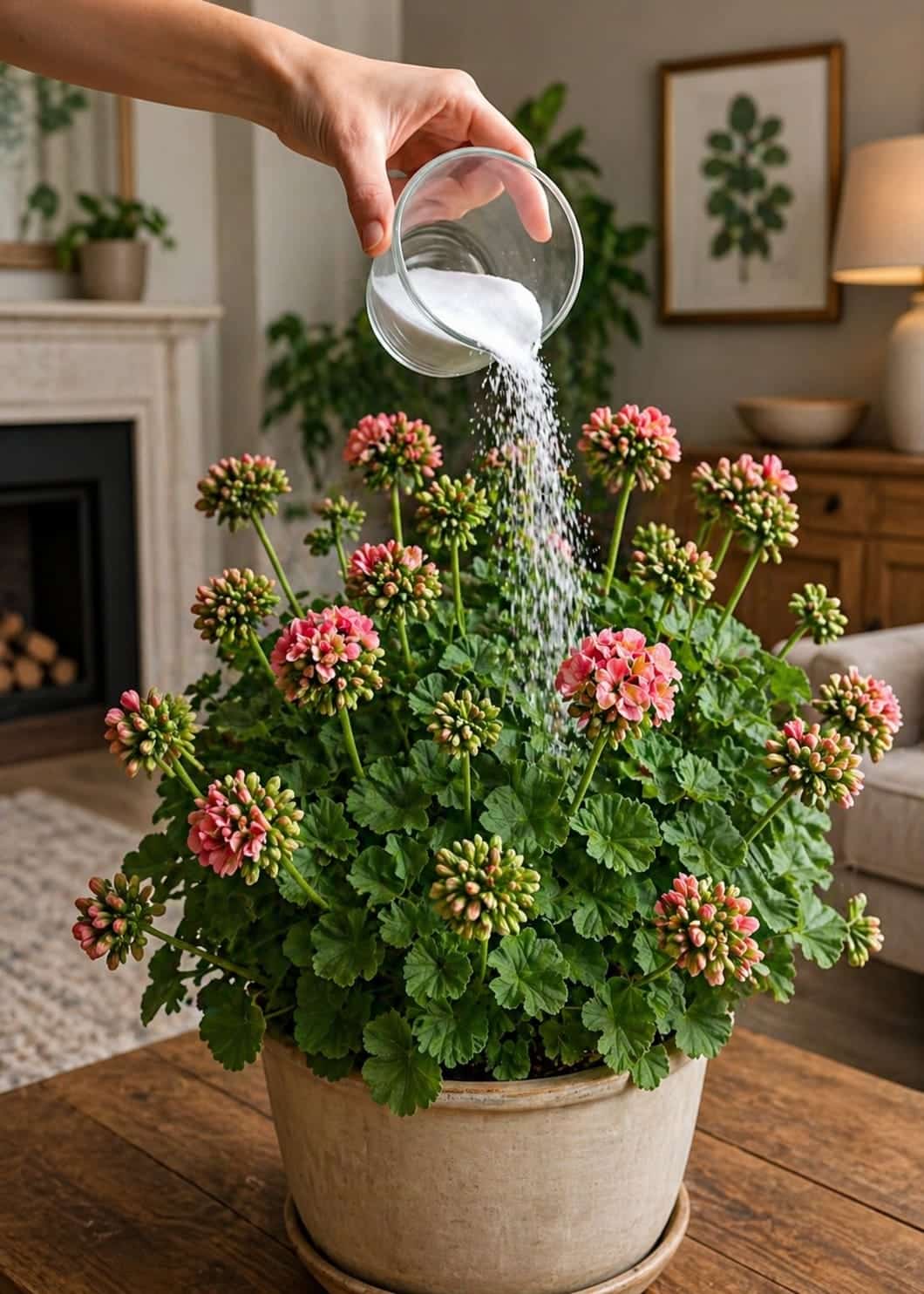
Pruning Geraniums for Bushier Growth
Geraniums can become leggy, especially indoors or after a long season of growth. Pruning helps them stay compact and full. Pinch or cut back long stems just above a leaf node. This encourages branching and creates a bushier plant with more potential bloom points.
Do not be afraid to prune a healthy geranium. Light pruning often makes it stronger. However, avoid cutting away too much at once if the plant is stressed. Gradual shaping is better.
After pruning, place the plant in bright light and avoid overwatering. New growth should appear from the nodes below the cuts.
Air Circulation: The Hidden Key to Mildew Prevention
Airflow is one of the most important factors in preventing powdery mildew. A crowded geranium with dense leaves can trap humid air inside the plant. This creates the perfect place for mildew to develop.
Keep geraniums spaced apart from other plants. Remove dead leaves and crowded inner growth. If grown indoors, open a window when weather allows or use a small fan on a low setting nearby. The fan should not blast the plant directly; gentle air movement is enough.
Outdoors, avoid placing geraniums in cramped corners where air cannot move. Hanging baskets, railing planters, and open patios often provide better airflow than tight, shaded spaces.
How to Spot Powdery Mildew Early
Powdery mildew usually begins as small white or gray patches. Check the top and underside of leaves, especially older leaves and crowded areas. It may also appear on stems or flower buds.
At first, the spots may wipe away slightly, but they return if conditions remain favorable. As mildew spreads, leaves may yellow, curl, or become distorted. Flowering may slow because the plant is under stress.
Early action matters. Remove the worst affected leaves, improve airflow, avoid overhead watering, and use a gentle baking soda spray if appropriate. Do not wait until the entire plant is covered.
What to Do If Your Geranium Already Has Mildew
If mildew is already visible, start by isolating the plant from other susceptible plants. Remove heavily affected leaves and discard them. Do not compost diseased leaves if you are trying to reduce spread.
Next, improve the environment. Move the geranium to brighter light if possible. Increase spacing. Reduce humidity around the plant. Water at the soil level instead of wetting the leaves.
Then apply the diluted baking soda spray after testing it on a small area. Repeat weekly for a short period if needed, but watch for leaf sensitivity. If the plant reacts badly, stop using the spray and switch to other mildew-control methods.
Indoor Geranium Care Tips
Growing geraniums indoors can be very rewarding, but indoor conditions are different from outdoor ones. The biggest challenge is light. Place your geranium in the brightest window available. If it becomes leggy or refuses to bloom, add a grow light.
Indoor air can also be still, which encourages mildew. Make sure the plant has room around it. Avoid crowding it among many other houseplants. Keep leaves dry and remove faded blooms promptly.
Indoor geraniums may need less water than outdoor plants because they dry more slowly. Always check the soil before watering. During winter, growth may slow, and the plant may bloom less. This is normal.
Outdoor Geranium Care Tips
Outdoor geraniums often bloom more heavily because they receive more light. Place them where they get several hours of sun. In very hot climates, morning sun and afternoon shade may be best.
Water deeply, then allow the soil to dry slightly. Containers dry faster outdoors, especially in wind and heat. Check them regularly, but do not keep them soggy.
Deadhead often, feed lightly, and watch for pests. Outdoor geraniums can attract aphids, caterpillars, whiteflies, and other insects. Healthy plants are more resilient, so consistent care helps prevent problems.
Can Baking Soda Damage Geraniums?
Yes, baking soda can damage geraniums if used too strongly or too often. Leaf burn, spotting, residue, and stress can happen when the mixture is too concentrated or applied in hot sun. Soil problems can occur if baking soda is repeatedly poured into the pot.
That does not mean you must avoid it completely. It simply means you should use it carefully. Keep the mixture weak, test first, spray lightly, avoid hot sun, and do not use it as a soil drench.
Plants are living things, and each one may react differently. A healthy, mature geranium may tolerate a spray better than a young, stressed, or newly repotted plant.
Best Companion Care Habits with Baking Soda Spray
If you use baking soda spray, combine it with habits that reduce mildew naturally. Prune crowded growth. Space plants apart. Water at the base. Avoid wetting leaves at night. Remove old flowers. Keep the plant in bright light. Clean up fallen leaves from the soil surface.
These habits reduce the need for sprays. The strongest plant-care strategy is always prevention. Baking soda spray should be a supporting tool, not the entire solution.
Common Geranium Problems and Solutions
Yellow Leaves
Yellow leaves may be caused by overwatering, underwatering, poor drainage, low light, or natural aging. Check the soil first. If it is constantly wet, reduce watering and improve drainage. If it is bone dry, water more consistently.
No Blooms
No blooms usually means not enough light, too much nitrogen, lack of deadheading, or plant stress. Move the plant to brighter light, feed correctly, and remove old flowers.
Leggy Growth
Leggy growth is often caused by low light. Prune the plant back and move it to a brighter location.
Brown Leaf Edges
Brown edges can come from underwatering, fertilizer buildup, heat stress, or spray damage. Review your care routine and avoid strong homemade mixtures.
Mildew
Mildew appears as white powdery patches. Improve airflow, remove affected leaves, avoid overhead watering, and use a gentle baking soda spray if needed.
How Often Should You Use This Geranium Hack?
For prevention, use the baking soda spray every 10 to 14 days only during mildew-prone conditions. You do not need to spray constantly when the plant is healthy and the weather is dry. For active mild mildew, use once a week for two or three weeks while improving airflow and removing affected leaves.
Once the problem is under control, stop spraying regularly and return to normal care. Overusing any homemade spray can create new problems. The goal is balance.
Can You Mix Baking Soda with Fertilizer?
It is better not to mix baking soda spray with fertilizer. They serve different purposes. Fertilizer belongs in the soil as plant nutrition, while baking soda spray is used on leaves for mildew prevention. Mixing too many things together can increase the risk of plant stress.
Keep your routine simple. Fertilize on one schedule and use baking soda spray separately only when needed. This makes it easier to see how the plant responds.
Can You Use Baking Soda on All Flowering Plants?
Not all plants respond the same way. Some leaves are more sensitive than others. Before using baking soda spray on any plant, test a small area first. Plants with thin, delicate, fuzzy, or tender leaves may be more prone to damage.
Geranium leaves are fairly sturdy, which is one reason gardeners often try this method on them. Still, caution is important. Always start weak and observe carefully.
The Best Natural Bloom Plan for Geraniums
If you want your geranium to bloom naturally and stay mildew-resistant, follow this simple plan:
- Place the plant in bright light with several hours of sun if possible.
- Use a pot with drainage holes.
- Plant in well-draining potting mix.
- Water when the top inch of soil dries.
- Deadhead faded blooms regularly.
- Prune leggy stems to encourage bushiness.
- Feed lightly during the growing season.
- Keep good airflow around the plant.
- Remove yellow or diseased leaves quickly.
- Use diluted baking soda spray only when mildew prevention is needed.
This plan works because it strengthens the plant from every angle. Strong roots, bright light, clean leaves, and proper airflow create a geranium that is naturally more likely to bloom and less likely to suffer from mildew.
Frequently Asked Questions
Can baking soda make geraniums bloom?
Baking soda does not directly make geraniums bloom like a fertilizer. Its main use is helping prevent powdery mildew when applied as a diluted leaf spray. Better blooms come from bright light, deadheading, proper watering, and gentle feeding.
Can I sprinkle baking soda directly on geranium soil?
It is not recommended. Baking soda contains sodium and can affect the soil if used too much. Use it as a diluted leaf spray instead, and avoid heavy soil application.
How often should I spray geraniums with baking soda?
Use it every 10 to 14 days during mildew-prone conditions, or weekly for a short time if mildew has just started. Do not use it daily.
Will baking soda kill powdery mildew completely?
It may help reduce mild powdery mildew and prevent spread, but it works best with good airflow, pruning, proper watering, and removal of affected leaves.
Can baking soda burn geranium leaves?
Yes, if the mixture is too strong or applied in hot sun. Always use a weak solution and test a few leaves first.
Should I spray the flowers too?
Try to avoid spraying flowers heavily. Focus on leaves and stems. Wet flowers can spot or fade faster.
What is the best way to get more geranium blooms?
Give the plant bright light, remove faded flowers, water correctly, feed lightly, and prune leggy growth. These steps are more important than any single homemade hack.
Can indoor geraniums bloom all year?
Indoor geraniums can bloom for long periods if they receive enough light and warmth. In winter, they may slow down unless supported with strong light or grow lights.
Final Thoughts
The baking soda geranium care hack is popular because it is simple, affordable, and easy to try. Used properly, a diluted baking soda spray can help create a leaf environment that is less friendly to powdery mildew. This can keep geraniums cleaner, healthier-looking, and better able to focus energy on growth and flowering.
However, baking soda is not a miracle fertilizer and should not be treated like one. It does not replace sunlight, good soil, proper watering, deadheading, or balanced feeding. It is best used as a gentle mildew-prevention tool, not as a heavy powder poured over the plant.
If your geranium is struggling to bloom, start with the basics. Move it into brighter light, check the soil, water only when needed, remove old flowers, and feed lightly during active growth. If mildew is a problem, improve airflow and use the baking soda spray carefully. The most beautiful geraniums come from consistent care, not from one dramatic treatment.
With the right routine, your geranium can reward you with lush green leaves and clusters of cheerful flowers again and again. A small homemade spray may help protect it, but your attention, timing, and care are what truly bring the blooms.