Snake plants are famous for being almost impossible to kill. They can tolerate low light, missed watering, dry indoor air, and beginner mistakes better than many other houseplants. Their upright sword-like leaves, bold green patterns, and architectural shape make them one of the easiest ways to add life to a room. But even though snake plants are tough, many people eventually notice the same problem: the plant stays alive, but it does not seem to grow much.
If your snake plant has looked the same for months, produced no new shoots, or started looking dull and tired, you may be searching for a simple natural trick to wake it up. One popular idea is using wood ash. This old-fashioned garden ingredient has been used for generations in outdoor soil because it contains minerals and can help adjust acidic soil. Recently, indoor plant lovers have started talking about using tiny amounts of wood ash for hardy houseplants like snake plants.
The idea looks simple: add a small amount of clean wood ash, mix it with water or soil, and use it as a gentle mineral boost. Because snake plants prefer a well-draining, slightly dry environment and do not like heavy feeding, this trick must be done carefully. Wood ash is powerful, alkaline, and mineral-rich. Used in a tiny amount, it can be part of a natural plant-care routine. Used heavily, it can harm the plant by making the soil too alkaline or salty.
In this complete guide, you will learn what the wood ash trick is, why people use it for snake plants, how to apply it safely, how often to use it, what mistakes to avoid, and how to combine it with proper snake plant care for better growth. This article is designed to be practical, beginner-friendly, and ready to use as a full indoor plant guide.
What Is the Wood Ash Snake Plant Trick?
The wood ash snake plant trick is a natural houseplant care method where a very small amount of clean wood ash is used as a mineral supplement for the plant. Wood ash is the powdery gray residue left after untreated natural wood has burned completely. It can contain minerals such as potassium, calcium, magnesium, and trace elements. These minerals are the reason gardeners have used wood ash in vegetable gardens, flower beds, and compost piles for years.
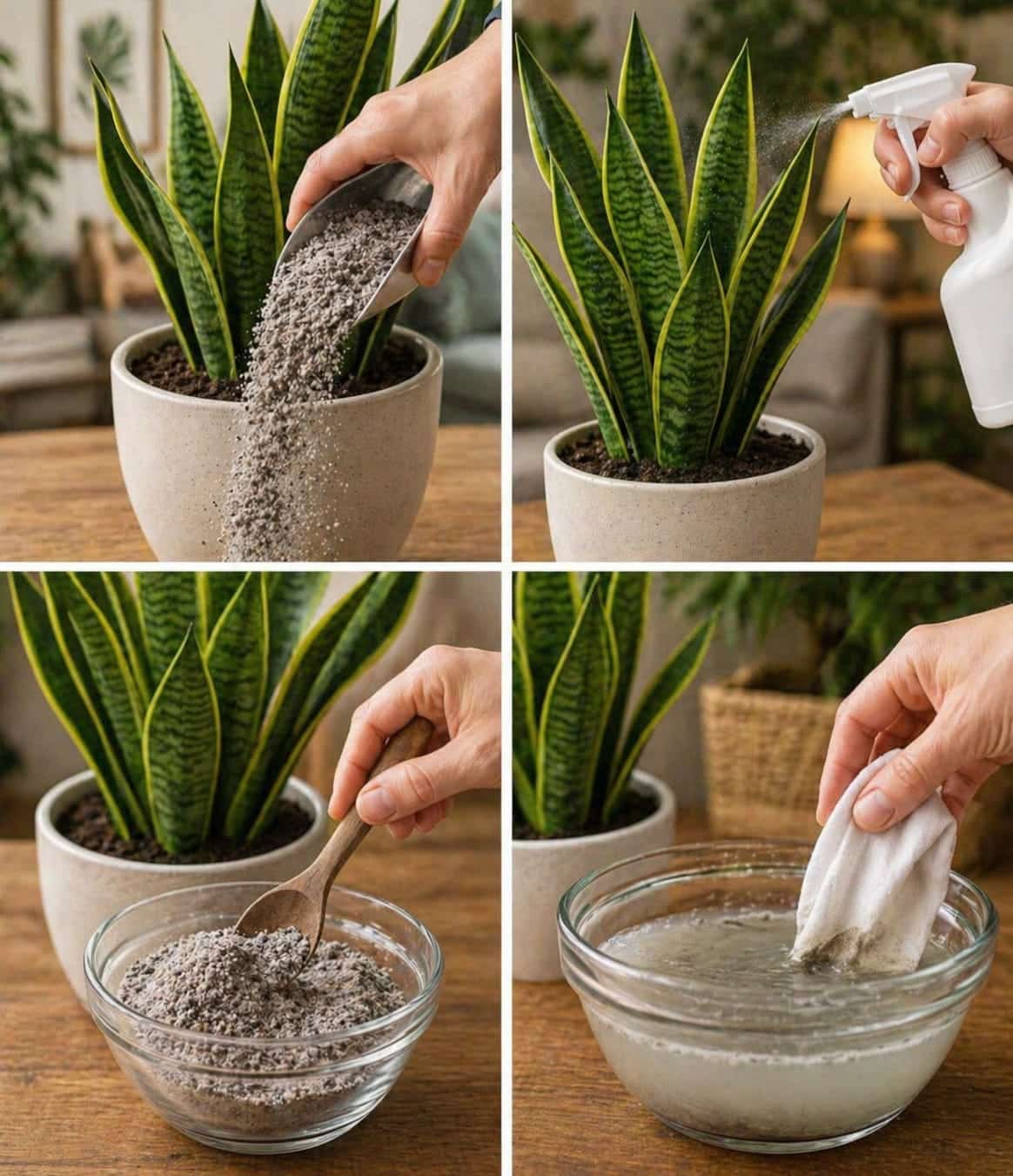
For snake plants, the trick is usually presented in two ways. The first method is sprinkling a tiny pinch of fine wood ash over the soil surface and watering it in lightly. The second method is making a weak ash-water solution, straining it, and using it occasionally as a very diluted soil rinse.
The goal is not to bury the plant in ash or turn the potting mix gray. The goal is to use wood ash as a small mineral booster. Snake plants do not need rich, heavy fertilizer. They are slow-growing succulents that prefer light feeding. That means any natural amendment should be used in moderation.
The image of wood ash being mixed, sprayed, or soaked beside a snake plant can make the trick look dramatic and powerful. But with indoor plants, less is almost always better. A snake plant can benefit from careful attention, but it does not need aggressive feeding. This trick works best when it is gentle, diluted, and used only once in a while.
Why Snake Plants Sometimes Stop Growing
Before using wood ash or any plant hack, it helps to understand why a snake plant may stop growing. Snake plants naturally grow slowly, especially indoors. During winter or in low light, they may barely grow at all. This does not always mean something is wrong.
However, a snake plant may become truly stagnant if its care routine is not supporting healthy roots. The most common reasons for slow growth include not enough light, overwatering, poor drainage, compacted soil, a pot that is too large, lack of nutrients, or cool indoor temperatures.
Low light is one of the biggest reasons snake plants grow slowly. They can survive in dim rooms, but survival is not the same as active growth. A snake plant placed in bright indirect light will usually grow faster than one placed in a dark corner.
Overwatering is another major issue. Snake plants store moisture in their thick leaves and rhizomes. If the soil stays wet for too long, the roots can rot. A plant with damaged roots cannot grow strongly, no matter what you add to the soil.
Old soil can also slow growth. Over time, potting mix becomes compacted, depleted, or slow to drain. If water sits in the pot too long, oxygen cannot reach the roots properly. Snake plants need soil that drains quickly and stays airy.
Wood ash may help provide a small mineral lift, but it cannot fix bad light, soggy soil, or rotten roots. That is why this trick should be used as part of a complete care routine, not as a magic solution.
Why Wood Ash Is Used in Plant Care
Wood ash is used in gardening because it contains minerals left behind after wood burns. Many gardeners value it for its potassium and calcium content. Potassium supports general plant strength, while calcium can help with cell structure and soil balance. Wood ash is also alkaline, meaning it can raise soil pH.
In outdoor gardens, wood ash is often used carefully on acidic soils. It can be helpful for certain plants that prefer less acidic conditions. It is also sometimes sprinkled into compost piles in small amounts to add minerals.
For houseplants, the situation is more delicate. A garden bed has a large volume of soil, rain, microbes, and natural buffering. A small indoor pot is a closed environment. Anything you add can build up faster. This is why wood ash must be used very lightly for potted plants.
Snake plants are more tolerant than many soft-leaved houseplants, which is why some indoor gardeners experiment with ash. Their thick leaves, drought tolerance, and preference for mineral-style soil make them better candidates than moisture-loving plants. Still, caution is essential.
Is Wood Ash Good for Snake Plants?
Wood ash can be used around snake plants in very small amounts, but it should not become a regular heavy fertilizer. Snake plants do not need much feeding, and too much ash can do more harm than good. The main potential benefit is that wood ash may add small amounts of minerals to the potting mix. It may also help slightly if the soil has become too acidic, although most indoor snake plant soil does not need strong pH adjustment.
The main risk is that wood ash is alkaline and contains salts. If too much is added, it can make the soil harsh for roots. This may cause leaf tip browning, poor water uptake, yellowing, root stress, or slowed growth. In a small pot, even a small mistake can have a big effect.
So the answer is: yes, wood ash can be used as a tiny occasional supplement, but it must be treated with respect. Think of it like a strong spice in cooking. A pinch can add something useful, but a handful can ruin the whole dish.
The Safest Type of Wood Ash to Use
Only use ash from clean, untreated, natural wood. This is extremely important. Do not use ash from painted wood, stained wood, pressure-treated lumber, plywood, charcoal briquettes, glossy paper, trash fires, or anything that may contain chemicals. These materials can leave harmful residues that should not go into plant soil.
The ash should be fully cooled before use. Never use warm or hot ash near plants. It should be dry, powdery, and free from large charcoal chunks. If there are big pieces, sift the ash first and use only the fine powder.
Ash from hardwoods is often preferred because it can be more mineral-rich, but the most important factor is cleanliness. Clean fireplace ash from untreated wood is the only type to consider for plants.
How to Use Wood Ash for Snake Plants Safely
There are two safe beginner-friendly ways to use wood ash on a snake plant: the pinch method and the diluted ash-water method. Both must be done lightly.
Method 1: The Tiny Pinch Soil Method
This is the simplest method. Take a very small pinch of fine wood ash and sprinkle it lightly over the top of the soil. For a small snake plant pot, use no more than 1/8 teaspoon. For a larger pot, use no more than 1/4 teaspoon. After sprinkling, gently mix it into the top layer of soil with your finger or a small spoon. Then water lightly only if the plant is due for watering.
Do not create a thick gray layer on top of the soil. If you can clearly see a heavy blanket of ash, you used too much. The ash should almost disappear into the surface.
Method 2: The Diluted Ash-Water Method
This method creates a very weak mineral rinse. Add 1/4 teaspoon of fine wood ash to 1 quart of water. Stir well and let it sit for a few hours. Then strain the water through a cloth or coffee filter so gritty particles are removed. Use a small amount of the clear or lightly cloudy liquid to water the soil when the plant is already ready for watering.
Do not spray ash water on snake plant leaves. Use it only on the soil. Snake plant leaves do not need ash residue, and white mineral marks can remain on the surface.
How Often Should You Use Wood Ash on a Snake Plant?
Wood ash should be used rarely. Once every three to four months is enough for most snake plants, and many plants may not need it more than once or twice a year. It is not a weekly fertilizer. It is not a monthly miracle tonic. It is an occasional mineral amendment.
If your snake plant is healthy and growing well, you do not need to use wood ash often. If your plant is struggling, first check light, watering, drainage, roots, and soil condition before applying ash.
Never use wood ash repeatedly if you see brown tips, yellowing leaves, crusty soil, or signs of root stress. These may indicate buildup or poor soil conditions. In that case, flush the soil with plain water or repot the plant in fresh, well-draining mix.
What Wood Ash Can Do for Snake Plant Growth
When used properly, wood ash may support snake plant growth by adding small amounts of minerals to the potting mix. Potassium is often associated with overall plant strength, water regulation, and resilience. Calcium can help support healthy plant tissue. Trace minerals may also contribute to balanced growth.
However, the effect is usually subtle. Do not expect your snake plant to grow five new leaves overnight. Snake plants grow slowly by nature. A healthy plant may produce new shoots during the active growing season, especially when it has bright light, warm temperatures, and a good root system.
Wood ash may be most useful for a plant that is otherwise healthy but growing in older, slightly depleted soil. It can give a small mineral refresh. But if the soil is old and compacted, repotting is often better than adding amendments.
What Wood Ash Cannot Do
Wood ash cannot save a snake plant with severe root rot. It cannot make a plant grow in a dark room. It cannot replace proper watering. It cannot fix a pot without drainage. It cannot reverse cold damage. It cannot turn a weak plant into a giant plant in a few days.
This is important because many plant tricks become popular because they promise dramatic results. In real plant care, growth comes from consistent conditions. Wood ash can be a small helper, but it is not the main reason a snake plant becomes strong.
The real foundation is simple: bright indirect light, fast-draining soil, a pot with drainage, careful watering, warmth, and patience.
The Best Snake Plant Soil for Growth
Snake plants need soil that drains quickly. They are succulent-like plants and dislike staying wet. A regular houseplant potting mix can hold too much moisture if used alone, especially indoors. A better mix includes gritty ingredients that improve drainage.
A simple snake plant soil mix can include:
- 2 parts cactus or succulent mix
- 1 part perlite or pumice
- 1 part orchid bark or coarse sand
This type of mix allows water to move through quickly and gives roots access to oxygen. Healthy roots are the real engine of growth. If roots are suffocating in dense soil, no amount of wood ash will help.
If your snake plant has not grown in a long time and the soil is old, hard, or slow to dry, repotting into fresh well-draining soil may do more than any homemade trick.
Choosing the Right Pot for a Snake Plant
The pot matters more than many people realize. Snake plants must be grown in pots with drainage holes. Without drainage, water collects at the bottom and increases the risk of root rot. Decorative pots are fine if the plant is kept in a nursery pot inside them, but excess water must always be emptied.
Snake plants also prefer being slightly snug. A pot that is too large holds extra soil, and extra soil holds extra water. This can keep the roots wet too long. When repotting, choose a pot only one size larger than the current one.
Heavy ceramic or terracotta pots can be useful because snake plants are top-heavy. Terracotta also allows soil to dry faster, which can help prevent overwatering.
Best Light for Faster Snake Plant Growth
Snake plants are often advertised as low-light plants, and they can survive in low light. But if you want faster growth, give them brighter light. Bright indirect light is ideal. A spot near an east-facing window, a few feet from a south-facing window, or near a bright west-facing window with some protection can work well.
Direct hot sun can scorch leaves, especially if the plant is not used to it. But gentle morning sun is usually fine. If your snake plant is in a dark hallway or far from a window, it may stay alive but produce little new growth.
When moving a snake plant to brighter light, do it gradually. Sudden exposure to intense sun can burn the leaves. Increase light slowly over a week or two.
How to Water a Snake Plant Correctly
Watering is where many snake plant problems begin. These plants do not want frequent watering. They store water in their leaves and rhizomes, so they prefer drying out between waterings.
Before watering, check the soil deeply. The top may feel dry while the lower soil is still damp. Use your finger, a wooden stick, or a moisture meter to check. Water only when the soil is dry at least several inches down, and in many cases almost completely dry.
When you water, water thoroughly until water drains from the bottom. Then empty the saucer. Do not give tiny sips every few days. Deep, occasional watering is better than constant light watering.
In winter or low light, snake plants may need water only every few weeks. In bright light and warm weather, they may need it more often. Always let the soil guide you.
Should You Mist a Snake Plant?
Snake plants do not need misting. They are adapted to tolerate dry air and do not require high humidity. Misting can leave water sitting between leaves, especially in the center of the plant, which may encourage rot or fungal issues if airflow is poor.
If the leaves are dusty, wipe them with a soft damp cloth. This helps them absorb light better and keeps the plant looking clean. But avoid regular misting as a growth trick. It is not necessary.
If you use the wood ash trick, do not spray ash water onto leaves. Keep the ash treatment in the soil only.
How to Make an Ash Water Tonic for Snake Plants
If you prefer the liquid method, use this very mild recipe:
Ingredients
- 1 quart clean water
- 1/4 teaspoon clean fine wood ash
- A jar or bowl
- A cloth, coffee filter, or fine strainer
Instructions
- Add the wood ash to the water.
- Stir well.
- Let the mixture sit for 2 to 4 hours.
- Strain out the ash particles.
- Use a small amount to water the soil only when the plant is due for watering.
- Do not store the mixture for long periods.
This ash water should be weak. If it looks thick, muddy, or heavily gray, it is too strong. Dilute it more before use.
Continue to Page 2
Continue to page 2 for more details about this article and the key points many readers miss on the first page.