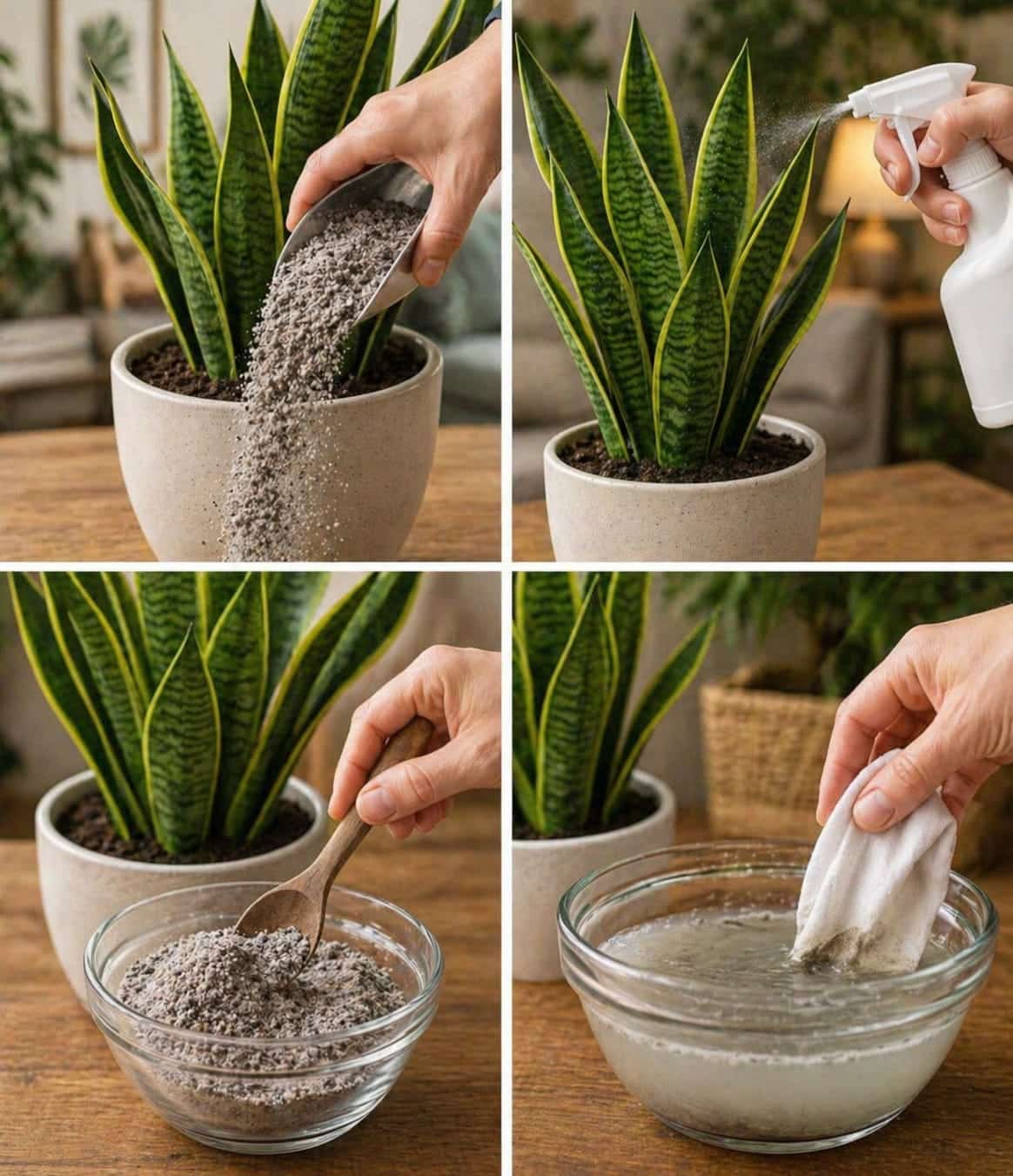
How to Apply Dry Wood Ash Correctly
If you prefer the dry method, use only a small pinch. Sprinkle it lightly over the soil and mix it into the top layer. Then leave it alone. Do not keep adding more because you cannot see dramatic changes right away.
For a small pot, 1/8 teaspoon is enough. For a medium to large pot, 1/4 teaspoon is enough. Large outdoor containers may tolerate more, but indoor snake plants should always receive less.
After applying, watch the plant over the next few weeks. Healthy signs include firm leaves, stable color, and eventual new growth during the growing season. Warning signs include brown tips, yellowing, soft leaves, or soil crusting.
Signs Your Snake Plant Likes the Routine
A snake plant that is responding well to its care routine will have firm upright leaves, rich coloring, stable variegation, and slow but steady new growth. You may notice small new shoots, also called pups, emerging from the soil. These pups are a sign that the plant is growing from its underground rhizomes.
New leaves may appear lighter at first and darken as they mature. Growth is usually faster in spring and summer and slower in fall and winter. Do not judge the success of the wood ash trick after only a few days. Snake plants take time.
If the plant remains firm and healthy and later produces new shoots, your overall routine is working.
Signs You Used Too Much Wood Ash
Too much wood ash can stress a snake plant. Warning signs may include brown leaf tips, dry crispy edges, yellowing, slowed growth, white crust on the soil surface, or a plant that looks dehydrated even after proper watering. These symptoms can also come from other care issues, but if they appear after adding ash, stop using it.
To correct overuse, flush the soil thoroughly with plain water and let it drain completely. If the potting mix remains crusty or the plant continues declining, repot into fresh, well-draining soil.
Do not try to fix too much ash by adding more amendments. Keep it simple. Fresh soil and correct watering are usually the best reset.
Can Wood Ash Prevent Pests?
Some gardeners believe wood ash can discourage certain pests in outdoor gardens, especially soft-bodied insects or slugs when used as a dry barrier. However, indoor snake plant pests are usually different. Common problems include fungus gnats, mealybugs, spider mites, and scale.
Wood ash is not a reliable pest treatment for indoor snake plants. If you have pests, identify them first and treat them properly. Mealybugs can be removed with cotton swabs dipped in rubbing alcohol. Spider mites need leaf cleaning and humidity management. Fungus gnats usually indicate soil staying too wet.
Using wood ash to fight pests may create more soil problems than benefits. Use it only as a tiny mineral supplement, not as pest control.
Can Wood Ash Stop Root Rot?
No. Wood ash cannot cure root rot. Root rot happens when roots are damaged by too much moisture and lack of oxygen, often followed by decay. If your snake plant has mushy leaves, a bad smell, or black soft roots, you need to remove the plant from the pot and inspect it.
Trim away rotten roots and mushy parts with clean tools. Let healthy cut sections dry and callus if needed. Repot into dry, well-draining soil. Do not water immediately if the plant has been badly rotted. Give it time to recover.
Adding ash to rotting soil is not a solution. It may make the soil even more stressful. Root health must come first.
How to Encourage Snake Plant Pups
Many snake plant owners want pups because they make the plant look fuller. Pups grow from underground rhizomes when the plant has enough energy. To encourage pups, provide bright indirect light, a snug pot, well-draining soil, warm temperatures, and careful watering.
A slightly rootbound snake plant often produces pups better than one in a large pot. If the plant is in a huge container, it may spend more time filling the soil with roots and less time pushing visible growth.
Light feeding during the growing season can help. You can use a diluted cactus fertilizer or a very occasional wood ash mineral boost. But again, light is the main driver. A snake plant in a bright location is much more likely to produce pups than one in a dim corner.
Should You Fertilize Snake Plants Too?
Yes, but lightly. Snake plants do not need much fertilizer. During spring and summer, you can feed once every one to two months with a diluted balanced houseplant fertilizer or cactus fertilizer. Use half strength or less.
If you use wood ash, do not use it at the same time as strong fertilizer. Keep treatments separate and mild. Too much feeding can cause buildup in the soil and stress the plant.
In fall and winter, reduce or stop feeding unless the plant is actively growing under strong light. Feeding a plant that is resting can cause more harm than good.
Wood Ash vs. Regular Fertilizer
Wood ash is not a complete fertilizer. It does not provide the balanced nutrition that a formulated plant fertilizer can provide. It may contain potassium and calcium, but it lacks significant nitrogen, which plants also need for leafy growth.
Regular fertilizer is more predictable. You know what nutrients are included and in what ratio. Wood ash varies depending on the type of wood burned and how it was burned. This makes it less precise.
For that reason, wood ash should be considered a traditional mineral amendment, not a full feeding plan. If you want steady growth, use proper light, good soil, correct watering, and occasional diluted fertilizer. Wood ash can be an optional extra.
Best Time of Year to Use Wood Ash
The best time to use wood ash on a snake plant is during the active growing season, usually spring or summer. This is when the plant can use extra minerals more effectively. Avoid using it in winter when the plant is barely growing, especially if the room is cool and light is low.
Use it only when the plant is healthy. Do not use it immediately after repotting, after root rot, or when the plant is stressed. Give the plant time to settle first.
If you are unsure, skip the ash and focus on light and watering. Snake plants often grow better from improved conditions than from added amendments.
How to Repot a Snake Plant for Better Growth
If your snake plant is not growing and the soil is old, repotting may be the best solution. Choose a pot with drainage holes and fresh gritty soil. Remove the plant gently from its old pot. Shake away some old soil and inspect the roots. Healthy roots should be firm. Rotten roots will be mushy, dark, or smelly.
Trim damaged roots with clean scissors. Place the plant in the new pot at the same depth as before. Fill around it with fresh soil and keep it stable. Wait a few days before watering if roots were trimmed or if the soil is already slightly moist.
After repotting, place the plant in bright indirect light and avoid fertilizing for a few weeks. Once it adjusts, you can return to a gentle care routine.
Cleaning Snake Plant Leaves
Snake plant leaves collect dust, especially indoors. Dust blocks light and reduces the plant’s ability to photosynthesize. Clean leaves help the plant grow better and look more beautiful.
Use a soft damp cloth to wipe each leaf from base to tip. Support the leaf with one hand while wiping with the other. Do not use oily leaf shine products, as they can leave residue. Plain water is enough.
Clean leaves also make it easier to spot pests early. Check the base of the leaves and the spaces between them for mealybugs or scale.
Common Snake Plant Problems
Soft Mushy Leaves
Soft mushy leaves usually mean overwatering or root rot. Remove the plant from the pot and inspect the roots. Repot into dry, well-draining soil if needed.
Brown Tips
Brown tips can come from inconsistent watering, mineral buildup, too much fertilizer, too much wood ash, or low humidity. Snake plants tolerate dry air, but soil buildup can still cause tip damage.
Yellow Leaves
Yellow leaves often indicate overwatering, poor drainage, or root stress. Check the soil and roots before adding any fertilizer or ash.
No New Growth
No new growth is usually caused by low light, cool temperatures, old soil, or the natural slow-growing habit of the plant. Move it to brighter indirect light and be patient.
Leaning Leaves
Leaves may lean if the plant is reaching for light, if roots are weak, or if the pot is unstable. Rotate the pot and check the root system.
Can You Use Fireplace Ash for Snake Plants?
You can use fireplace ash only if it comes from clean, untreated wood. Make sure it is completely cool and free from chemicals. Do not use ash from burned trash, colored paper, cardboard with ink, charcoal briquettes, or treated lumber.
Also, use only the fine ash, not large chunks of charcoal. Sifting the ash makes it easier to apply lightly and evenly.
Can You Mix Wood Ash Into Potting Soil?
You can mix a tiny amount into potting soil, but it is usually better to avoid adding it directly to a fresh mix unless you know what you are doing. Because wood ash changes pH and adds salts, too much can create imbalance.
If you are preparing a large batch of soil, a very small sprinkle may be enough. For most indoor growers, applying a tiny pinch to the soil surface once in a while is easier and safer.
Can You Use Wood Ash on Other Houseplants?
Some hardy plants may tolerate tiny amounts of wood ash, but many houseplants prefer slightly acidic soil and may not appreciate it. Plants like ferns, calatheas, peace lilies, and many tropical foliage plants are not ideal candidates for wood ash. They prefer gentler, more balanced feeding.
Snake plants are more tolerant, but even they need moderation. Never assume that because one plant tolerates wood ash, all plants will.
The Best Natural Snake Plant Growth Routine
If you want your snake plant to grow stronger, use this simple routine:
- Place it in bright indirect light.
- Use a pot with drainage holes.
- Plant it in fast-draining cactus or succulent-style soil.
- Water only when the soil is dry.
- Clean the leaves every few weeks.
- Keep the plant warm and away from cold drafts.
- Feed lightly during spring and summer.
- Use wood ash only as a rare, tiny mineral boost.
- Repot when soil becomes compacted or roots are overcrowded.
- Watch for signs of overwatering or buildup.
This routine gives the plant what it actually needs. The wood ash trick can be included, but it should never be the center of the care plan.
Frequently Asked Questions
Can wood ash boost snake plant growth?
Wood ash may provide a small mineral boost when used in tiny amounts, but it will not magically force fast growth. Better growth comes mainly from bright indirect light, proper watering, good drainage, and healthy roots.
How much wood ash should I use for a snake plant?
Use only a tiny pinch. For a small pot, about 1/8 teaspoon is enough. For a larger indoor pot, about 1/4 teaspoon is enough. Do not create a thick ash layer on the soil.
Can I spray ash water on snake plant leaves?
No. It is better to use ash water only on the soil. Spraying leaves can leave mineral residue and does not provide meaningful benefit.
How often can I use wood ash?
Once every three to four months is enough, and many snake plants may only need it once or twice a year. Do not use it weekly or monthly as a heavy treatment.
Can wood ash damage snake plants?
Yes. Too much wood ash can make soil too alkaline or salty, causing root stress, brown tips, yellowing, or poor growth. Always use it sparingly.
What type of ash is safe?
Only use ash from clean, untreated natural wood. Avoid ash from treated wood, charcoal briquettes, trash, painted wood, or glossy paper.
Is wood ash better than fertilizer?
No. Wood ash is not a complete fertilizer. It may provide some minerals, but a balanced diluted fertilizer is more predictable for plant nutrition.
Why is my snake plant not growing?
The most common reasons are low light, overwatering, poor drainage, old soil, cool temperatures, or natural seasonal slowdown. Check these factors before adding wood ash.
Can wood ash fix root rot?
No. Root rot requires removing damaged roots, improving drainage, and repotting into fresh dry soil. Wood ash cannot cure rotten roots.
Should I use wood ash in winter?
It is better to avoid it in winter unless the plant is actively growing under strong light. Spring and summer are better times for gentle feeding or mineral boosts.
Final Thoughts
The wood ash snake plant trick is an interesting natural care method, especially for plant lovers who enjoy simple homemade gardening ideas. Wood ash contains minerals and has a long history in garden care, which is why it attracts attention as a possible growth booster. For snake plants, it can be used as a very occasional, very light mineral supplement.
The most important rule is moderation. Wood ash is powerful. A tiny pinch can be enough. Too much can harm the soil, stress the roots, and damage the plant. Never use ash from treated or chemical-contaminated wood, never pour thick ash mixtures into the pot, and never rely on ash to fix serious care problems.
If your snake plant is slow-growing, begin with the basics. Give it brighter indirect light, use fast-draining soil, water only when the soil is dry, and make sure the pot has drainage. Clean the leaves, keep the plant warm, and feed lightly during the growing season. Once those basics are in place, a small wood ash boost can be an optional extra.
Snake plants do not need complicated care. They need consistency, patience, and a dry, airy root environment. When cared for correctly, they can produce strong upright leaves, fresh new shoots, and a fuller, healthier appearance over time. Wood ash may be part of that routine, but the real secret is always balanced care.