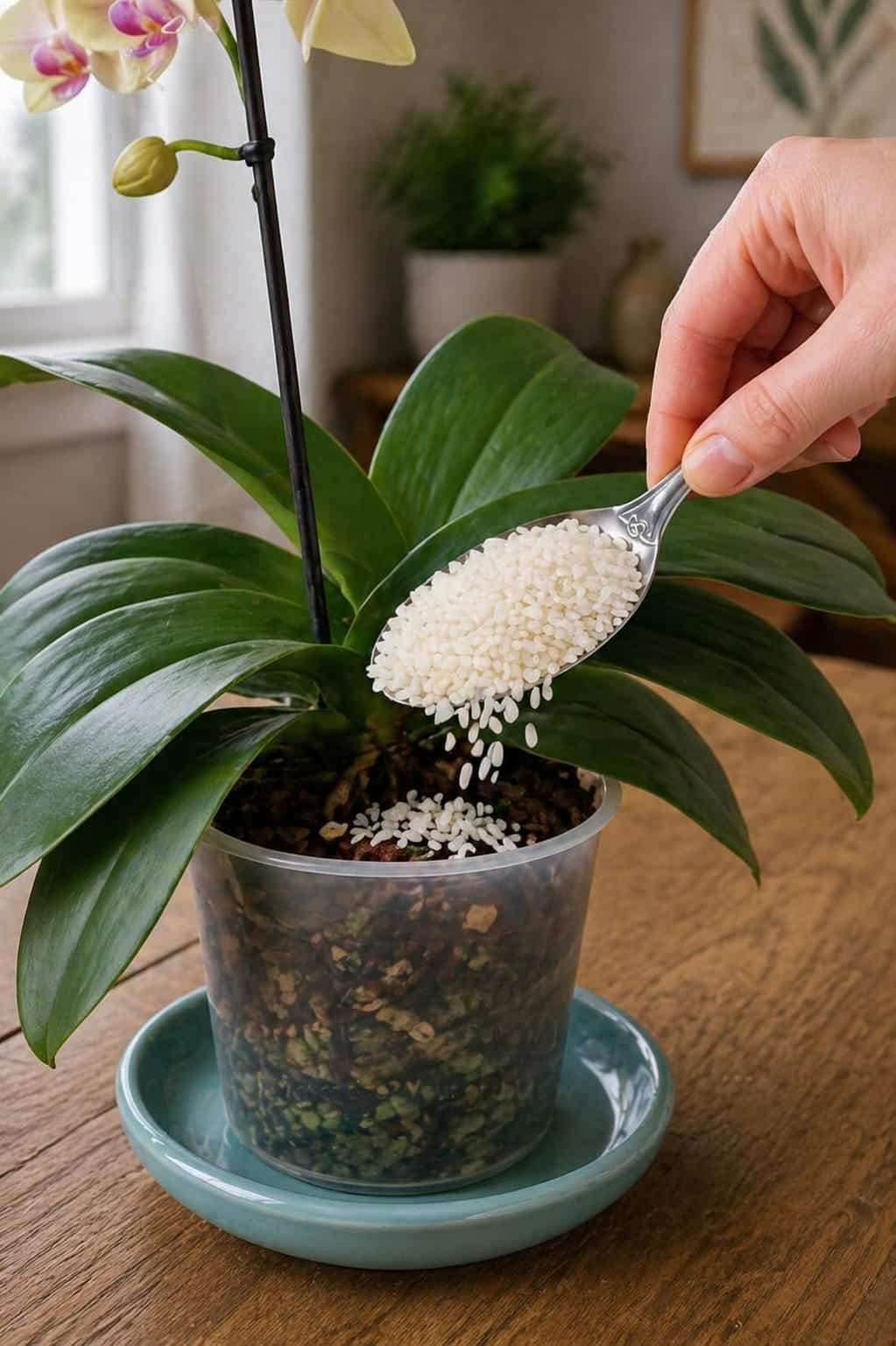
Orchids have a special way of making a room feel elegant. Their glossy leaves, arching flower stems, and delicate blooms can turn even a simple windowsill into a peaceful indoor garden. But anyone who has cared for orchids knows they can also be confusing. One month they look perfect, and the next month the flowers fade, the leaves look tired, or the roots seem dry and lifeless.
That is why simple orchid care tricks always get attention. One of the most popular natural methods people are starting to try is using rice around orchids. The image is instantly interesting: a spoonful of plain white rice being sprinkled over orchid bark, as if it were a secret ingredient for stronger roots and more blooms. It looks simple, affordable, and almost too easy.
So what exactly is this rice orchid trick?
The idea behind it is that rice, especially rice water, can be used as a gentle homemade supplement for orchids. Rice water is the cloudy liquid created when uncooked rice is rinsed or soaked in water. Many gardeners use it because it contains tiny amounts of starch and trace compounds that may support the soil or potting environment when used carefully. Some people sprinkle rice grains directly into the orchid pot, but the safer version for orchids is usually diluted rice water rather than leaving dry rice sitting in the bark.
Orchids are not ordinary houseplants. Most common indoor orchids, especially Phalaenopsis orchids, grow naturally with their roots exposed to air, moisture, and loose organic material. They do not like dense soil. They do not like soggy conditions. They do not like heavy homemade mixtures that sit around the roots and turn sour. That means the rice trick must be used gently and intelligently.
When done the right way, rice water can become a mild monthly boost in your orchid routine. It may help refresh the potting medium, encourage more attentive watering, and support a healthier growing environment. When done the wrong way, rice grains can mold, attract pests, and create problems in the orchid pot.
In this complete guide, you will learn what the rice orchid trick is, how to use rice safely, why rice water is better than dry grains, how often to apply it, what results to expect, and how to combine it with proper orchid care for stronger roots, glossy leaves, and better blooming potential.
What Is the Rice Trick for Orchids?
The rice trick for orchids is a homemade plant-care method where rice or rice water is used as a natural supplement. The most common versions include sprinkling uncooked rice on top of the orchid bark, soaking rice in water and using the cloudy liquid, or rinsing rice and using the rinse water as a mild watering tonic.
The reason this trick is popular is simple: rice is available in almost every kitchen. Instead of buying expensive plant boosters, people like the idea of using something natural and familiar. Rice water also has a cloudy white appearance, which makes it look like a special orchid tonic when poured through the pot.
However, orchids are sensitive to their root environment. Their potting mix is usually made of bark, sphagnum moss, perlite, charcoal, or other airy materials. This mix is designed to let air reach the roots. If rice grains are left in the pot and begin to soften, swell, or decay, they can create mold and attract fungus gnats. That is why rice water is usually the safer method.
In other words, the trick is not about feeding orchids cooked rice or filling the pot with grains. It is about using a very light rice-based rinse as an occasional support for a healthy plant.
Why Orchid Owners Are Talking About Rice
Orchid owners love simple tricks because orchids can feel mysterious. A plant may bloom beautifully in the store, then stop flowering at home for months. A new owner may wonder whether the plant needs fertilizer, more water, less water, more sun, or a different pot. In that confusion, a kitchen remedy like rice feels approachable.
The rice trick also feels satisfying because it turns waste into plant care. Many people already rinse rice before cooking. The cloudy rinse water usually goes down the drain. Using it for plants feels practical and sustainable.
Another reason the trick is popular is visual. Sprinkling rice or pouring rice water around an orchid looks dramatic. The white grains or cloudy liquid stand out against dark bark. It makes the care routine look intentional and special.
But the most important thing is not the visual effect. The real value comes from using the method lightly, observing the plant, and improving the overall care routine. Rice water may support the orchid, but it works best when the basics are already correct.
Can Rice Really Help Orchids?
Rice may help orchids only in a gentle, indirect way. It is not a miracle fertilizer. It will not make a weak orchid bloom overnight. It will not save rotten roots. It will not replace proper light or a balanced orchid fertilizer.
What rice water may do is provide a mild organic rinse containing small amounts of starch and trace compounds from the rice surface. In tiny amounts, this can become part of a natural care routine. It may also encourage beneficial microbial activity in the potting medium when used sparingly.
But orchids need caution. Too much organic material can cause problems. If rice water is too thick or used too often, it can feed mold, fungus gnats, or unwanted growth in the pot. If dry rice grains are left in damp bark, they can swell and decay.
So the answer is: rice water can be useful as a very occasional supplement for healthy orchids, but it should never be treated as a powerful cure or heavy fertilizer.
Rice Grains or Rice Water: Which Is Better?
Rice water is better for orchids than dry rice grains. Dry grains may look attractive in a photo, but they are not ideal for long-term orchid care. Once rice grains become wet, they soften. In the warm, humid environment of an orchid pot, they can begin to break down. This may create a sour smell, attract insects, or encourage mold.
Rice water is easier to control. You can dilute it, pour it through the bark, and let it drain out. It gives you the possible benefit of the rice trick without leaving solid food in the pot.
If you sprinkle rice on the surface for visual effect, use only a tiny amount and remove the grains after a short time. Do not leave a thick layer of rice sitting in the orchid pot. For actual plant care, diluted rice water is the safer choice.
Why Orchids Need Airy Roots
To understand why rice must be used carefully, you need to understand orchid roots. Many common orchids are epiphytes. In nature, they grow attached to trees or other surfaces rather than buried in heavy soil. Their roots absorb moisture from rain, humidity, and organic debris, but they also get plenty of air.
This is why orchids are often grown in bark instead of regular potting soil. Bark creates air pockets around the roots. The roots can absorb water and then dry slightly. This wet-dry rhythm keeps them healthy.
If the root zone becomes dense, soggy, or filled with decaying material, orchids can decline quickly. The roots may turn brown, mushy, or hollow. Leaves may become limp because damaged roots cannot absorb water properly.
Any homemade trick must respect this root system. Rice water should be thin, diluted, and able to drain freely. Rice grains should not clog the bark or sit wet around the roots.
The Best Rice Water Recipe for Orchids
The safest rice trick for orchids is fresh diluted rice water. It should be light and watery, not thick or sticky. Use plain uncooked rice only. Do not use cooked rice water that contains salt, oil, butter, or seasoning.
Ingredients
- 1 tablespoon plain uncooked rice
- 1 cup clean room-temperature water
- 3 to 4 cups extra clean water for dilution
- A small bowl
- A strainer
- A watering cup or bottle
Instructions
- Place the uncooked rice in a clean bowl.
- Add 1 cup of clean water.
- Stir the rice gently for 30 to 60 seconds.
- Let the water turn cloudy.
- Strain out every grain of rice.
- Dilute the cloudy rice water with 3 to 4 cups of clean water.
- Use the diluted rice water immediately.
The final mixture should look only lightly cloudy. If it looks thick, creamy, or milky, dilute it more. Orchids do not need a heavy starch solution.
How to Apply Rice Water to Orchids
Before applying rice water, check the orchid’s potting medium. Do not use rice water if the bark is still wet. Orchids should not be watered again until the potting mix is approaching dryness, depending on the type of orchid and the medium.
Place the orchid over a sink, tray, or basin. Slowly pour the diluted rice water around the bark, avoiding the crown of the plant. The crown is the center area where the leaves meet. Water trapped in the crown can cause rot, especially in Phalaenopsis orchids.
Let the rice water drain completely through the pot. This is essential. If liquid does not drain out, the pot may not have enough drainage or the medium may be too compacted. After watering, empty any saucer or decorative outer pot.
Return the orchid to bright indirect light and allow it to dry appropriately before the next watering. Do not repeat the rice water treatment right away. Orchids need time between waterings.
How Often Should You Use Rice Water on Orchids?
For most orchids, once every four to six weeks during active growth is enough. Active growth usually means the orchid is producing new roots, new leaves, or a flower spike. During colder or darker months, reduce use or stop completely.
Do not use rice water every week. Do not use it every time you water. Too much organic residue can create mold or pests. Orchids grow best when their potting mix stays airy and clean.
A good routine is plain water most of the time, a diluted orchid fertilizer occasionally during active growth, and diluted rice water once a month or less as a gentle extra.
Can Rice Water Make Orchids Bloom?
Rice water may support a healthy orchid, but it does not directly force blooms. Orchid blooming depends on several important factors: light, temperature, maturity, root health, seasonal rhythm, and proper feeding.
If your orchid is not blooming, the first thing to check is light. Many indoor orchids fail to rebloom because they are kept in too little light. They may stay alive and grow leaves, but they do not have enough energy to produce flowers.
Rice water cannot replace bright indirect light. It also cannot replace the natural temperature cues some orchids need before flowering. For Phalaenopsis orchids, a slight drop in nighttime temperature can sometimes help trigger a flower spike.
So rice water can be part of a bloom-supporting routine, but it is not the main trigger. Healthy roots and proper light matter far more.
What Results Can You Expect?
If your orchid responds well to rice water, the changes will be subtle and gradual. You may notice leaves looking slightly firmer over time if your watering routine improves. You may see new root tips during active growth. The plant may look fresher because you are checking it more carefully and watering with intention.
Do not expect instant flowers. Orchids move slowly. A plant that is recovering from stress may take months to show strong improvement. The best sign of success is healthy root growth. New green root tips mean the orchid is active and capable of supporting future leaves and blooms.
If you notice mold, sour smells, fungus gnats, or sticky residue after using rice water, stop immediately. Flush the pot with plain water and allow it to dry properly. If problems continue, repot the orchid in fresh bark.
Can You Sprinkle Dry Rice on Orchid Bark?
It is better not to leave dry rice in orchid bark. While the image of rice being sprinkled over an orchid is eye-catching, it is not the cleanest long-term method. Rice grains can become wet and begin to soften. In a warm indoor environment, this can attract pests or mold.
If you want to try the visual version, use only a few grains and remove them after watering. But for real care, rice water is safer. It gives you control and reduces the chance of decaying material sitting in the pot.
Orchid bark should stay open and airy. Anything that clogs it or breaks down quickly can interfere with root health.
Can You Use Cooked Rice?
No, cooked rice should not be placed in orchid pots. Cooked rice is soft, starchy, and prone to spoilage. It can attract pests and create mold. It may also become sticky and block airflow in the potting medium.
Cooked rice water is also risky if it contains salt, oil, butter, or seasoning. Salt can damage roots. Oil can coat the medium. Seasonings can attract insects or create unpleasant odors.
Only use rinse water from plain uncooked rice, and dilute it well.
Can You Use Fermented Rice Water?
Some plant lovers use fermented rice water for certain plants, but it is not the best option for orchids, especially for beginners. Fermented rice water can become strong, sour, and biologically active. It may smell unpleasant and attract insects indoors.
Orchids prefer clean air around their roots. A strong fermented liquid can create more risk than benefit in a bark-based pot. Fresh diluted rice water is safer and easier to control.
If you are new to orchid care, avoid fermentation. Keep the method simple, fresh, and mild.
Can Rice Water Replace Orchid Fertilizer?
No, rice water should not replace orchid fertilizer. Rice water is not a complete fertilizer. It does not provide a predictable balance of nutrients that orchids need for long-term growth.
A proper orchid fertilizer contains measured nutrients. When diluted correctly, it can support leaf growth, root development, and blooming potential. Rice water may be used as an occasional natural supplement, but it should not be the only source of nutrition.
If your orchid is actively growing, use a weak orchid fertilizer according to the product instructions. Many orchid growers prefer weak feeding rather than strong feeding. Rice water can be used separately and occasionally, not at the same time as strong fertilizer.
The Best Light for Orchids
If you want your orchid to grow and bloom, light is essential. Most common orchids, especially Phalaenopsis orchids, prefer bright indirect light. They should not sit in harsh direct afternoon sun, but they also should not be kept in deep shade.
An east-facing window is often ideal. A bright north-facing window can work if the room is sunny. A south- or west-facing window may be suitable if filtered with a sheer curtain.
Leaves can tell you a lot about light. Very dark green leaves may indicate too little light. Yellowish or scorched leaves may indicate too much direct sun. A healthy orchid leaf is usually medium green, firm, and clean.
Rice water will not make an orchid bloom if the plant does not receive enough light. Always fix light before relying on homemade tricks.
Best Potting Medium for Orchids
Orchids need a potting medium that matches their root needs. For Phalaenopsis orchids, chunky orchid bark is often a good choice. Some mixes include bark, perlite, charcoal, and a little sphagnum moss. The medium should hold some moisture but still allow plenty of airflow.
If your orchid is planted in dense soil, it should be repotted into proper orchid mix. Regular potting soil is usually too heavy and can suffocate roots.
Old bark can also become compacted over time. As bark breaks down, it holds more water and less air. This can lead to root rot. Repotting every one to two years, or when the medium breaks down, helps keep roots healthy.
Rice water should only be used on orchids growing in a suitable, well-draining medium.
How to Water Orchids Correctly
Watering orchids is more important than any trick. Most orchids prefer to be watered thoroughly and then allowed to dry slightly before the next watering. The exact timing depends on the pot, medium, room temperature, humidity, and light.
Clear pots are helpful because you can see the roots. Hydrated Phalaenopsis roots often look green. Dry roots often look silvery. If roots are still green and the medium is damp, wait before watering.
When you water, let water run through the pot and drain out completely. Do not let the orchid sit in standing water. If the plant is in a decorative outer pot, remove the inner pot after watering and empty any leftover liquid.
Rice water should follow the same rule. Use it only when the orchid is ready for watering, and let it drain fully.
Continue to Page 2
Continue to page 2 for more details about this article and the key points many readers miss on the first page.